Sign in. It’s quick, free and it’s up to you.
An account is an optional way to support the work we do. Find out more.
Sign in. It’s quick, free and it’s up to you.
An account is an optional way to support the work we do. Find out more.
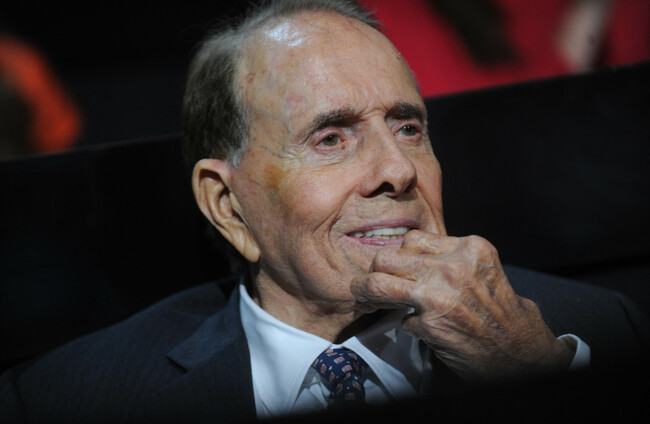
LONG-TIME KANSAS SENATOR and Republican nominee for US president Bob Dole has died aged 98.
His wife, Elizabeth Dole, posted the announcement on Twitter today.
Dole, who overcame disabling war wounds to become Senate leader, announced in February 2021 that he had been diagnosed with stage 4 lung cancer.
During his 36-year career on Capitol Hill, Dole became one of the most influential legislators and party leaders in the Senate, combining a talent for compromise with a caustic wit, which he often turned on himself but did not hesitate to turn on others too.
He shaped tax policy, foreign policy, farm and nutrition programmes and rights for the disabled, enshrining protections against discrimination in employment, education and public services in the Americans with Disabilities Act.
Today’s accessible government offices and national parks, pavement ramps and the sign-language interpreters at official local events are just some of the more visible hallmarks of his legacy and that of the fellow politicians he rounded up for that sweeping civil rights legislation 30 years ago.
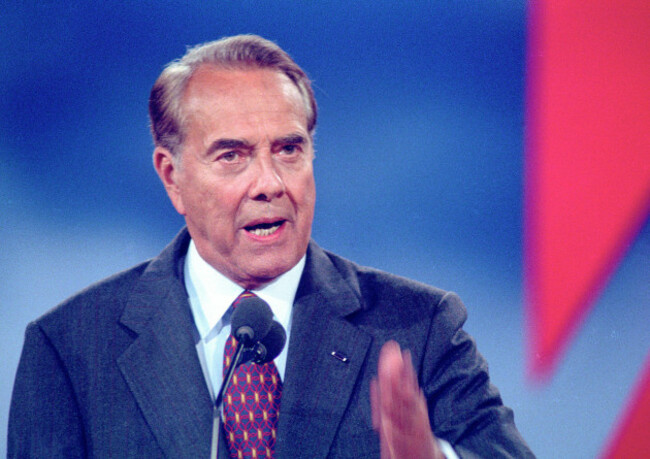
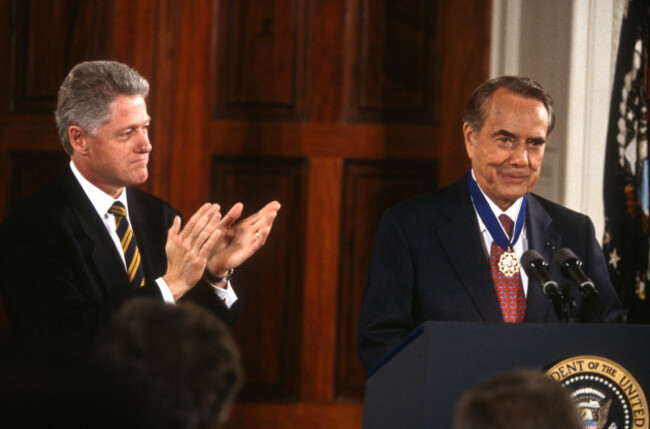
Dole devoted his later years to the cause of wounded veterans, their fallen comrades at Arlington National Cemetery and remembrance of the fading generation of Second World War veterans.
Thousands of old soldiers massed on the National Mall in 2004 for what Dole, speaking at the dedication of the Second World War Memorial there, called “our final reunion”. He had been a driving force in its creation.
“Our ranks have dwindled,” he said then. “Yet if we gather in the twilight it is brightened by the knowledge that we have kept faith with our comrades.”
Long gone from Kansas, Dole made his life in the capital, at the centre of power and then in its shadow upon his retirement, living at the Watergate complex.
When he left politics and joined a law firm staffed by prominent Democrats, he joked that he brought his dog to work so he would have another Republican to talk to.
He tried to become president three times. The last was in 1996, when he won the Republican nomination only to see president Bill Clinton re-elected.
He sought his party’s presidential nomination in 1980 and 1988 and was the 1976 GOP vice presidential candidate on the losing ticket with president Gerald Ford.

To embed this post, copy the code below on your site













have your say