Sign in. It’s quick, free and it’s up to you.
An account is an optional way to support the work we do. Find out more.
Sign in. It’s quick, free and it’s up to you.
An account is an optional way to support the work we do. Find out more.
LAST UPDATE | 21 Aug 2023
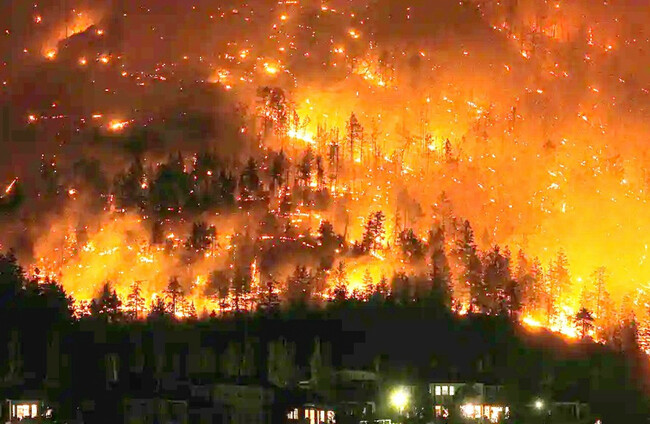
CANADIAN FIREFIGHTERS HAVE made some progress battling blazes in the west of the country but thousands of people have been forced to flee their homes to escape the danger.
35,000 people were under evacuation orders as of yesterday in British Columbia as hundreds of fires continued to rage across the region.
There is “finally a bit of a glimmer of hope,” West Kelowna fire chief Jason Broland told a news conference of the progress being made in the Lake Okanagan region, which is known as a summer destination for families.
“The weather has allowed us to make progress,” he said, adding that crews were able to conduct more traditional firefighting techniques such as putting out hot spots.
However, he said that some people “may be coming back to nothing” when evacuees are allowed to return.
“Some of you have lost your homes. There’s no question about that,” he said. “There are lots of backyards where the fire has come right to your patio furniture. And it’s been stopped there because of the work of the 500 people that are on the ground fighting. ”
More than 1,200 miles away, firefighters fought flames bearing down on Yellowknife, the capital of the Northwest Territories.
The fire remained about nine miles from the city, which was left virtually empty after nearly all of its 20,000 residents fled for safety.
“Even as things dried out and fire behaviour picked up, we were able to do some good suppression work form the air and limit the progression,” fire information officer Mike Westwick said at a media briefing last night.
Canada has seen a record number of wildfires this year that have also caused choking smoke in parts of the US.
In total, there have been more than 5,700 fires, which have burned more than 53,000 square miles from one end of Canada to the other, according to the Canadian Interagency Forest Fire Centre.
Canadian Prime Minister Justin Trudeau announced the government has approved British Columbia’s request for federal assistance.
In a Facebook post, Yellowknife officials said they were working to establish wildfire defence lines around the city, creating fire breaks and using water sprinklers, cannons and aircraft dropping fire retardant.
“We are not out of the woods yet as many factors can change the status of a fire quickly,” the post said.
Shane Thompson, the province’s environment minister, said the fire was “unlikely to reach the outskirts of the community today or tomorrow”.
In the town of Hay River in the Northwest Territories, evacuees could be looking at weeks before they can return home, Mayor Kandis Jameson said in a statement to the community’s 3,800 residents.
Warm, dry weather and steady winds are forecast for the upcoming week, she said.

To embed this post, copy the code below on your site













have your say