Sign in. It’s quick, free and it’s up to you.
An account is an optional way to support the work we do. Find out more.
Sign in. It’s quick, free and it’s up to you.
An account is an optional way to support the work we do. Find out more.
YOU WOULD BE forgiven for not being fully up to speed with the latest chapter in the seemingly never-ending RTÉ drama.
At this point, we are all collectively shouting “just get it sorted”.
This latest instalment has taken a turn for the granular but at its core is a classic case of who knew what and when.
Below you will find an explainer of the latest turn in the saga, and at under 1,000 words it will take on average less than four minutes to read. Go!
In the scheme of things, the intricacies of the last week aren’t what’s important in the long-term for RTÉ, but they do speak to a wider problem that exists in the relationship between the broadcaster and the Government.
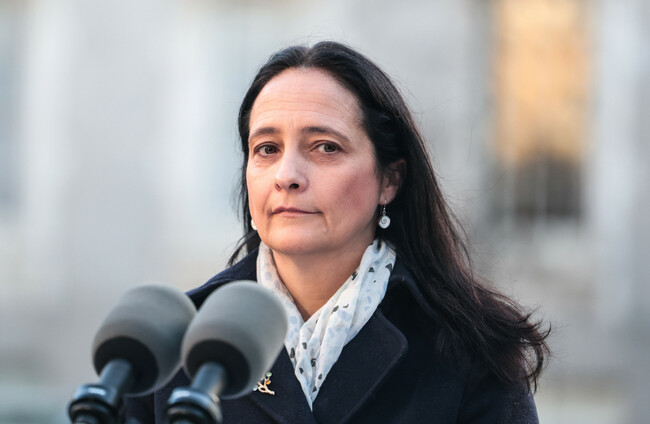
The start of the latest spiral for RTÉ began (somewhat ironically) in an RTÉ studio on Thursday evening when Minister for Media Catherine Martin failed to express confidence in chair of the RTÉ board Siún Ní Raghallaigh during a Prime Time interview.
This was because Martin said she was misinformed by Ní Raghallaigh about the board’s role in approving former RTÉ chief financial officer Richard Collins’ exit package in October.
"What I am going to do tomorrow is talk to the chair of the board..."
— RTÉ Prime Time (@RTE_PrimeTime) February 22, 2024
In response to questions about whether she has confidence in the chair of the RTE board, Catherine Martin says she will be meeting her tomorrow morning to discuss new concerns which have emerged.#rtept pic.twitter.com/XPhq0E2KvL
Within a number of hours Ní Raghallaigh had dramatically tendered her resignation in the black of night and RTÉ was again plunged into the unknown.
A press conference with the Minister on Friday evening did little to instil confidence that things were A) under control and B) handled appropriately.
In the hours leading up to Martin’s appearance rumours had circulated that the entire RTÉ board would resign in protest over Ní Raghallaigh’s treatment by the Minister.
While this did not materialise, a stinging statement from the Board in which it expressed “great disappointment and regret” over the resignation of its chair Siún Ní Raghallaigh, made clear that its members were not happy.
By the end of the weekend revelations in the Sunday newspapers cast even more uncertainty on an already fraught situation – with the Business Post reporting that Martin’s three most senior officials were explicitly told in October in the context of a PAC hearing that the RTÉ board were required to sign off on exit packages.
This is the crux of the latest drama, as it directly contradicts Martin’s reasoning for failing to express confidence in Ní Raghallaigh.
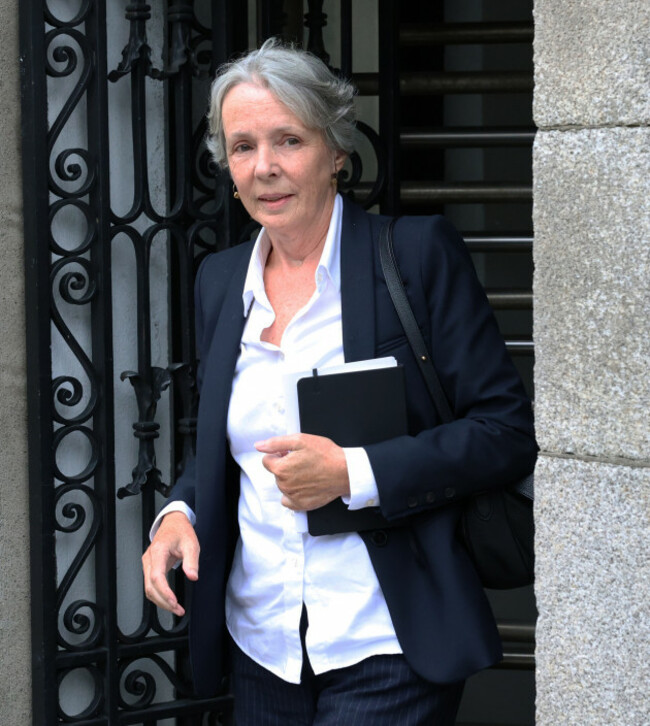
As Ní Raghallaigh explained it, she “neglected to recollect” that the exit package did go before the remuneration committee (which Ní Raghallaigh also sat on).
She maintains it was not an intentional misrepresentation and that she subsequently contacted the Department of Media to clarify the details and remind them that she had previously relayed the information to the Department in October.
So has Martin or her officials also “neglected to recollect” this point?
On Friday, Martin said no record was made of the phone call where RTÉ claims this information was relayed to the Department’s Secretary General because as Martin said it “wasn’t of significance at the time”.
In hindsight, and in the wake of the RTÉ chair losing her job over it, this seems pretty significant.
On Friday, Martin was adamant that the Secretary General was not informed that Richard Collins’ exit package was approved, merely that the exit process was complete.
However, reports in the the Business Post yesterday directly contradict the Minister’s version of events.
Martin will have tough questions to answer tomorrow evening as she appears before an emergency three hour meeting of the Oireachtas Media Committee, scheduled for 7pm.
As Fianna Fáil senator Malcolm Byrne told The Journal, he wants to know which of three possible scenarios reflects the truth.
Byrne said while he believes it was not wise of Minister Martin to have done the Prime Time interview last week, he does continue to have confidence in her and said she has done a good job to date.
Byrne added that what is critical for RTÉ now is that confidence remains in RTÉ Director General Kevin Bakhurst and that an experienced chair of the board is put in place promptly.
Zooming out from this most recent episode, one of the more fundamental questions Minister Martin faces is where do we stand on a new funding model for RTÉ.
Arguably, getting this sorted would bring the stability that is so needed by the broadcaster right now but the question is what is taking so long and what progress has Martin been making on this?
Sources say the delay is because there is no agreement at Government level on the best approach to take, but with every new layer added to the RTÉ debacle the need for swift action on this front becomes more urgent.
Never say never but it seems unlikely. If one was going to be tabled, it would make most sense for the Labour Party to do it seeing as they are the only party who have said Minister Martin’s position is untenable.
Sinn Féin have been almost uncharacteristically quiet on this latest headache for the Government – possibly because their last motion of no confidence in a Government minister (Helen McEntee after the Dublin riots) seemed to backfire on them.
It seems Sinn Féin President Mary Lou McDonald is waiting to see how things further play out before jumping in with a definitive stance.
Leaders’ Questions in the Dáil tomorrow afternoon will give us a clearer understanding of how far opposition parties want to take this.
For now though, with the backing of her Government and party colleagues, Martin looks set to limp on another day.

To embed this post, copy the code below on your site













have your say