Sign in. It’s quick, free and it’s up to you.
An account is an optional way to support the work we do. Find out more.
Sign in. It’s quick, free and it’s up to you.
An account is an optional way to support the work we do. Find out more.

DROWNING IS A leading cause of accidental death in children worldwide.
A study published in the British Medical Journal found that children who drown and suffer from cardiac arrest with hypothermia are significantly more likely to die or suffer severe brain damage if resuscitation continues for more than 30 minutes.
Drowning is often associated with hypothermia – which is thought to offer a protective effect by slowing down the brain’s metabolism.
Current guidelines suggest that if spontaneous circulation is not reached within 30 minutes, prolonged resuscitation should continue until a body temperature of 32-34°C is achieved but only a few case reports have included clinical outcomes.
Challenge current recommendations
In the largest study of its kind, a team of Dutch researchers carried out a retrospective analysis to identify outcomes of resuscitation in all children who drowned and suffered cardiac arrest with hypothermia.
In total, 160 children were included in the study, all of whom drowned outdoors between 1993 and 2012.
Prolonged resuscitation beyond 30 minutes was performed in 98 (61%) of children, but did not result in a good outcome: 87 (89%) died and only 11% (11) survived in a vegetative state or with severe neurological damage.
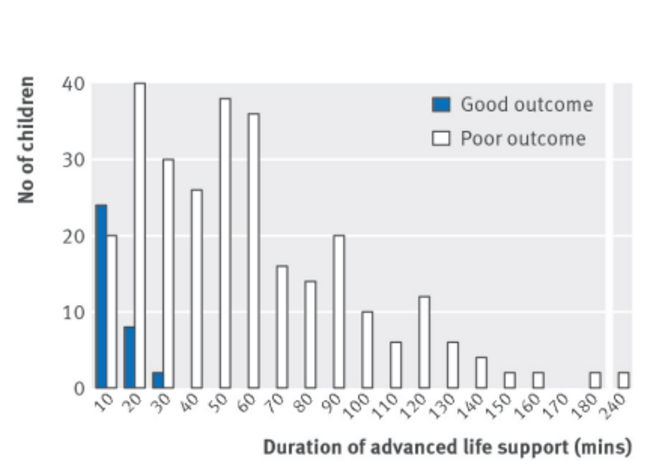
Of the children that were included in the study:
Only 44 (28%) children were still alive one year after the accident.
The study found that the maximum duration of resuscitation with a good outcome was 25 minutes. The authors said,
These findings suggest that there is no therapeutic value of restitution beyond 30 minutes for drowned children with cardiac arrest and hypothermia.
But they note that established recommendations should be followed in winter months and in exceptional circumstances, such as, drowning that involves a motor vehicle or boat because in exceptional circumstances hypothermia might possibly precede asphyxia and the present study does not provide data for these situations.

To embed this post, copy the code below on your site












have your say