Sign in. It’s quick, free and it’s up to you.
An account is an optional way to support the work we do. Find out more.
Sign in. It’s quick, free and it’s up to you.
An account is an optional way to support the work we do. Find out more.
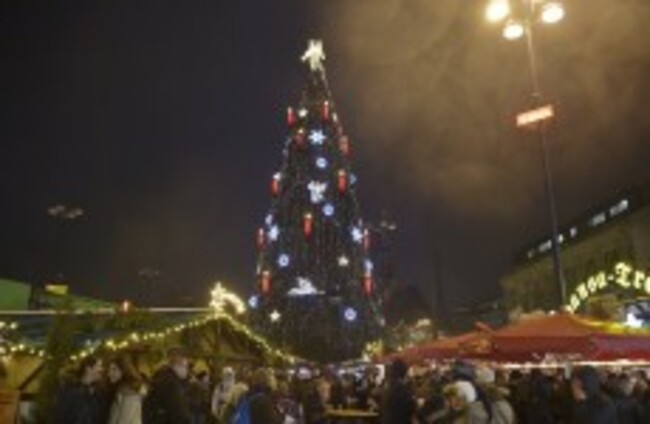
AT ITS HEART, putting a tree in your sitting room to commemorate a birth in the desert is a strange thing to do.
So, why do we put an evergreen (plastic) tree in the sitting room at Christmas time?
The tradition, like much of the celebration of Christmas, actually has its roots (sorry) in pagan rituals.
Pagans used branches of evergreen firs to decorate their homes during the winter solstice and the Romans used to decorate their temples at the festival of Saturnalia with branches.
Christian historians Edwin and Jennifer Woodruff Tait say that “by the early Middle Ages, the legend had grown that when Christ was born in the dead of winter, every tree throughout the world miraculously shook off its ice and snow and produced new shoots of green”.
The custom of associating a tree with Christmas came about during the Renaissance, with clear records of trees being used in Latvia as early as 1510.
It appears to many historians that 16th-century Nativity plays featured an evergreen tree as a representation of Eden. These plays were soon outlawed, having become rowdy open-air festivals, so people likely took the “paradise trees” into their homes.
It gained popularity in the 17th and 18th century and is used to represent the everlasting union that Christians feel with Christ.
The Taits say that gifts only came to be associated with trees in the Lutheran era when the custom of giving gifts to friends and family members developed in Germany, the Netherlands, and Scandinavia.
The first Christmas trees came to Britain sometime in the 1830s, but didn’t become popular until 1841, when Prince Albert had a Christmas Tree set up in Windsor Castle.

To embed this post, copy the code below on your site













have your say