Sign in. It’s quick, free and it’s up to you.
An account is an optional way to support the work we do. Find out more.
Sign in. It’s quick, free and it’s up to you.
An account is an optional way to support the work we do. Find out more.
LAST UPDATE | 3 Nov 2021
THE GOVERNMENT’S CLIMATE Action Plan has been finalised today before the publication of the much-awaited document tomorrow.
As well as outlining different actions being planned to help Ireland achieve its overall target to reduce emissions, the plan will also outline specific targets for individual sectors to achieve.
Some examples of the targets the Government will be setting for various industries include a 22-30% reduction in carbon emissions for the agricultural sector, a 44-56% reduction for the housing industry, and the business sector will have to cut down by between 29-41%.
The Cabinet sub-committee on Environment and Climate Change has concluded its meeting this evening and signed off on the plan, which will then be brought to Cabinet by Minister Eamon Ryan tomorrow.
The three coalition leaders are expected to officially unveil the document tomorrow.
Cop26 comments
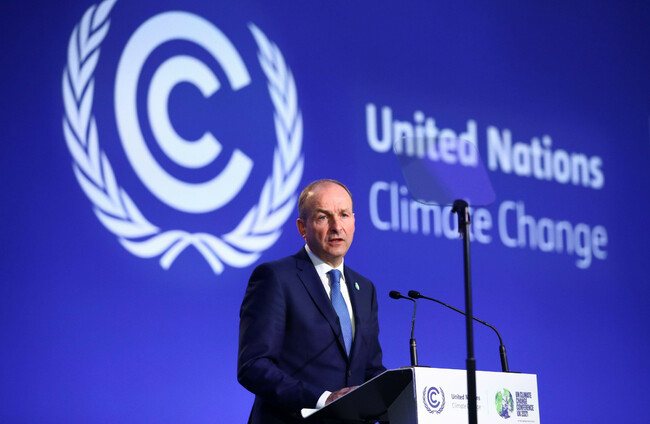
Speaking yesterday at the COP26 summit in Glasgow, Taoiseach Micheál Martin reaffirmed Ireland’s pledge to cut emissions by 51% below 2018 levels by 2030 and to reach net-zero emissions by 2050.
He said yesterday that the sector-by-sector targets will be “very challenging” and that “no sector will escape”. He denied however that there was disagreement over the final plans.
“There’s not too many issues left between different departments, just fine tuning the numbers and so forth, so I expect that Wednesday’s Cabinet subcommittee will give it a clear light,” he said.
Farming job losses
Last week, a report commissioned by the Irish Farmers Journal and carried out by KPMG found that a 30% reduction in carbon emissions in agriculture could result in the loss of 56,400 farming related jobs.
An Taoiseach yesterday described the prospect of such job losses as “scaremongering” and that a diversification of farming output was possible.
IFA President Tim Cullinan said it was “extraordinary” that the government would dismiss the report without doing a similar assessment.
“We have repeatedly asked for such an exercise to be carried out by our government, but they have refused to do so. Micheál Martin is shooting in the dark and he has no idea what the economic or social impact of these ceilings will be in rural areas,” he said.

To embed this post, copy the code below on your site













have your say