Sign in. It’s quick, free and it’s up to you.
An account is an optional way to support the work we do. Find out more.
Sign in. It’s quick, free and it’s up to you.
An account is an optional way to support the work we do. Find out more.
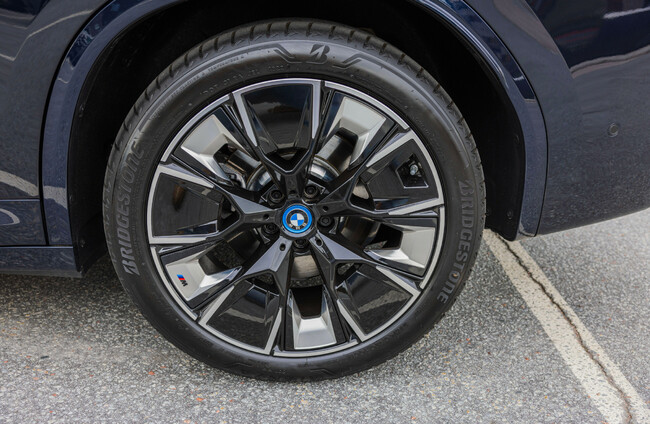
CLIMATE EXPERTS HAVE recommended higher taxes for larger vehicles, such as SUVs, to offset the cost of electrifying the national car fleet and incentivise the purchase of smaller cars.
The tax, which was floated by the government’s tax advisory group in July, could be based on a French model, which taxes motorists €10 for every 10 kilograms over the threshold of 1,800kg.
Speaking at the Oireachtas Committee on the Environment and Climate Action today, James Nix, the Climate Director of Transport and Environment, suggested that the tax be introduced by mid-year 2024.
Asked if the state should consider the tax, Nix said that the introduction would be “desirable” as the “top sellers” have become up to 30 centimetres wider in the last thirty years.
Four experts addressed the committee today, with a consensus between the group that Ireland must focus on incentivising downsizing cars. Research has found that cars have become 300 kilograms heavier since 2001.
Dr Hannah Daly, a professor for Sustainable Energy and Energy Systems Modelling in the University College Cork, told the committee that had the weight of cars remained the same, CO2 intensity would be 10% lower.
Apostolos Petropoulos of the International Energy Agency said that introducing policies to promote the purchase of lighter cars will help the state meet its climate targets, but heavier electric vehicles should not be looked at as the “silver bullet”.
Evidence shown to the committee suggested that heavier cars overall, powered by both combustion engines and battery, have impacts on emission targets, other road users and road infrastructure.
Dr Daly said that introducing policy measures to regulate the weight of vehicles could cut five and a half million tonnes of carbon emissions by 2035.
The government’s Tax Strategy Group estimated the electrification of the national car fleet would cost the exchequer €1.5 billion per year in lost motor tax, VAT, and petrol and diesel excise receipts.
The advisors noted that the weight of a vehicle “generally correlates with vehicle emissions” and suggested that the introduction of a weight-based tax would incentivise the purchase of vehicles with lower emissions.
It also explored similar schemes in other EU member states such as France, which has introduced the scheme as an additional charge, on top of motor tax, with a cap of €50,000 and an exemption for EVs.
Chair of the committee, TD Brian Leddin said the hearing was held because of the “growing trend in recent years of increasing sales of larger, heavier vehicles, such as SUVs”.

To embed this post, copy the code below on your site













have your say