Sign in. It’s quick, free and it’s up to you.
An account is an optional way to support the work we do. Find out more.
Sign in. It’s quick, free and it’s up to you.
An account is an optional way to support the work we do. Find out more.
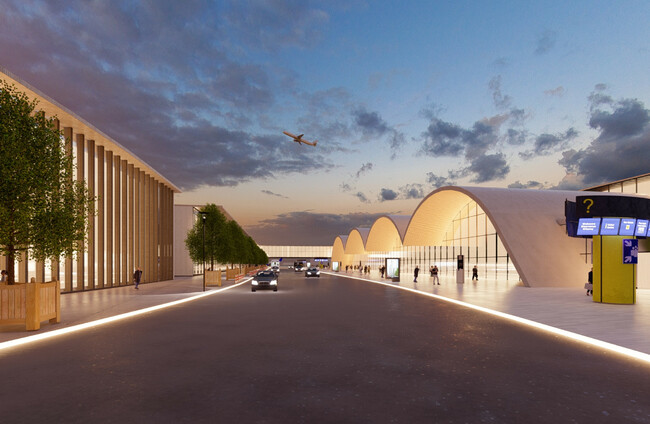
A PRIVATE COMPANY owned by the McEvaddy brothers, which aims to develop and construct a third terminal at Dublin Airport, has submitted “concept plans” to Fingal County Council.
The company, DA Terminal 3 Ltd, submitted the plans to the local authority today. They are not a part of official planning permission submissions but aim to “set out a clear vision” for the development of a third terminal.
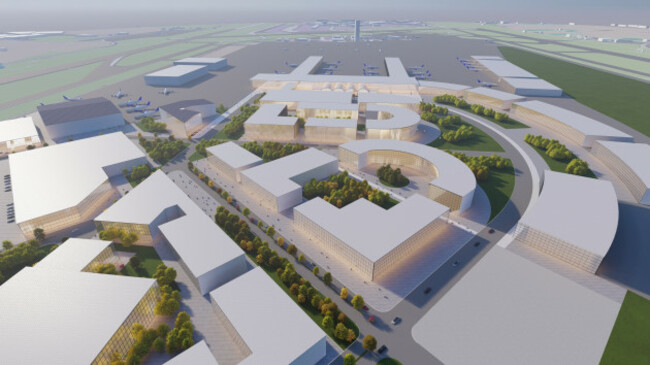
The idea would see the terminal and a western campus placed between the airport’s two existing runways.
The company, directed by Des and Ulick McEvaddy, claims that the building will be key in tackling increased footfall at the airport in the coming years.
There has been mounting pressure on the State to abolish the cap on passenger numbers at Dublin Airport, particularly from Ryanair CEO Michael O’Leary.
There currently are no plans to increase the cap on passenger numbers to 40 million at Dublin Airport until at least 2030, despite estimated figures by airline operators and the airport operator suggesting higher passenger numbers will be seen sooner.
DA Terminal 3 suggests that 2027 will see passenger figures reach over 40 million and claims its concept “addresses the issue of significantly increasing passenger throughput in both a realistic and sustainable manner”.
Along with a third passenger terminal, the concept plans include a cargo terminal, a hotel, more parking spaces and an office space within its campus. The company also claims that its location between the runways will reduce the risk and costs involved.
Dublin Airport operator DAA is not involved in the McEvaddy’s company. In a statement, a spokesperson said: “The McEvaddys have sought to sell this land over several decades and are now seeking to develop the lands with these creative ‘concepts’ of what a third terminal could look like.
“Daa’s focus is on our own infrastructure application (submitted in December 2023) which is well developed and based on the practical needs of passengers and airlines,” the spokesperson said.
“We wish the best to the McEvaddys and no doubt there will be a lot to consider for the planning authorities should a planning application be submitted at some future point.”
Last year, DAA told The Journal that there was “no need” for a third terminal ahead of a proposed sale of a major landbank between the both runways at the hub.
Justifying its plans, DA Terminal 3 Ltd said many Irish travellers “will testify that Dublin Airport falls well short of acceptable standards”.
A spokesperson for the company said: “It is crammed and there are queues everywhere. There are ongoing issues around cleanliness.
“The short-sighted plans that have been developed by DAA lack any clear vision or strategy and are a disservice to the Irish travelling public.”
They added that “the time has come for a reality check” and the company’s scheme for airport expansion will accommodate the increasing number of passengers, but improve travel experiences. “We have the solution,” they said.
The company has been told by experts that their concept plans are “fully compliant” with Fingal County Council’s airport strategies, in their local area and development plans.
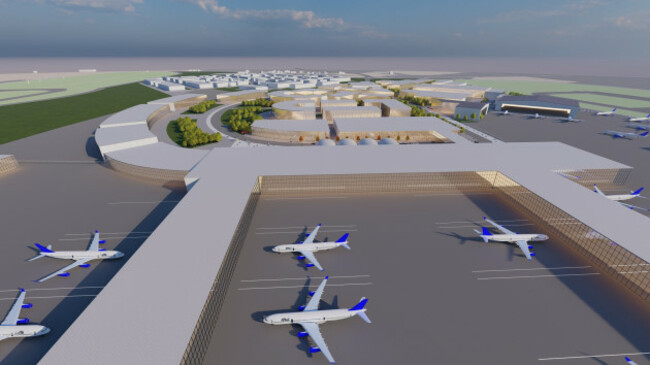
It claims the development and construction of a third terminal, which it claims will double the current capacity at the airport, will cost around €2.2 billion – the same amount that DAA plans to spend to increase capacity by just 20%.
While no official planning permission has been sought, and there are no plans by DAA to construct a third terminal itself, DA Terminal 3 Ltd plans to later submit a pre-planning presentation.
The company says it is “open to engaging with all relevant national stakeholders about the optimum planning for the Fingal/Dublin Airport zoned lands”.
“This is in the context of factors such as access, noise, car parking, sustainability, cargo and others. It is part of a solution that will contribute to Ireland’s economic prosperity into the future,” it added.

To embed this post, copy the code below on your site












have your say