Sign in. It’s quick, free and it’s up to you.
An account is an optional way to support the work we do. Find out more.
Sign in. It’s quick, free and it’s up to you.
An account is an optional way to support the work we do. Find out more.
PREGNANT WOMEN WHO have Covid-19 should only attend a hospital if they are in need of urgent medical or obstetric care, the National Maternity Hospital (NMH) has said.
The NMH has published advice for pregnant women about the coronavirus, based off guidance given to healthcare professionals by the Royal College of Obstetricians and Gynaecologists (RCOG).
The document, written by Dr Gráinne Flannelly of the NMH, has been picked up internationally and is being translated into six languages.
The guidelines note that the information available to date suggests pregnant women are not a high-risk group in relation to Covid-19.
“While pregnant women may pick up infections more easily than non pregnant women, the evidence to date is that these infections are not more likely to be severe when compared to the general population,” the RCOG has noted.
To date most Covid-19 cases in pregnant women have been mild – mirroring the experience in the general population – with symptoms such as fever, cough and mild shortness of breath.
A minority of pregnant women will have more severe symptoms such as pneumonia, respiratory failure, lower oxygen levels and the need for ventilation support.
Impact on pregnancy
The document notes that if women experience Covid-19 in early pregnancy, “there is no evidence of increased first or second trimester [miscarriage]“.
In terms of later pregnancy, case reports from China show that some pregnant women with Covid 19 are more likely to deliver before term.
“In most cases the baby was delivered early by the medical team to improve the medical condition of the mum but isolated cases of early breaking of the waters have been reported,” the guidelines states.
The advice answers a number of questions pregnant women may have:
What should you do if you think you may have been exposed to Covid-19?
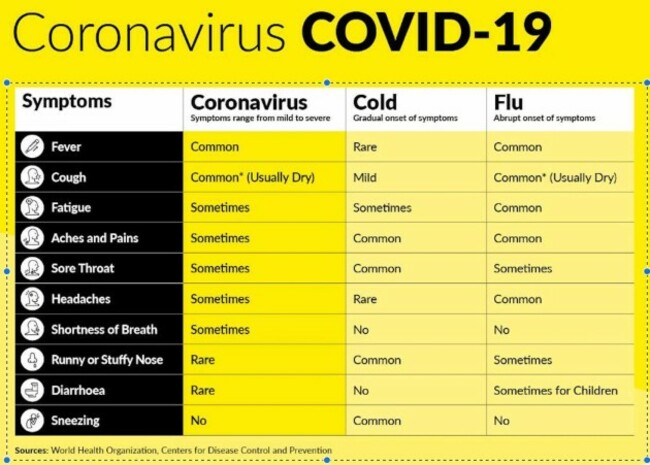
How do you know whether you might have Covid-19 as opposed to other infections such as colds and flu?
Most people present with a high temperature (more than 38 degrees Celsius) and a cough.
The below table may be useful to help pregnant women, and people in general, decide if they need help:
How does the test work?
The test involves swabbing the throat by going through a person’s mouth and nose. It then looks at the DNA of the virus using a technique called PCR.
While the test result can be delivered within 24 hours, the wait can be much longer depending on the demands on the laboratory service.
How do you self-isolate?
Step one – stay at home and practice strict hand and respiratory hygiene.
The document states: “Isolate yourself from other family members as much as possible using separate towels and eating utensils. Stagger eating times. Make sure your space is well ventilated.”
Step two – do not travel.
“Do not travel on public transport or leave your home to go to work or visit the shops. Ensure any deliveries of food or other goods are left outside.”
Advice for pregnant women who have Covid-19
Pregnant woman who have Covid-19 should only attend the hospital if they are in need of urgent medical or obstetric care.
The guidelines state that routine antenatal or ultrasound appointments “should be deferred until after the period of self-isolation (14 days)”.
“Your doctor will consider including an additional foetal assessment in the recovery phase to make sure that your baby is growing normally,” the document adds.
If you need a specialist foetal assessment scan or you normally attend the high-risk maternal medical service, these visits should take place by special arrangement.
“You need to phone ahead to ensure adequate infection control measures are put in place. This allows the staff to be ready and wearing full PPE (personal protection equipment of masks, goggles and a gown).”
Delivery of the baby
If a woman who has Covid-19 goes into labour, “this should take place in hospital and not at home”.
The document notes: “Again the staff will be wearing PPE but you do not have to wear a mask. You can have a partner with you. You will need continuous foetal and maternal monitoring and sometimes might need oxygen.
You might consider having an early epidural because breathing the “gas and air” (nitrous oxide) is not such a good idea. If you need an emergency Caesarean section please be aware that there may be a slight delay as the staff have to put on their PPE.
What should you do if you are at risk of Covid-19 and you need to come to the hospital?
It is important for pregnant women to phone the hospital in advance of coming to make sure they “are seen at the right place by the right medical team”.
Travelling by private car is important to minimise the spread of infection. If this is not possible, the woman is advised to discuss this with the triage team.
“When you arrive at the hospital phone the triage team who will guide you on what the next steps are.
“Please be patient if there is a delay. You will be assessed as soon as possible.”
Management of the newborn baby of a woman diagnosed with Covid-19
The document gives the following advice:
A small number of newborn babies in the UK have tested positive for the virus.

To embed this post, copy the code below on your site













have your say