Sign in. It’s quick, free and it’s up to you.
An account is an optional way to support the work we do. Find out more.
Sign in. It’s quick, free and it’s up to you.
An account is an optional way to support the work we do. Find out more.
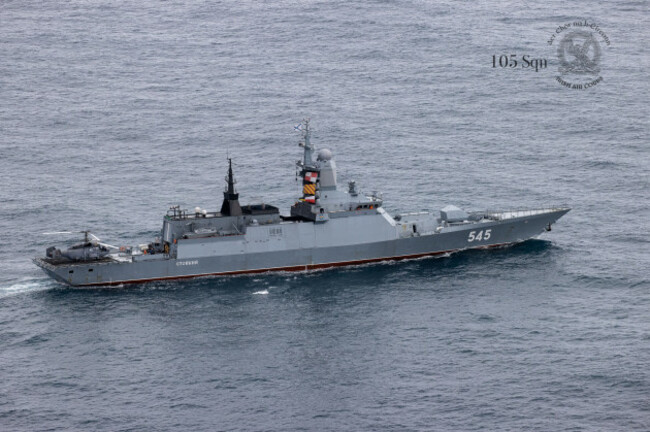
THE DEFENCE FORCES have released images of Russian, French and US warships in the international waters off the island of Ireland.
The images were released as the Defence Forces issued an update of its monitoring operation this afternoon.
The ships were observed by the Irish Air Corps Maritime Patrol Aircraft and Irish Naval Service Vessels as part of their maritime, defence and security operations.
The Irish Air Corps also monitored the presence of Royal Air Force Combat Aircraft southeast of, and outside, the Ireland’s Exclusive Economic Zone (EEZ).
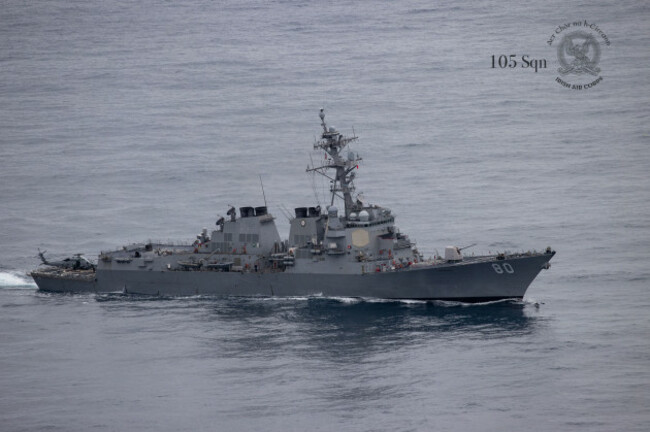
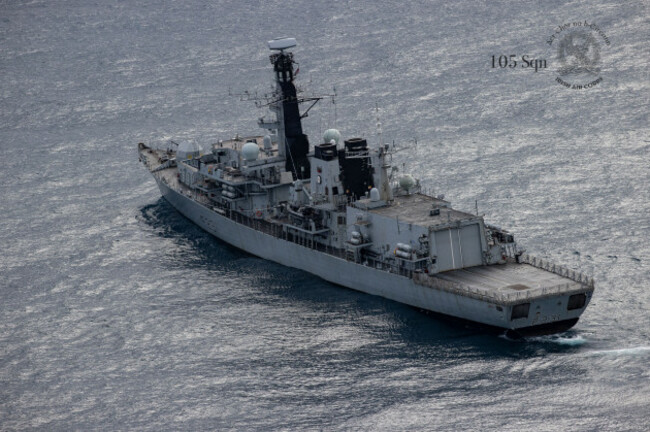
The Defence Forces said these international naval vessels are transmitting on the Automatic Identification System (AIS) and are outside Irish Territorial Waters.
They said this activity is in line with the UN Convention on the Law of the Sea (UNCLOS) rules for transit through international waters.
“Territorial Waters are 12 nautical miles from the coast of Ireland and under UNCLOS there is no restriction on warships operating on the high seas inside and outside of Exclusive Economic Zones,” the Defence Forces said.
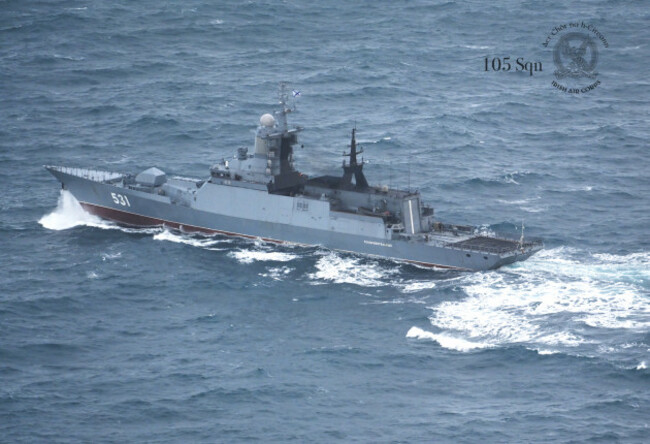
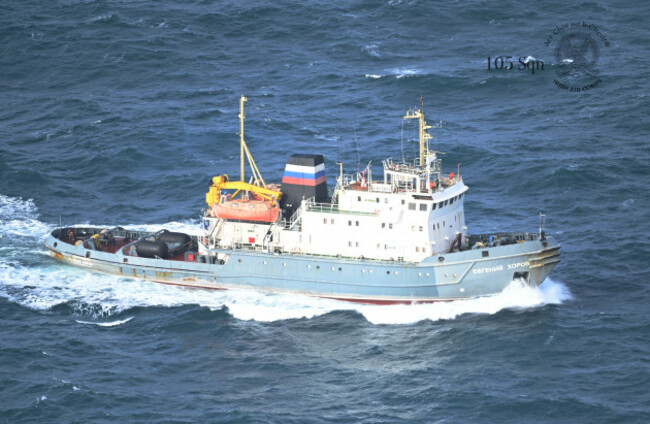
This update came after sources yesterday morning confirmed to The Journal that an Irish Air Corps aircraft was patrolling south of Cork on Tuesday.
The Russians have decided to transit through the English channel and will have to cross the Irish Exclusive Economic Zone to get to the new location for their naval drills.
It is understood the Casa maritime patrol aircraft had been out over seas where the Russian vessels are expected to cross while a PC12 surveillance aircraft was also spotted in Cork Airport.
Sources yesterday said an Irish navy ship departed in recent days from Cork Harbour and was on patrol but it was not known where the vessel was at that time or if her crew were tasked with monitoring the ships.
With reporting by Niall O’Connor

To embed this post, copy the code below on your site















have your say