Sign in. It’s quick, free and it’s up to you.
An account is an optional way to support the work we do. Find out more.
Sign in. It’s quick, free and it’s up to you.
An account is an optional way to support the work we do. Find out more.
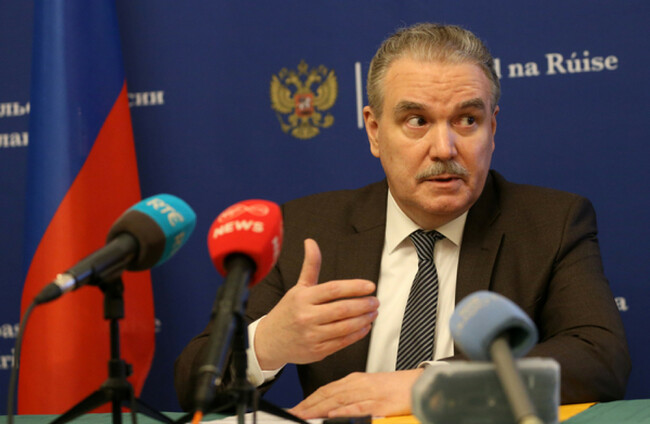
RUSSIA’S AMBASSADOR TO Ireland has criticised the new report into the Defence Forces, saying it portrays Russia as a “bogeyman”.
The Commission on the Defence Forces published a long-awaited report yesterday into the structure of the forces, examining gaps in resources and potential threats.
The report issued a list of recommendations for expanding the Defence Forces’ capabilities, including changes to its hierarchy, pay, and government funding.
It identified potential future threats to Ireland and the Defence Forces and gaps in the forces’ ability to respond to an emergency.
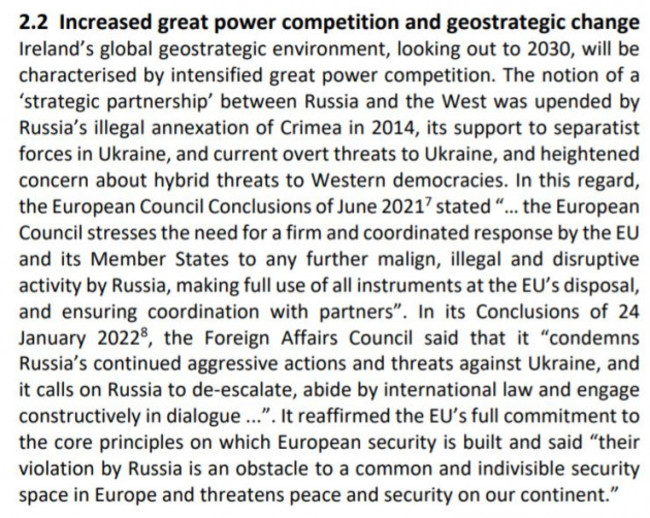
The report points to Russia in a section on “the threat and risk environment looking out to 2030 (and beyond)”.
It says that Russia’s annexation of Crimea in 2014, support to separatist forces in Ukraine, and “current overt threats to Ukraine” disrupted the idea of a strategic partnership between Russia and other countries.
Responding to the report, Russian ambassador Yuriy Filatov said the Commission tried to create a “notion of a threat” to Ireland from Russia.
In a statement issued this evening, Filatov said: “We believe that the report of the Commission on the Defence Forces of Ireland, published on February 9, 2022, calls for a brief commentary.”
“While the subject of the report is clearly an internal matter for Ireland, one cannot but note an attempt by the Commission to substantiate its conclusions with a notion of a threat, allegedly posed by Russia to the security of Ireland,” the ambassador said.
Any unbiased observer would be hard put to find any evidence of such a ‘threat’. Attempts to portray Russia as a bogeyman are misplaced and regrettable.
The ambassador’s initial statement described “attempts to portray Russia as a boogie”. A spokesperson subsequently clarified that the intended word was “bogeyman”.
“We also reject as totally unfounded the conclusions by the EU Council and the Council on Foreign Affairs of the EU quoted in the report, referring to ‘aggressive actions’ by Russia,” the ambassador said.
“These insinuations are not only baseless, they are also especially unhelpful at the time of great tension in Europe, created by the US and its NATO allies,” he said.
“We believe that now is the moment for mature and responsible decisions, which would be based not on political fiction, but on reality, as all as an imperative need for the all-European system of security.”
Yesterday’s report called for a significant increase in government funding to the Defence Forces.
Its key recommendations would create a larger navy and introduce more aircraft, as well as more cyber security specialists.
Minister for Defence Simon Coveney, who brought the report to Cabinet, said the proposed changes are “significant” and that it posed “serious questions”.
The minister said he will need to make a “persuasive political argument” to try to carve out government funding to implement the recommendations.

To embed this post, copy the code below on your site













have your say