Sign in. It’s quick, free and it’s up to you.
An account is an optional way to support the work we do. Find out more.
Sign in. It’s quick, free and it’s up to you.
An account is an optional way to support the work we do. Find out more.
LAST UPDATE | 11 Mar 2021
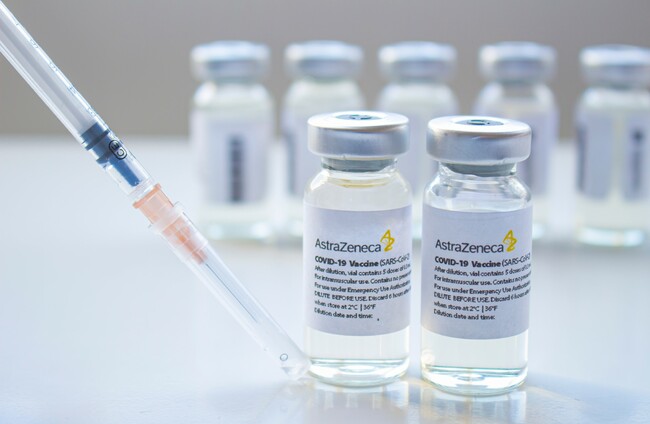
EUROPE’S MEDICINES REGULATOR has said there appeared to be no higher risk of blood clots in those vaccinated against Covid-19, after Denmark, Norway and Iceland suspended use of the AstraZeneca jab.
“The information available so far indicates that the number of thromboembolic events in vaccinated people is no higher than that seen in the general population,” the European Medicines Agency told AFP by email when asked about the suspension.
The Amsterdam-based regulator said it understood the Danish decision “has been taken as precaution”.
The EMA said the decision followed the regulator’s own announcement yesterday that it was “reviewing thromboembolic events reported in temporal association with the vaccine” after reports of cases in Austria.
The watchdog said it “will continue its assessment and EMA will communicate updates as soon as possible,” the agency said.
In its announcement on Austria, the EMA had said there had been 22 ‘thromboembolic events’ among three million people who received the vaccine across the European Economic Area, which includes Norway and Iceland.
The Danish suspension, which will be reviewed after two weeks, is expected to slow down the country’s vaccination campaign.
Austria said on Monday that it had suspended the use of a batch of AstraZeneca vaccines after a 49-year-old nurse died of “severe blood coagulation problems” days after receiving an anti-Covid shot.
Four other European countries – Estonia, Latvia, Lithuania and Luxemburg – have also suspended the use of vaccines from this batch, which was sent to 17 European countries – including Ireland- and consisted of one million jabs.
Denmark however suspended the use of all of its AstraZeneca supply, as did Iceland and Norway in subsequent announcements today citing similar concerns.
The EMA says AstraZeneca use can continue pending the blood clot probe.
Speaking about the issue today, HSE Chief Clinical Officer Dr Colm Henry confirmed the batch that has been suspended by Austria was used in Ireland on the week of 22 February. He said the Health Products Regulatory Authority (HPRA) has reported two cases of thromboembolic disease.
“It happened around the time of vaccination, that doesn’t imply there’s a cause and effect,” he said.
He pointed out that millions of doses of the vaccine have been administered so far.
“At this stage, according to the EMA – and we are awaiting the outcome of the deliberations today – there’s no signalling of thromboembolic disease among the AstraZeneca vaccine to date,” he said.
“But they will look at the data, they will look at all the cases of thromboembolic disease that have been reported and see if there’s any association with a particular vaccine or particular batch.”
Dr Henry said with any medication or vaccine there is a balance to be struck between the risk and benefit.
“There’s undoubted benefits to the vaccine, including the AstraZeneca vaccine, among groups in Ireland and it has been demonstrated in Scotland, England and so on, we’re seeing huge drops in hospitalisation, serious illness and death as a result and linked to the vaccination programme,” he said.

To embed this post, copy the code below on your site












have your say