Sign in. It’s quick, free and it’s up to you.
An account is an optional way to support the work we do. Find out more.
Sign in. It’s quick, free and it’s up to you.
An account is an optional way to support the work we do. Find out more.
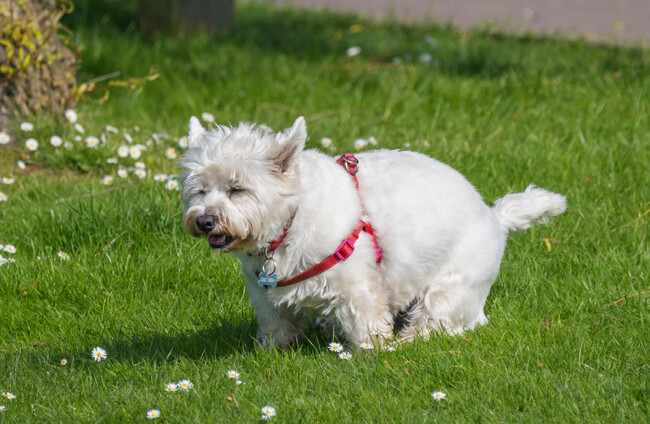
ONLY ONE FINE for dog fouling has been paid in Dublin city in the past four years – and it was cancelled on appeal.
Figures released by Dublin City Council show just eight fines were issued between 2019 and 2023.
The figures indicate the council made a handful of unsuccessful attempts to prosecute people for dog fouling over that period.
In two cases witnesses were not prepared to give evidence in court. In one case a summons was not received, and another case was struck out by the court.
Two cases are pending in the courts.
Dog dirt on footpaths is a widespread problem in the capital, particularly in suburban areas. It has been highlighted by the National Council for the Blind of Ireland as a “huge problem” nationally for people who are blind or vision impaired, and also poses a particular difficulty for people with prams, who find it harder to avoid.
Dog dirt is regularly identified as a problem in litter surveys of the capital conducted by An Taisce.
Fine Gael Councillor Colm O’Rourke, who raised the issue with council management, said: “Residents are continually raising the issue with me, all the time.”
It’s a huge problem.
“Some people are picking it up, and then leaving the bag on the ground or throwing it up into a tree. I think it’s disgusting. Hearsay is that people are doing that in protest at there not being dog dirt-specific bins, but that’s been the case for years.”
The council has previously run publicity campaigns with the slogan “any bin will do”, however it told O’Rourke this led some to believe they could dispose of dog dirt in recycling or food waste bins.
The council’s latest campaign uses the slogan “bag it and bin it”. It has put signs on public litter bins to inform dog owners that they can dispose of dog dirt there.
O’Rourke, who represents the northside suburbs of Cabra, Phibsboro and Glasnevin, said he has seen the council power washing dog dirt from paths, only for fresh fouling to take place “minutes later”.
He acknowledged that it was “extremely hard” for the council to prosecute dog fouling.
“They have to see the person not picking up, which is difficult to do, and they can’t approach someone who they think is under age, so there are difficulties around it,” O’Rourke said.
However he added that a new approach focused on awareness-raising of the council’s enforcement activities could result in improved compliance, for instance if dog wardens were to place temporary signs in neighbourhoods informing people that they are patrolling that day.
The council said in its response to O’Rourke that it will develop an awareness raising campaign in relation to dog fouling.

To embed this post, copy the code below on your site















have your say