Sign in. It’s quick, free and it’s up to you.
An account is an optional way to support the work we do. Find out more.
Sign in. It’s quick, free and it’s up to you.
An account is an optional way to support the work we do. Find out more.
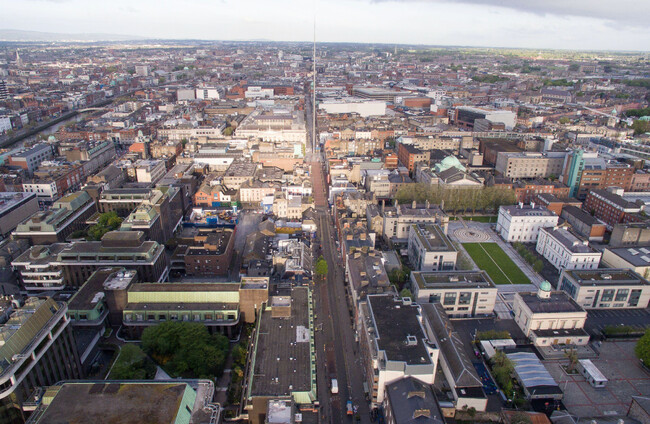
A NEW DRONE strategy aims to make Dublin City Council a European leader in the delivery of drone-based public-sector services.
A five-year plan published today moots a dedicated Drone Unit within the council’s Survey and Mapping division that would oversee day-to-day operations and would include trained drone pilots.
The council says it could help emergency services, environmental protection and surveying of hard-to-reach areas.
Speaking at the launch today, Julie Garland, CEO of Avtrain, a consultancy group that created the strategy, said drones are currently used by the council as a “tool in their toolbox”, on an ad-hoc basis – but this is going to expand.
If it’s dull, if it’s dirty, or if it’s dangerous, then a drone should be doing it.
A more “centralised” approach is needed, she says.
“At the moment, they will gather data from multiple different sources, but that date would sit in the individual departments rather than being in a centralised resource.”
It would also mean that the council would have its own equipment at the ready for routine missions.
The plan says an “extraordinary acceleration” of technology and regulatory approvals would be required to have many drones flying in our airspace, which is shared with planes.
Such expansion would require “a new level” of collaboration between the State, local government, academia, the drone industry, and the Irish Aviation Authority.
“Agreeing the new rules and governance for how we best utilise this low-altitude air space will be essential.”
Regulations by European Union Aviation Safety Agency are evolving.
Jim Gavin, Chief Operations Officer in the Irish Aviation Authority, is supportive of the strategy, saying that “proactive steps” in the sector will only enhance public safety and improve efficiency.
“We believe that this initiative will pave the way for advancements in urban air mobility, benefiting both the public and the broader aviation industry.”
It’s a futuristic sector, but it’s not entirely new.
Irish startup Manna Drone Delivery has been prototyping drone delivery services in Dublin suburbs and is now scaling the services globally.
Dublin Fire Brigade has also begun using drones to spot fires and track their spread, which has been “invaluable”, says Garland, as it also helps protect personnel.
Drones may be used by the council for repetitive tasks such as traffic surveillance, or the surveillance of ecosystems after chemical spills.
Eileen Quinlivan, Assistant Chief Executive of the council, says the cost of the five-year plan has yet to be measured or determined, but she assured that “significant savings” are to be made.
Last year, the council used drones to survey the roof of the historic Iveagh Markets, which has fallen into disrepair.
This method avoided the implementation of a traffic management system, safety measures, and saved days of planning and disruption. It also cost about €900 less than the traditional method used for surveying old buildings, not including the cost of the drone.
The council now owns more than a dozen drones, but it will hire from external companies for specialised missions that exceed their capabilities.

To embed this post, copy the code below on your site












have your say