Sign in. It’s quick, free and it’s up to you.
An account is an optional way to support the work we do. Find out more.
Sign in. It’s quick, free and it’s up to you.
An account is an optional way to support the work we do. Find out more.
LAST UPDATE | 14 Dec 2023
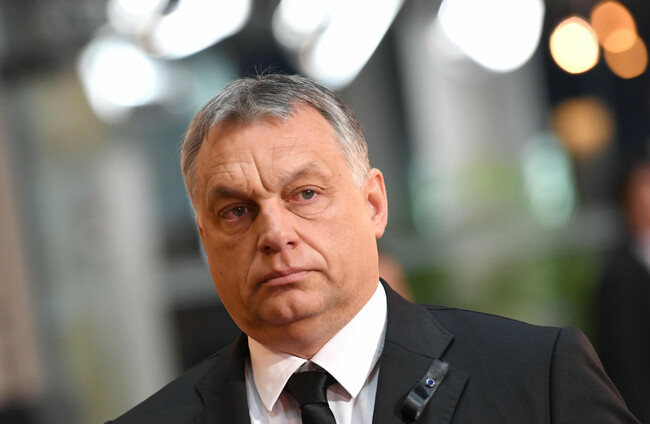
TAOISEACH LEO VARADKAR and fellow EU leaders arrived in Brussels today for a summit where many member state heads are expected to face off against Hungarian Prime Minister Viktor Orban as he threatens to veto a massive aid package and a start to membership talks for Ukraine.
Speaking to reporters as he arrived at the summit this morning, Taoiseach Leo Varadkar said this week’s Council meeting was “probably one of the most important” ones he has attended because of the decisions that need to be made in relation to Ukraine.
The crunch summit in Brussels – which diplomats fear could drag on longer than the two days planned – comes as fears mount over Western backing for Ukraine nearly two years into Russia’s war.
Varadkar said the Council must say yes to at least one, but ideally both, of the decisions facing it – the €50 billion aid package and the opening of EU membership talks for Ukraine.
Kyiv is desperately seeking to improve the narrative after President Volodymyr Zelenskyy failed in Washington to win over Republican lawmakers blocking support from the United States.
But Orban – Russia’s closest ally in the European Union – stands in the way of Ukraine’s hopes for the large sum of financial aid and progress towards its goal of one day joining the EU.
Critics have accused the Hungarian leader of holding Kyiv’s survival hostage in a bid to force Brussels to release billions of euros of EU funds frozen over a rule of law dispute.
In what some saw as a last-minute concession the European Commission, the EU’s executive, agreed yesterday to unblock €10 billion of that cash.
But €21 billion still remain out of Orban’s grasp and it was far from clear that the gesture would avert a damaging dispute at the summit.
Varadkar today refuted claims that the EU had released these funds as an “incentive” for Orban.
“The rules are the rules. Hungary is entitled to certain monies and they’re linked to certain rules and if they fulfill the criteria the money flows.
“The timing is not good, because of course, the perception is that this is some sort of incentive to Hungary to support certain positions…but that’s actually not the case,” the Taoiseach said.
Orban has warned opening accession talks with Ukraine would be a “terrible mistake” and has said that he will not budge.
Zelenskyy countered that Orban had “no reason” to block Kyiv from moving towards EU membership and said his country could not beat Russia without more Western support.
The stand-off sets the stage for hours of arm twisting in Brussels as fellow leaders will try to hash out a deal to get Orban to back down.
“If Ukraine doesn’t have support from the EU and the US, well then Putin will win and [we will see] all of the consequences that flow for the world after that. So that’s why this meeting is so important,” Varadkar said.
The Taoiseach insisted Hungary would not be successful in its bid to veto either of today’s decisions.
“That’s not going to happen. This is going to be a difficult meeting, it’s going to take awhile,” he said.
Varadkar added that he knows from speaking to President Zelenskyy that EU membership talks for Ukraine “matters on the front line”.
“Soldiers who have been fighting on the front line for Europe, for Ukraine, this will really counts in terms of their morale,” he said.
Elsewhere however, Estonia’s Prime Minister Kaja Kallas said yesterday: “I’m not that optimistic, having talked to Viktor Orban about these issues.”
The Baltic leader said the focus was on getting the “plan A” across the line rather than the EU’s other 26 countries having to find the money for Kyiv.
“If that is absolutely a no-go, if we have sat here for already very many days and Christmas is coming, maybe even New Year already, then we’ll think about a plan B,” she said.
European Council chief Charles Michel, whose job it is to corral the leaders towards an agreement, insisted work was going on “day and night” to try to thrash out a deal.
“The most important thing for us as Europe is to support effectively Ukraine,” said newly elected Polish Prime Minister Donald Tusk.
“We are talking not just about Ukraine and the war and the Russian aggression, we are talking about our future,” said Tusk, himself a former EU Council chief and summit host.
Tusk’s Dutch counterpart Mark Rutte agreed that it was “vital that we agree on the 50 billion for Ukraine”.
The summit also has to consider the membership ambitions of Moldova and Georgia, two other ex-Soviet states.
Even if Ukraine and Moldova are granted talks, the protracted process of joining the EU will involve years – if not decades – of major reforms.
- Reporting from © AFP 2023

To embed this post, copy the code below on your site












have your say