Sign in. It’s quick, free and it’s up to you.
An account is an optional way to support the work we do. Find out more.
Sign in. It’s quick, free and it’s up to you.
An account is an optional way to support the work we do. Find out more.

Updated 18.14
THE EU HAS assembled its first list of international tax havens as it launches its “action plan” to crack down on companies trying to avoid paying their dues in the European bloc.
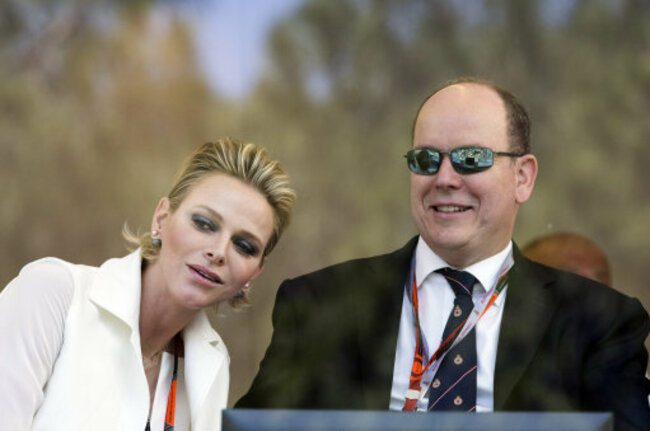
Its tally of 30 “blacklisted” non-EU territories includes Hong Kong and Brunei in Asia, the European principalities of Monaco and Liechtenstein, and a string of islands including Bermuda, the Caymans and the Bahamas.
The EU also wants to stamp out the practice of countries cutting sweetheart tax deals for multinationals like those Ireland has been accused of striking with Apple and Luxembourg‘s set up with Amazon.
The idea is to tax companies where they earn their profits, rather than allowing firms to shift money into low-tax jurisdictions.
The EU’s top tax official, Pierre Moscovici, today said corporate tax needed a “radical reform” and all member states needed to “pull together” to ensure companies paid their way.
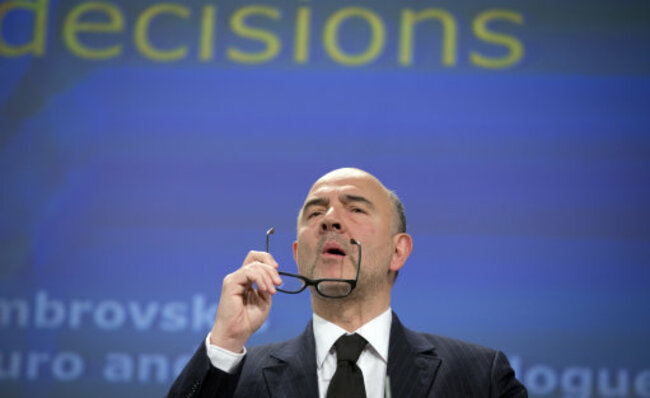
Our citizens can no longer tolerate that certain companies, often the most prosperous, avoid fair tax contributions and that certain tax regimes encourage them on this path,” he said.
Moscovici said publishing the blacklist of “non-cooperative jurisdictions” was a decisive step in pushing the territories to adopt international standards.
The full list is: Andorra, Liechtenstein, Guernsey, Monaco, Mauritius, Liberia, Seychelles, Brunei, Hong Kong, Maldives, Cook Islands, Nauru, Niue, Marshall Islands, Vanuatu, Anguilla, Antigua and Barbuda, Bahamas, Barbados, Belize, Bermuda, British Virgin Islands, Cayman Islands, Grenada, Montserrat, Panama, St Vincent and the Grenadines, St Kitts and Nevis, Turks and Caicos, US Virgin Islands.
A common tax plan
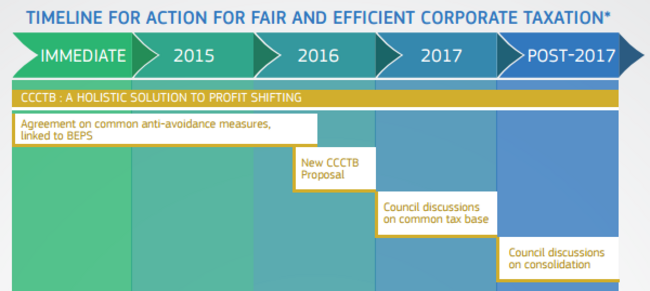
Meanwhile, the European Commission will also re-launch its so-called Common Consolidated Corporate Tax Base (CCCTB) under the plan.
The measures, as they stand, wouldn’t lead to a flat, EU-wide tax rate for businesses, but instead would work on the principle that company profits for the whole region should be divvied up based on where they were earned.
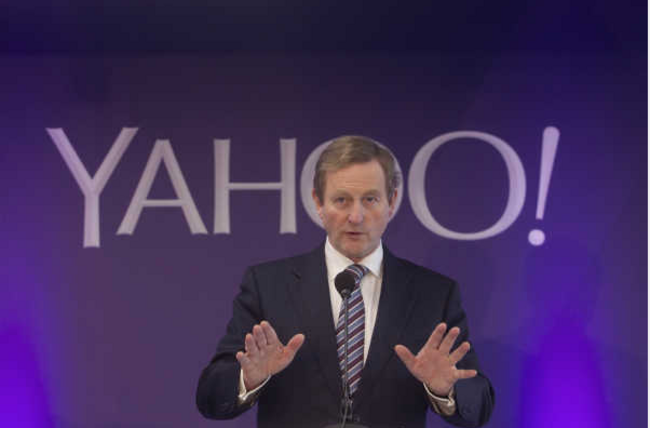
However Ireland still stands to lose out under the proposals as they could dull the attractiveness of the Republic’s 12.5% corporate tax rate, currently the equal-lowest in the EU, for businesses doing the majority of their trade outside the country.
Ireland was among several countries to reject a CCCTB when the idea was brought forward in 2011.
Leaders of the eurozone’s three biggest economies, Germany, France and Italy, who have been pushing for the changes, were previously accused of “kicking around” small countries like Ireland to their own advantage on corporate taxes.
No back-door attempts
Fine Gael MEP Brian Hayes said a common tax base wouldn’t have the desired effect of curbing tax evasion or stopping the “large divergences” between the headline tax rates of many EU states and the amounts they actually charged.
“Ireland’s transparent tax regime ensures that our effective corporate tax rate remains close to the headline rate,” he said.
This cannot be an attempt to harmonise corporate tax rates through the back door. It needs to be often repeated – corporate tax rates are an issue for member states and for member states alone. The EU has no competence in this regard.”
- With AFP, AP
First published 4.54pm

To embed this post, copy the code below on your site













have your say