Sign in. It’s quick, free and it’s up to you.
An account is an optional way to support the work we do. Find out more.
Sign in. It’s quick, free and it’s up to you.
An account is an optional way to support the work we do. Find out more.
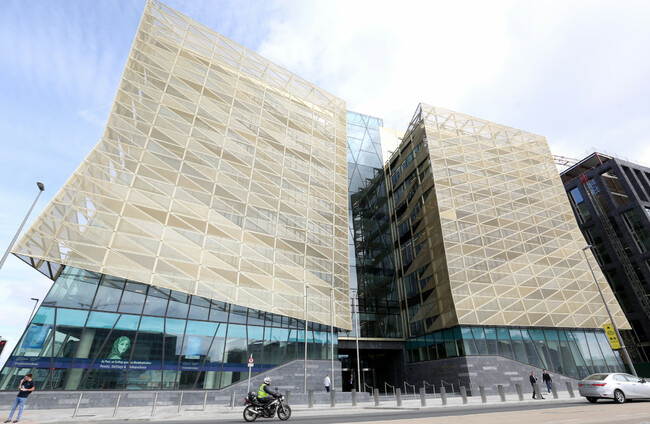
THE CENTRAL BANK has said that GDP will likely decline overall this year, but that the Irish economy is forecast to grow.
The regulator’s latest quarterly report for 2023 says that modified domestic demand, which captures consumer spending, government spending and modified investment, is predicted to increase by 1.5% in 2023, 2.5% in 2024 and 1.9% in 2025.
It also says that inflation has fallen significantly this year and that it is expected to return to 2.1% in 2025.
The bank says the drop in inflation was aided by the easing of externally driven price pressures, such as energy prices, and recent data shows a marked easing in price rises for other non-energy industrial goods too. This is expected to continue.
Robert Kelly, Director of Economics and Statistics said: “The Irish economy has slowed into a phase of growth in-line with its current medium-term potential.
“As momentum in the domestic economic activity decreases, and the effects of tighter monetary policy continue to emerge, the process of disinflation is expected to proceed at a more gradual pace over the next two years.
“The multi-faceted nature of the economy frequently makes it difficult to decipher how economic conditions in Ireland are changing. This has rarely been more so the case than in 2023.”
The bank described the Irish labour market as “remarkably resilient”, as more jobs are being created and vacancy rates are low.
“Wage growth is picking up in response to the tight labour market conditions, and in part to reverse real wage declines experienced since 2021,” the report said.
“Examining the different experience of inflation and disposable income growth across households, the evidence suggests that while overall real household income has returned to pre-Covid levels, that of lower income households has not.”
Unemployment is set to rise slightly to 4.8% in 2024, but remain below 5% out to 2026.
Weaker cross-border exports were recorded this year.
Physical exports produced in Ireland declined, mainly due to lower activity in the pharmaceutical and ICT manufacturing sectors. GDP was also reduced by the sharp decline in offshore exports.
The growth outlook is “uncertain”, the Bank said, as they are contingent on pharma and ICT manufacturing sectors bouncing back next year.
Additionally, the inflation outlook assumes energy prices continue on a downward path and excessive domestic inflationary pressures are avoided.
On government policy, the bank said it “should not unnecessarily aggravate any remaining imbalances between domestic demand and supply conditions, and thereby disrupt the gradual disinflation foreseen for the coming years”.
“The opportunity arises for achieving this aim while at the same time delivering the necessary scale of investment to address critical needs in housing and related infrastructure, alongside that required to decarbonise the economy and mitigate the implications of climate change.”
The Bank noted that GDP “does not provide a good indicator of economic conditions”, and that modified domestic demand and employment rates are more accurate measurements.

To embed this post, copy the code below on your site















have your say