Sign in. It’s quick, free and it’s up to you.
An account is an optional way to support the work we do. Find out more.
Sign in. It’s quick, free and it’s up to you.
An account is an optional way to support the work we do. Find out more.
THE MAIN PARTIES have again clashed over how the next government might be formed, with Fianna Fáil and Fine Gael repeating that they absolutely will not go into government with Sinn Fein.
Speaking on RTÉ Radio One’s Saturday with Cormac Ó hEadhra, Sinn Féin’s Louise O’Reilly, Fianna Fáil’s Darragh O’Brien and Fine Gael’s Helen McEntee continued the verbal sparring between the parties that won the most seats in last week’s general election.
All three broadly stuck to what their party has been saying in recent days regarding how the new government will be formed.
Sinn Fein topped the first preference poll following the general election. Its total of 37 seats is one fewer than that of Fianna Fáil. Taoiseach Leo Varadkar’s Fine Gael won 35 seats.
Here’s what a summary of the main parties are saying, as articulated by the three party TDs again this afternoon:
Tense exchanges
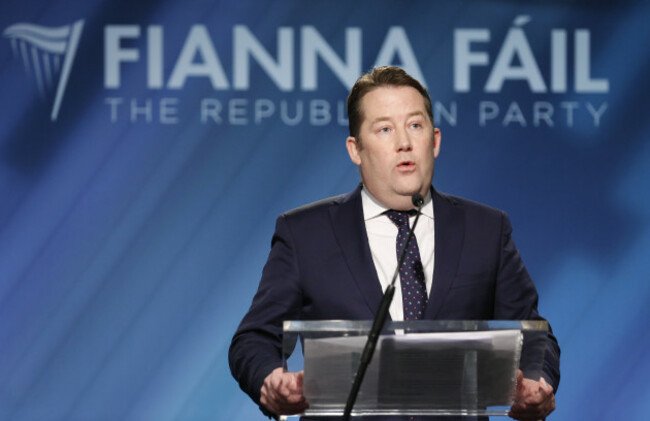
Fianna Fáil’s housing spokesperson Darragh O’Brien told the show it will be “complicated” to form a government with “eight different groupings in the Dáil.
“We’ve been very clear in relation to not doing a deal with Sinn Féin,” he said. “We’ve a very clear decision there on the mandate given to our negotiating team.
Anything is possible. Including another general election.
O’Brien said that his party wanted to implement a “radical policy agenda”, and that the party was united in its approach to government formation.
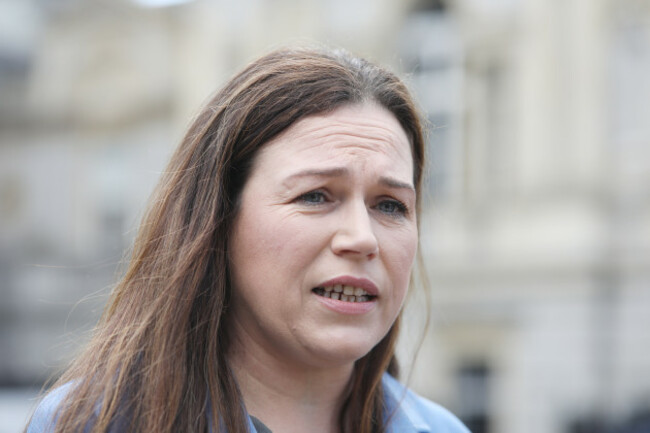
He wouldn’t be drawn on working with Fine Gael, specifically, but Sinn Féin’s health spokesperson Louise O’Reilly said the “worst possible scenario” would be a government with both Fianna Fáil and Fine Gael isn’t it.
This was echoed by Solidarity-People Before Profit TD Mick Barry, who also spoke to the programme.
Barry said that Fianna Fáil and Fine Gael were “eyeing a power grab” and that it would “turn the stomach of huge numbers of ordinary people” to see them both in power.
O’Reilly said she had canvassed again this week and people on the doors were saying that they want Sinn Féin in government.
“We want to be part of that decision-making process,” she said. “We want our mandate to be respected. We want to be involved and included… More of the same won’t work for people.”
She added the onus was on the parties to act like “grown ups” and get talking to try to form a stable government on the mandate of change she says Sinn Féin received.
Fine Gael’s junior minister Helen McEntee said that if the situation wasn’t so serious, “it’d be laughable”. No decision has been made by her party on how to proceed as of yet, with the parliamentary party due to meet on Monday.
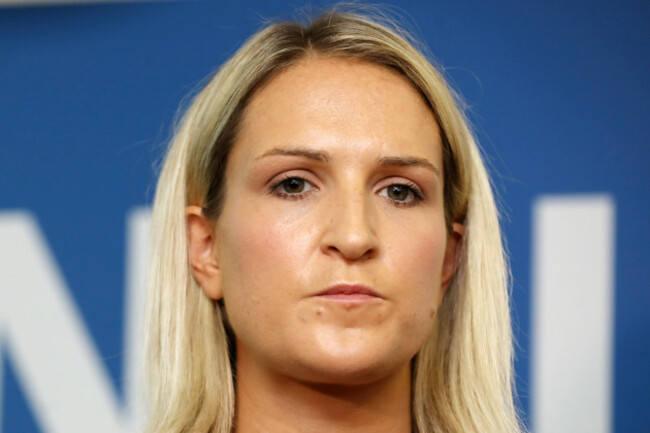
She said that after the 2016 general election, her party spent 72 days talking to all parties to form a government.
She said that Sinn Féin had “thrown the towel in” after just four days speaking to smaller parties. O’Reilly denied this and accused McEntee of repeating “more of this nonsense from Fine Gael”.
McEntee also said that people had voted for her and her party on the mandate that they wouldn’t go into government with Sinn Féin and that had to be respected. She also said that there were difficulties with Sinn Féin “ethically, morally, socially and economically”.
Fianna Fáil’s O’Brien also denied claims from Sinn Féin leader Mary Lou McDonald that his party and Fine Gael represented an “old boys club”.
“There’s no agenda against them,” he said. “No party has won this election. No grouping has won this election.”
When the Dáil meets next week, Solidarity’s Mick Barry said he may vote for Mary Lou McDonald as Taoiseach if he got assurances her party would not go into government with either Fianna Fáil or Fine Gael.

To embed this post, copy the code below on your site













have your say