Sign in. It’s quick, free and it’s up to you.
An account is an optional way to support the work we do. Find out more.
Sign in. It’s quick, free and it’s up to you.
An account is an optional way to support the work we do. Find out more.
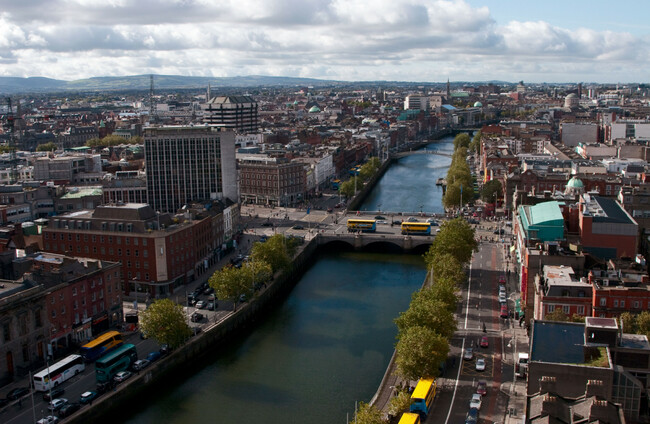
HOUSING DEVELOPMENTS IN city centres could radically increase in density as the Government prepare to bring new planning guidelines to consultation.
New policy proposals went to Cabinet yesterday, with Minister Darragh O’Brien due to publish a paper on reforming the existing Sustainable Residential Development Guidelines.
Alongside changes to housing density, there are proposals to reduce the number of car parking spaces in urban areas with high access to public transport facilities.
As part of the plan, O’Brien is seeking to make the guidelines more flexible around densities in urban areas, particularly cities and larger towns.
Currently, there is a three-tiered approach to density. This includes 35 dwellings per hectare (DPH) in villages and small towns, 35 to 50 DPH in suburban areas and over 50 DPH in urban areas.
A hectare is 10,000 metres squared.
Under the Government’s proposed policy, dwelling densities would increase massively in cities, particularly in city centres where it would rise to between 100 and 300 DPH.
Outside the direct city centre, densities would rise to between 40 DPH and 200 DPH, while in suburban areas it would sit at 40 to 80 DPH.
Both large towns and metropolitan areas will also see a rise in residential density guidelines, while rural housing will be based on the local context.
Alongside changes to housing densities, the memo detailed plans to curtail the number of car parking spaces in urban areas based on access to public transport networks.
The plan to reduce parking spaces is part of an attempt to meet targets set out in both the Climate Action Plan and the National Sustainable Mobility Policy.
The memo says that car parking spaces in cities and large towns should be “graduated” based on both location and access to public transport.
In particular, in areas where there is high access to public transport, residential car parking provision should be minimised or entirely eliminated.
Outside cities and large towns, availability of spaces should be based on access to public transport.
In areas with low public transport accessibility, the Government proposes that there be a maximum of two car parking spaces per house or apartment.

To embed this post, copy the code below on your site












have your say