Sign in. It’s quick, free and it’s up to you.
An account is an optional way to support the work we do. Find out more.
Sign in. It’s quick, free and it’s up to you.
An account is an optional way to support the work we do. Find out more.
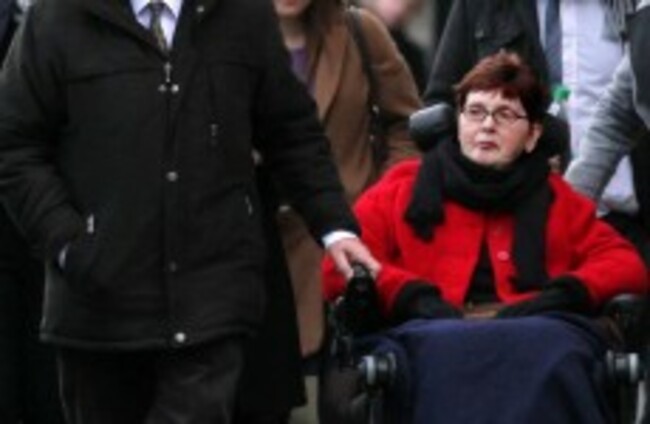
THE HIGH COURT will today deliver a landmark ruling on assisted suicide following a legal challenge on Ireland’s absolute ban by Wicklow woman Marie Fleming.
Former University College Dublin lecturer Fleming, 58, is in the final stages of Multiple Sclerorsis – after being diagnosed in 1986 – and is unable to end her life without assistance. She argues that the current law is invalid under the Constitution and incompatible with the European Convention on Human Rights.
Fleming told the High Court that she was being forced to live in pain and indignity against her will. She claimed the law discriminates against people in her position, who are unable to end their lives, while able-bodied people are free to do so, RTÉ reports.
However, lawyers for the State say that, while suicide was decriminalised in 1993, it is not a Constitutional right to die by suicide. They argued that the law should remain in place on order to protect vulnerable members of society from involuntary death.
Over a six-day hearing last December, Fleming told the court that her partner Tom Curran had promised to help her die – but only if it was legal. Fleming said she had also spoken to her children about her wish to end her life, and that despite their sadness they supported her decision because they could see how her life had “deteriorated”, the BBC reports.
“Tom has promised to help me, only if it’s lawful. Otherwise, I will die a horrible death which could take months or even a year,” she said.
A jail sentence of up to 14 years can be imposed on any person assisting the suicide of another.

To embed this post, copy the code below on your site













have your say