Sign in. It’s quick, free and it’s up to you.
An account is an optional way to support the work we do. Find out more.
Sign in. It’s quick, free and it’s up to you.
An account is an optional way to support the work we do. Find out more.
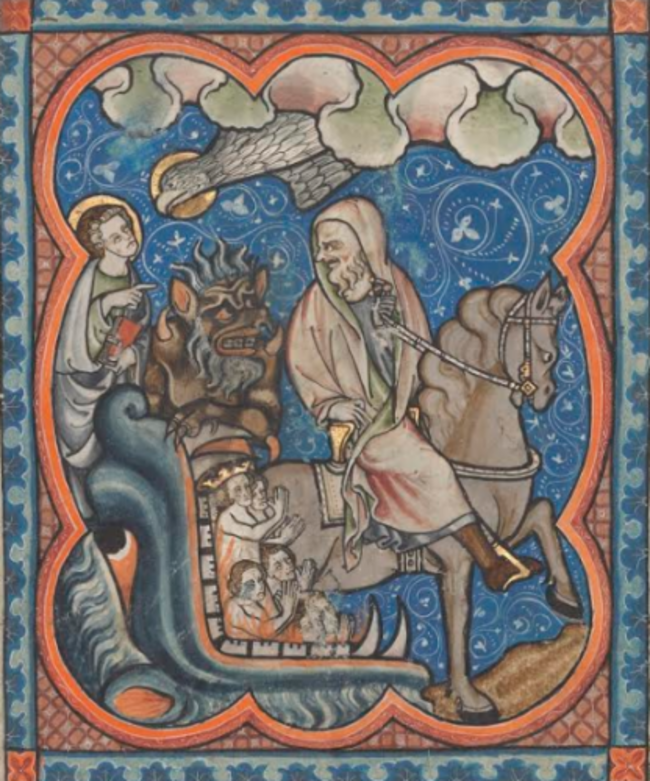
THE END OF days is a “perennially popular” subject, says Dr. Laura Cleaver of Trinity College Dublin, who led the recent digitisation of one of the college’s unique manuscripts.
Otherwise known as ‘The Dublin Apocalypse’, this 14th century Latin text has been held by the university since the 19th century and is now free to the public to view online for the first time.
Depicting scenes from the Book of Revelation – the final book in the new testament – and accompanied by illustrations in vivid colours depicting scenes of the horsemen of the Apocalypse, battles with beasts and a heavenly Jerusalem, Cleaver says the ‘Dublin Apocalypse’ differs from contemporary texts.
Unlike most manuscripts from the 13th and 14th centuries in which the text took up more of less the whole page, the Trinity text features large illustrations of biblical scenes with the text significantly smaller than usual.
Though the identity of the artist remains a mystery, they likely created similar manuscripts which are now held at Oxford University in the UK, according to Cleaver.
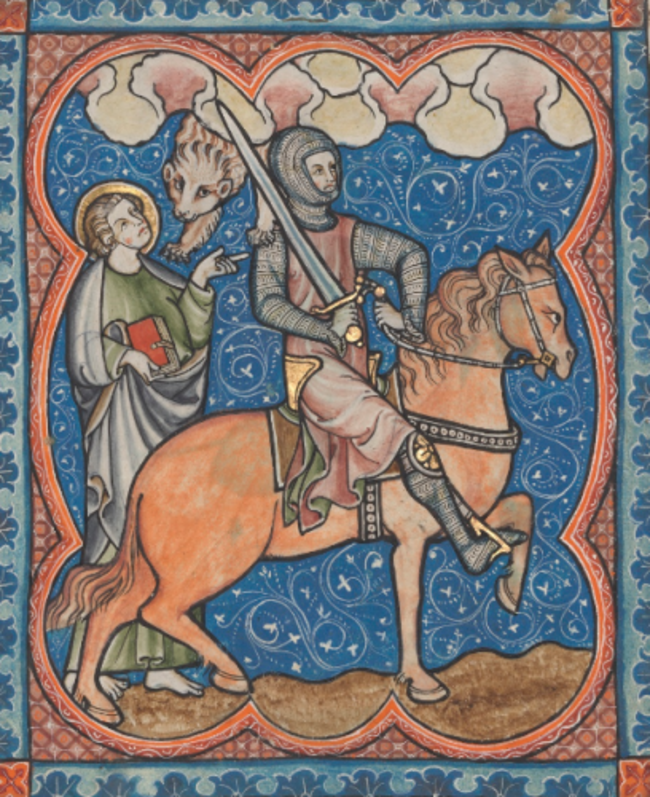
Hugely popular among royalty and the wealthy elite, these texts were designed to help the faithful understand one of the most dramatic and difficult Christian texts, the Book of Revelations, says Cleaver.
Biblical studies were, up until the 13th and 14th century, the reserve of monks, nuns and scholars.
As literacy grew, though, lay people became educated in the bible, albeit not to a high standard, says Cleaver. Illustrations, therefore, feature heavily as educational aids.
Until 1851, the manuscript was held by university Provost Franc Sadlier (c.1774-1851).
Sadleir, who taught Greek, Hebrew and mathematics at Trinity, served as the university’s bursar for nine years and as librarian for 16 years before being appointed Provost in 1837. It is believed that he held the manuscript in his private possession.
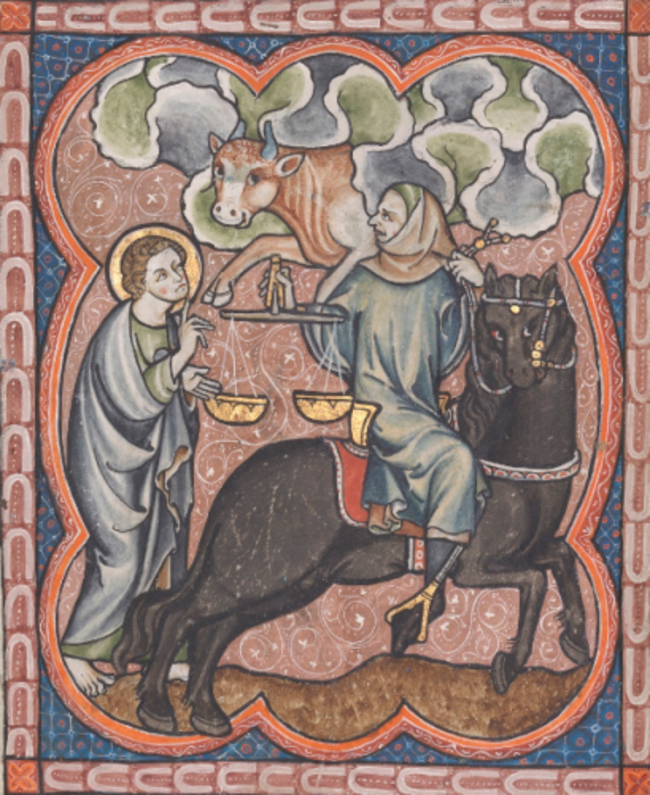
The ‘Dublin Apocalypse’ was likely created in East Anglia, England, says Cleaver, who explains that Trinity College Dublin prioritised the digitisation of the Book of Kells and the Book of Durrow before moving towards the ‘Dublin Apocalypse’.
A digital copy of the manuscript with 118 individual digital scans can be viewed online via the Library’s Digital Collections, says Cleaver.
“It’s a great opportunity to show people a part of Trinity they didn’t know.”

To embed this post, copy the code below on your site







have your say