Sign in. It’s quick, free and it’s up to you.
An account is an optional way to support the work we do. Find out more.
Sign in. It’s quick, free and it’s up to you.
An account is an optional way to support the work we do. Find out more.

HOW A STUDENT performs in their Leaving Certificate exams is the strongest indicator of whether or not they’ll complete their college degree, according to new research.
Performance in the Leaving Certificate, especially in Leaving Certificate Maths and in English, is a good indicator of likelihood to complete a third-level course.
In general, the higher the Leaving Cert points, the more likely a person is to complete their course, according to the Higher Education Authority.
The HEA has today published a study on the rates of completion of 34,059 students who entered Irish universities, institutes and colleges full-time at undergraduate level in the 2007/8 academic year.
These students were tracked over the following 10 years and 76% of them graduated during this period.
More than four in every five students completed their courses at Honours Degree Level 8, while 94% of students in colleges of education and the National College of Art and Design (NCAD) completed their courses, as did 83% in universities and 74% in the Institutes of Technology.
At 62%, the levels of completion at Level 6 and 7 programmes is lower but that still means more than three in five students at this level complete their courses.
Gender and Age
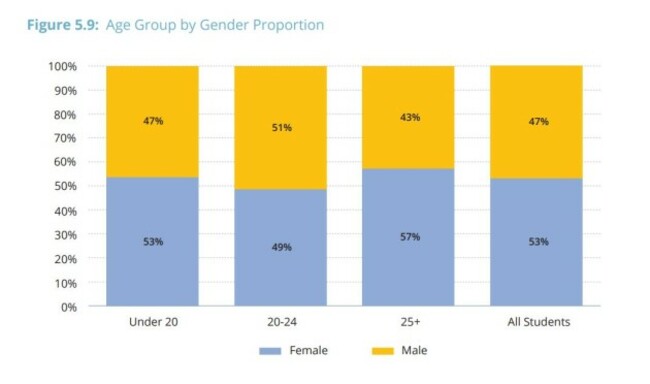
Completion rates for females are higher than males (81% vs 71% overall) and this reflects the generally higher performance rates of females in education, the HEA notes.
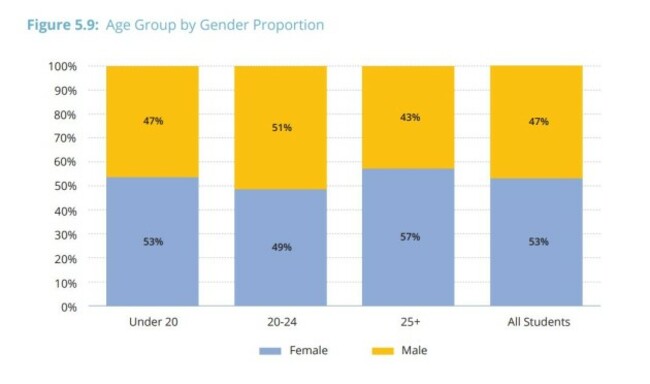
The study found age didn’t play a large role in whether a person completed a course or not, but the 20-24 age group had the lowest completion rate at 67%.
The other key findings in the report include:
Paul O’Toole, Chief Executive of the HEA, said the report makes “a significant contribution to broadening understanding of student performance at higher education”.
“The findings are mostly positive but require further consideration to address some of the challenges that the evidence presents.
“In particular, we need to look at non-completion rates by males in certain areas, and the higher education system is seeking ways to improve the outcomes for those students,” O’Toole said.

To embed this post, copy the code below on your site










have your say