Sign in. It’s quick, free and it’s up to you.
An account is an optional way to support the work we do. Find out more.
Sign in. It’s quick, free and it’s up to you.
An account is an optional way to support the work we do. Find out more.
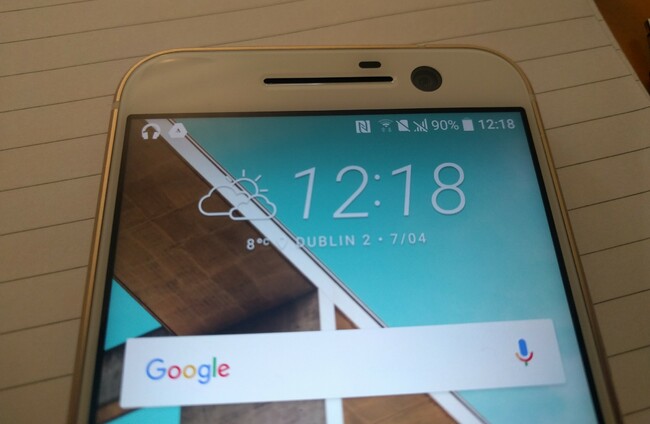
WITH ALMOST ALL of the big names having their main phones out for the year - Samsung, Sony, and Huawei (and Apple if you want to count the SE) have announced their own additions already – one of the last big names left is HTC, which waited a while to announce its flagship device.
Its latest phone, the HTC 10, hopes to revitalise its smartphone range after a dire 2015.
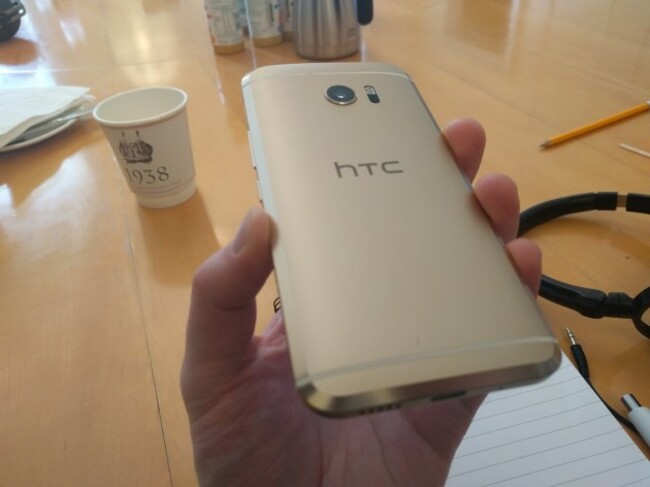
If anything, the 5.2-inch device is a cross between last year’s M9 and the iPhone-like A9 from October, bringing in the curved backing and smooth edges while adding the fingerprint scanner that the A9 introduced.
If anything, it’s a tad heftier than other smartphones but that’s relative to how light they’ve become in recent times. Yet the HTC 10 is a compromise between two different styles which makes it look a bit similar to previous phones.
Less bloat
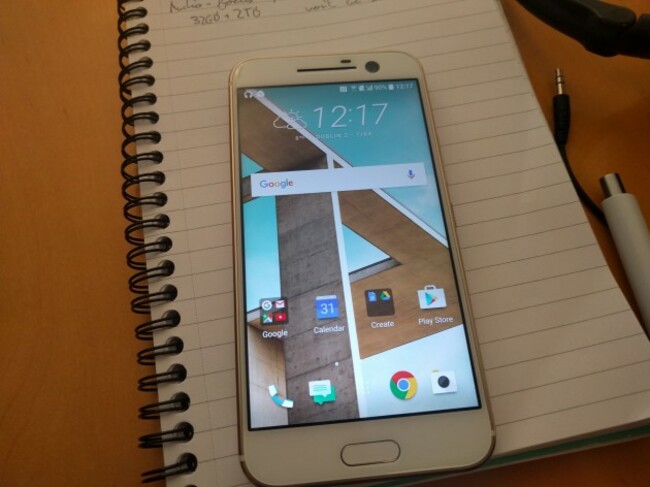
That said, there are a couple of things HTC is pushing with this to help separate itself from its main competitors. One part that will be particularly noteworthy for some people is how it’s simplifying the experience and cutting down on bloatware as a whole.
Normally when you buy an Android device, you find that it doubles up on certain apps. So for things like photos, calendars, and messages, you have both Google’s version and the manufacturer’s version.
This becomes more confusing when an app insists you connect to its own photos app when you want Google Photos instead, or certain features are locked to one app instead of the other.
The 10 is trying to streamline that by getting rid of such apps from the start. So instead of having a HTC and Google app for photos, it only has Google Photos and instead of having two camera apps, it just has HTC’s version.
It’s likely you can still install those apps not included, but the idea makes sense considering how closely HTC follows the traditional Android template. Integrating some of its own features from apps like ZOE, its social photo app, into Google Photos is now par for the course.
Personal sounds
The other thing is sound. Previous flagship phones from HTC had front-facing Boomsound speakers, but the positioning has changed somewhat.
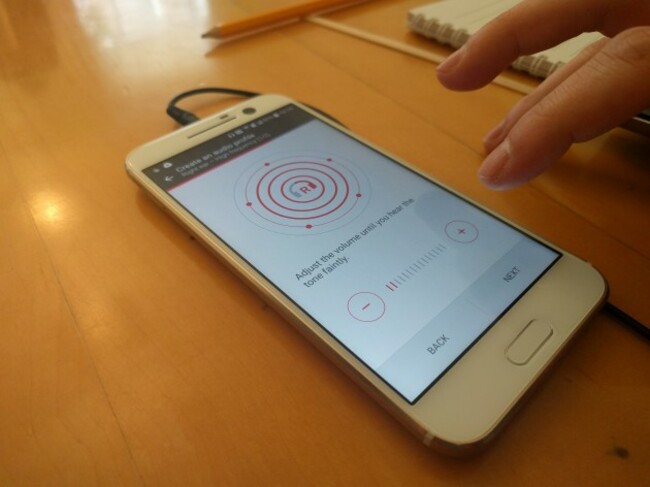
There are still speakers at the top and bottom, both a tweeter and woofer for high and low-frequency sounds respectively, but on top of sound quality, its main draw is how it can create personalised sound profiles.
Think of how equalisers work but instead of getting you to adjust certain frequencies, it asks you to go through a few tests before presenting a sound profile customised to you. We didn’t have a chance to try it out properly, but the idea could help those who often listen to podcasts and music.
Other features it’s pushing are things like the 12MP camera, which also has a quick bootup (0.6 seconds) and autofocus as well as an expanded Pro Mode and simplified camera options mode. It has some very tough competition thanks to Samsung and Apple so how it compares to them remains to be seen.
Also, the concept of rapid charging, HTC claims it can charge the battery by 50% in 30 minutes, and a battery that can last for up to two days have also been mentioned as well.
From first impressions, the focus on simplification could work in its favour. You have the reduction of bloatware home screen, but also custom backgrounds and stickers (each sticker is linked to an app) and extra settings like Boost+ for improving phone efficiency.
Overall, it’s hard to say how well all of this will work, and with the competition tighter than ever, it really has its work cut out.
The HTC 10 will be made available on Three from early May and the unlocked 32GB version will cost €699.

To embed this post, copy the code below on your site















have your say