Sign in. It’s quick, free and it’s up to you.
An account is an optional way to support the work we do. Find out more.
Sign in. It’s quick, free and it’s up to you.
An account is an optional way to support the work we do. Find out more.
WHENEVER YOU SEARCH for an image, you’re normally relying on the descriptions for an image, but new developments in image-recognition software might make it easier to find the type of images you’re looking for.
A collaboration between two teams of researchers from Google and Stanford University is creating software that will help describe the scene happening in an image, instead of just individual objects.
The software teaches itself to recognise and identify entire scenes and describe it in terms that anyone could understand.
How the software accomplishes this is by using two neutral networks. The first one deals with image recognition while the second deals with natural language processing. By using computer learning, which sees it being fed a number of captioned images and learning how the sentences provided relate to what the images show.
The developments could make it easier to group and search for the billions of images and hours of videos that are available online. Currently, Google and other sites rely on written descriptions accompanying an image to figure out what it contains, but this method is able to recognise and describe them without human assistance.
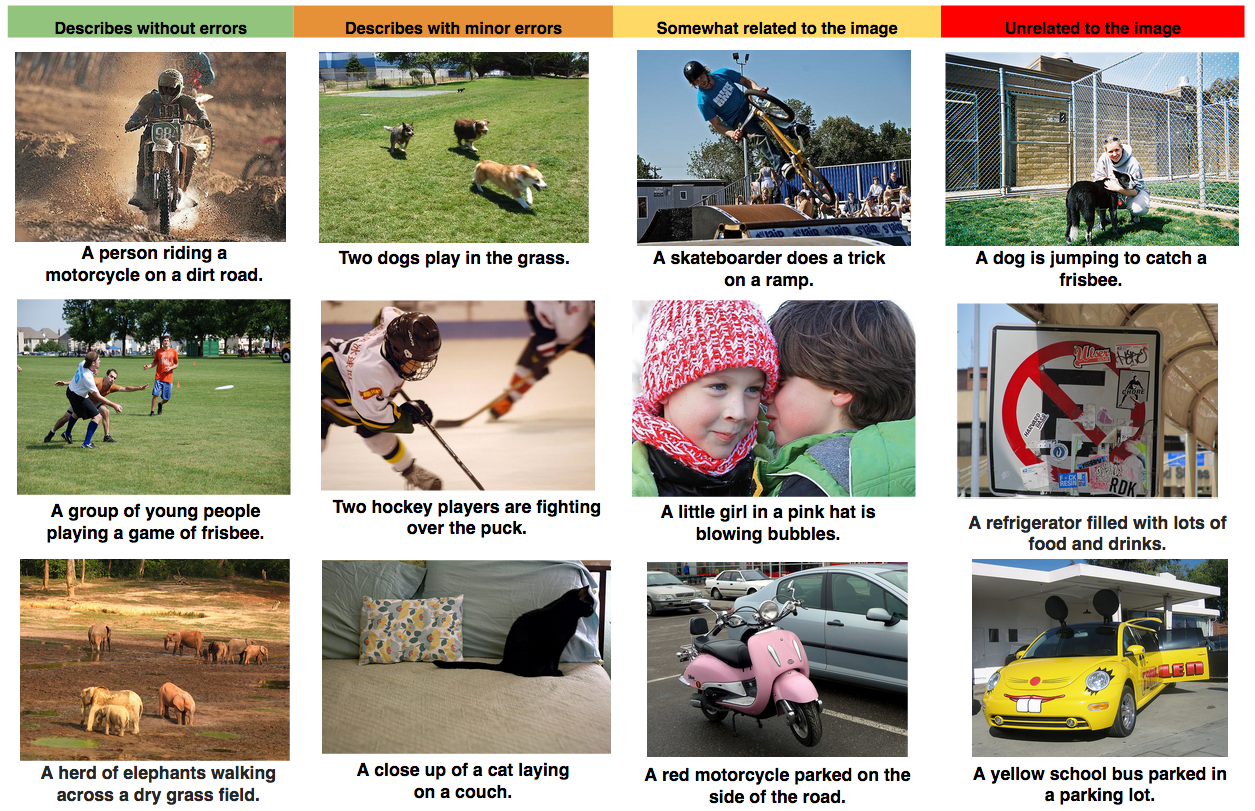
That said, it’s not perfect by any stretch of the imagination. While it’s capable of being accurate, the examples provided below show that there’s still a lot of work to be done before it’s ready for the world, either making minor mistakes or getting it wrong entirely.
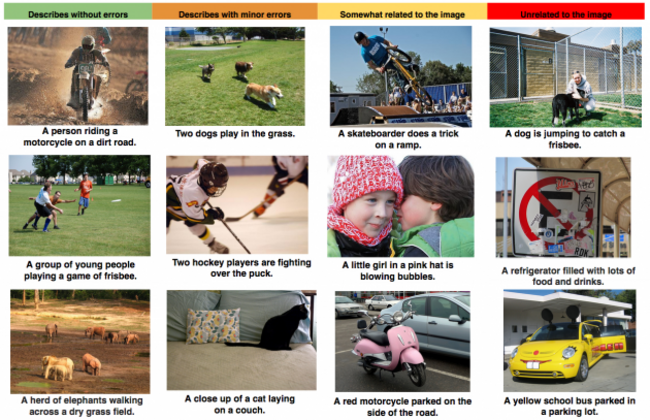
According to the New York Times, the two research teams said they expect to see significant increases in accuracy as they improve their software and train these programs with larger sets of annotated images.
Still, the speed in which image recognition is improving is picking up and perhaps in the near future, we will be able to upload an image or video and it will recognise what’s happening.

To embed this post, copy the code below on your site












have your say