Sign in. It’s quick, free and it’s up to you.
An account is an optional way to support the work we do. Find out more.
Sign in. It’s quick, free and it’s up to you.
An account is an optional way to support the work we do. Find out more.
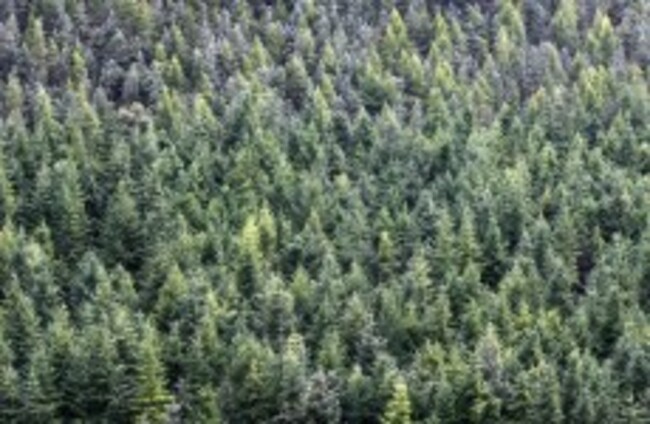
CONCERNS OVER A planned merger of Coillte and Bord na Mona have been raised by IMPACT.
The trade union said today that the merger “would leave the state forestry company as a small and relatively weak voice within a much larger company focused heavily on energy production”.
It was announced in June of this year that a planned sale of Coillte’s harvesting rights had been called off by the government.
The sale had been proposed in a 2011 review of the sale of State assets. According to the report, Coillte had net assets worth €1.2 billion, but the report has since been criticised.
In June, Agriculture Minister Simon Coveney said that the government would instead consider a potential merger of Coillte and Bord na Móna, in order to create a single State body.
Although in June IMPACT welcomed the above news, saying that the decision to retain harvesting rights was a “sensible response to the evidence that a sale would actually cost taxpayers’ money”, their stance has changed somewhat.
Company priorities
In contrast to their statement during the summer, today IMPACT said that it fears that there could be a “rebalancing of company priorities” following a merger.
It warned that this “would likely divert wood to energy usage rather than maintaining its most economically-advantageous use”.
It continued:
This would seriously weaken Coillte’s economic base with consequences for its ability to sustain its social and environmental functions, including access to state forests for recreation and tourism.
IMPACT published a paper called Coillte: The way forward, today, in which IMPACT’s Coillte Branch says that, following a merger, “pressure will immediately fall on Coillte to provide wood biomass for Bord na Mona’s electricity generation operation”.
Bord na Mona is required by regulation to guarantee that biomass products make up 30 per cent or 300,000 tonnes of its fuel by 2015.
But IMPACT said it would be “impossible to meet [this] demand for biomass” without compromising over 100 jobs in two Coillte panel board processing plants in Clonmel and Waterford.
It also pointed out that thinnings from Coillte forests support many jobs in the private wood products sector and fulfil an increasing demand for firewood.
The union therefore fears that a merged company “would divert substantial amounts of higher-grade timber to energy generation, with significant adverse effects on Coillte’s forestry, environmental and social operations”.
IMPACT national secretary Matt Staunton said: “If Coillte activity is rebalanced in this way, the economic return from the public forest will be weakened.”
Last year Coillte made an operating profit of €35 million and returned a €2 million dividend to the state.
The Coillte annual report for 2012 will be discussed by the Oireachtas Agriculture Committee today.

To embed this post, copy the code below on your site












have your say