Sign in. It’s quick, free and it’s up to you.
An account is an optional way to support the work we do. Find out more.
Sign in. It’s quick, free and it’s up to you.
An account is an optional way to support the work we do. Find out more.
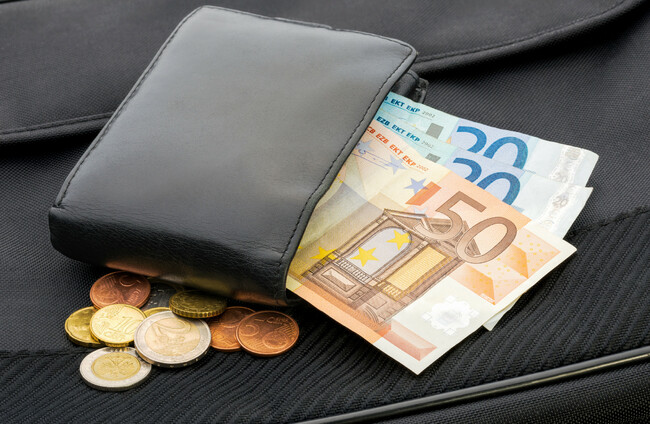
WORKERS SHOULD HAVE more money in their back pocket after budget day, Tánaiste Leo Varadkar has said.
Speaking after Cabinet in Dublin Castle today, Varadkar said public servants and those working in the private sector “will see that number at the bottom of the payslip” increase after October’s budget.
He said this would be “as result of pay increases and tax relief”.
Formal public sector pay talks between the Government and unions have begun at the Workplace Relations Commission. Earlier this year, Varadkar urged employers in the private sector to give their workers a pay increase as the cost of living soars.
His comments today come as Fine Gael senator Regina Doherty proposes a motion to help the “squeezed middle”. It proposes a new middle-income tax rate of 30% for people on middle incomes and that workers wouldn’t go onto the highest rate “until you earn a little bit more”.
Varadkar recently proposed a new middle rate tax band that could help cushion the blow of inflation on the squeezed middle.
Varadkar suggested that a third 30% rate of income tax could help middle-income earners and has asked the Finance Minister Paschal Donohoe to examine whether it could be introduced.
He said there might be a case for having a middle rate of 30% for people on middle incomes so the higher rate of 40% would only kick in for higher earnings.
Speaking on RTÉ Radio today Varadkar said there is a commitment in the programme for Government to index tax bands and credits.
Index tax bands
“So that means there will be a tax package in the budget. That’s not a Fine Gael position, all three parties agree with that,” he said.
He said the average person working full-time in Ireland now earns over €40,000 a year.
The average person in Ireland is going to get a pay increase this year, he claimed.
“The vast majority of people will lose more than half of that pay increase in income tax, PRSI and USC. And we don’t think that’s fair,” he said.
“And that’s why we’ve got that commitment to having a tax package in every budget… This is very much about rewarding work and making work pay and saying to people, that if you’re working hard and you get a pay increase, you should be able to keep most of that. I don’t see why anyone could possibly object to that position, although for some reason, on the left and some in the opposition, they do,” he said.
“I’m not saying that this should be the main feature of the budget”, he added, stating that there will also be a welfare package.
“Because of course, pensions and welfare payments have to increase,” he said.
He criticised Sinn Féin and other opposition parties who are not in favour of income tax changes, stating that workers’ pay increases could be gobbled up by tax that is returned to the Government coffers.
“And I don’t think that’s right,” he said.
Public transport
In terms of public transport, Varadkar said the reductions in fares has been a success, stating that government will now have to decide if such fare reductions can continue.
“And I hope we can,” he said.
He added that Ireland is a rural country, and reductions in public transport fares does not always benefit those living in the countryside, so Government will have to ensure that those in rural Ireland are looked after also.
Asked about the rising cost of petrol and diesel, the Tánaiste said that everyone can see that the numbers are going up. He said in other countries in Europe, the cost is as high as €2.50 per litre in some countries, but claimed it is lower in Ireland due to the Government reducing taxes.
Rather than chase inflation, Varadkar said the Government wants to addressing things it controls, like welfare rates, pension rates, tax, childcare costs as well as the college fees and healthcare costs.
Solidarity-People Before Profit TD Richard Boyd Barrett has hit out against the Government for not taking further action to ease the cost-of-living.
“We are going to see a major movement of people power on the streets to try and force them to take the action that so far, they’re refusing to take,” he said.
A cost-of-living protest is due to take place in Dublin this weekend.

To embed this post, copy the code below on your site














have your say