Sign in. It’s quick, free and it’s up to you.
An account is an optional way to support the work we do. Find out more.
Sign in. It’s quick, free and it’s up to you.
An account is an optional way to support the work we do. Find out more.
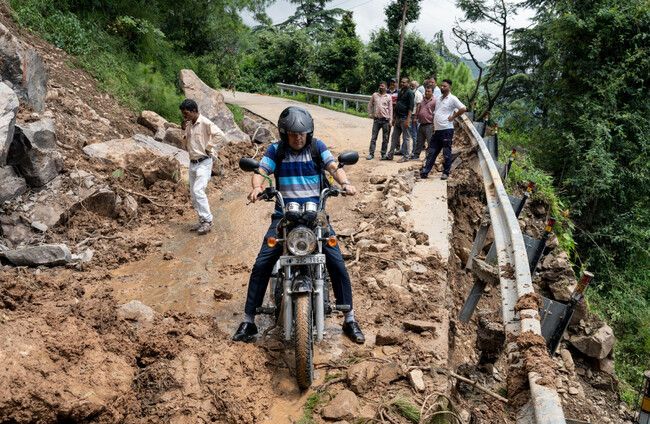
AT LEAST 40 people have died and several are missing in flash floods triggered by intense monsoon rains in northern India over the past three days.
The rains inundated hundreds of villages, swept away mud houses, flooded roads and destroyed bridges in some parts of Himachal Pradesh and Uttarakhand states.
The Indian Meteorological Department forecasts more heavy to very heavy rain for the region in the next two days.
The Indian government said today that landslides and flooding in the Himalayan state of Himachal Pradesh had killed at least 36 people. Hundreds were taking shelter in relief camps after being displaced from their flooded homes.
In the neighbouring Uttarakhand state, a series of cloudbursts yesterday left four dead and 13 missing as rivers breached banks and washed away some houses.
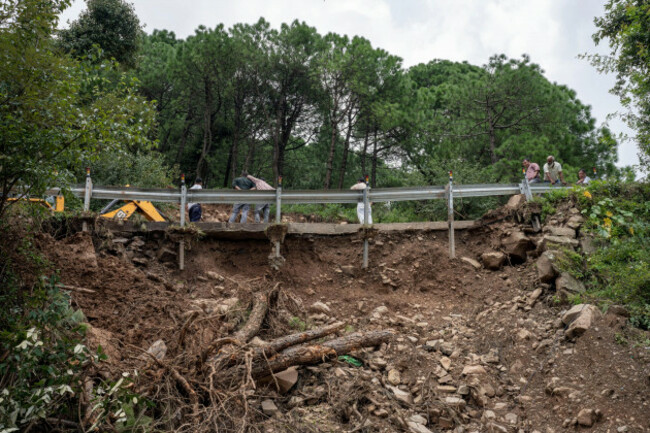
Rescue teams were evacuating people left stranded in both states.
Disasters caused by landslides and floods are common in India’s Himalayan north during the June-September monsoon season. Scientists say they are becoming more frequent as global warming contributes to the melting of glaciers there.
The UN’s IPCC has said that global warming has caused an increase in the intensity and frequency of extreme weather events.
The world has already warmed by about 1 degree Celsius since pre-industrial times due to human activity, and the IPCC has warned that global heating is virtually certain to pass 1.5 degrees Celsius above pre-industrial levels, probably within a decade.
Last year, flash floods killed nearly 200 people and washed away houses in Uttarakhand.

To embed this post, copy the code below on your site















have your say