Sign in. It’s quick, free and it’s up to you.
An account is an optional way to support the work we do. Find out more.
Sign in. It’s quick, free and it’s up to you.
An account is an optional way to support the work we do. Find out more.
THERE MIGHT BE a debate about whether it’s necessary to colourise black and white photos, but there’s no denying the impact of images you’ve seen before in a fresh way.
A new book containing colourised images of the Civil War is out now, and it certainly brings a new viewpoint to the pivotal event. The book, The Irish Civil War In Colour presents the defining moment in Irish history with hand-coloured photographs.
Each image has been painstakingly hand-coloured by John O’Byrne, a professional photographer and colouriser. He wanted to produce an accurate representation of colour, and he also kept the cracks, specks, or photographer’s inscriptions from the original photos.
The photographs are taken from archives and private collections and many of them have never been published before. All of the photos are accompanied by captions written by historian Michael B Barry, which help bring each scene to life.
The publishers of the book, Gill Books, have given us a selectoin of five images as a taster of what to expect from The Irish Civil War in Colour:
Prisoner
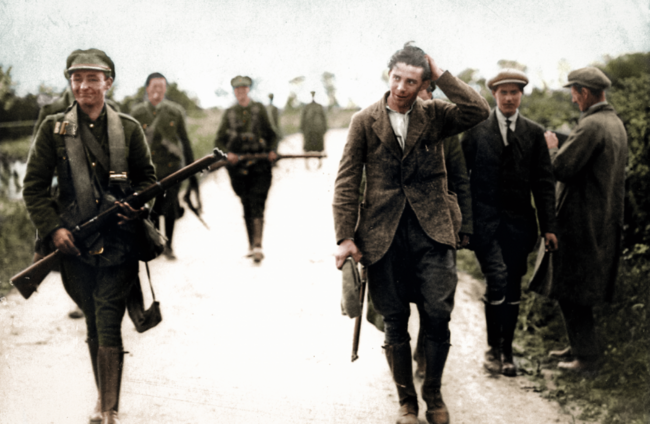
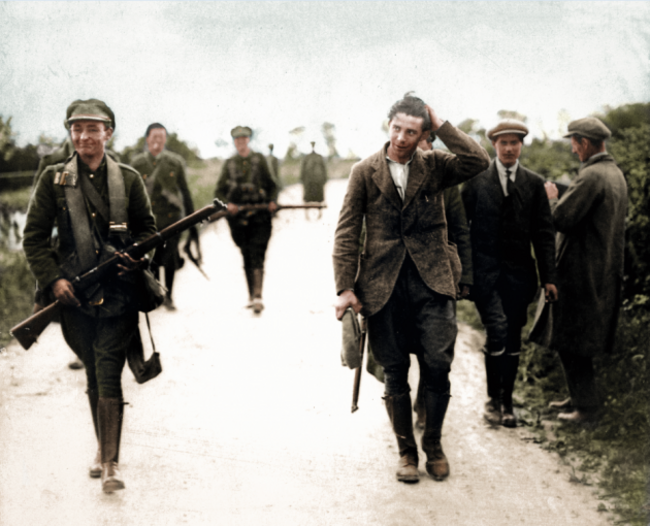
Provisional Government soldiers escort a prisoner. In the early part of the Civil War, relations between both sides were relatively relaxed, and bitterness was not widespread. All was to change over the months that followed.
In the photograph, the soldier on the left grins to the camera while the young IRA prisoner looks a little abashed.
Sackville Street
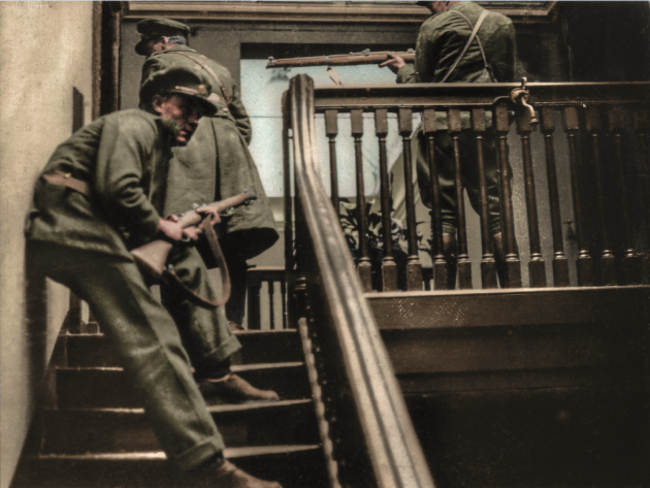
Urban fighting is one of the most difficult forms of combat. Here we see Provisional Government soldiers fanning out inside the Royal Bank of Ireland premises on Upper Sackville Street.
The roof
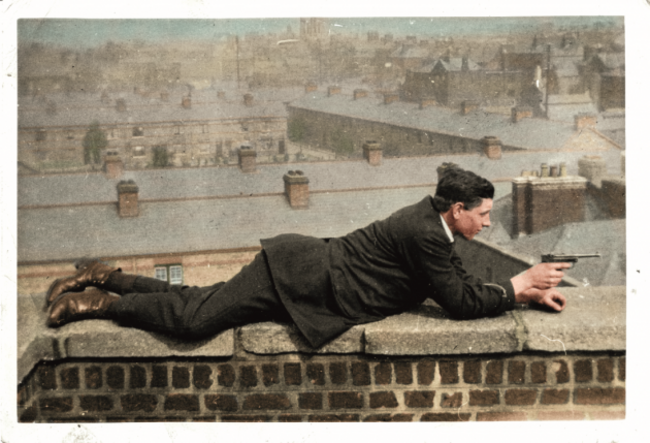
Volunteer Paddy Rigney (veteran of the War of Independence) on the Four Courts roof, during the early days of the occupation. When the assault began at the end of June, the IRA in the Four Courts sniped at the artillery positions from on high. For most of the siege, the defenders could communicate with the outside via messages conveyed by members of Cumann na mBan.
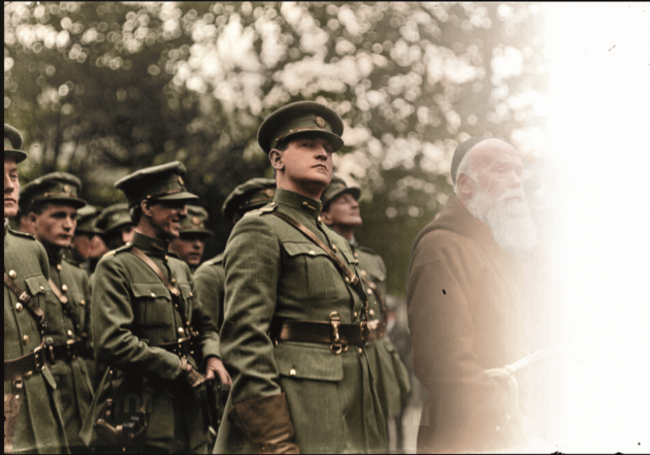
The Big Fella
Michael Collins at Griffith’s funeral on 16 August 1922. He, himself, had only six days left to live.
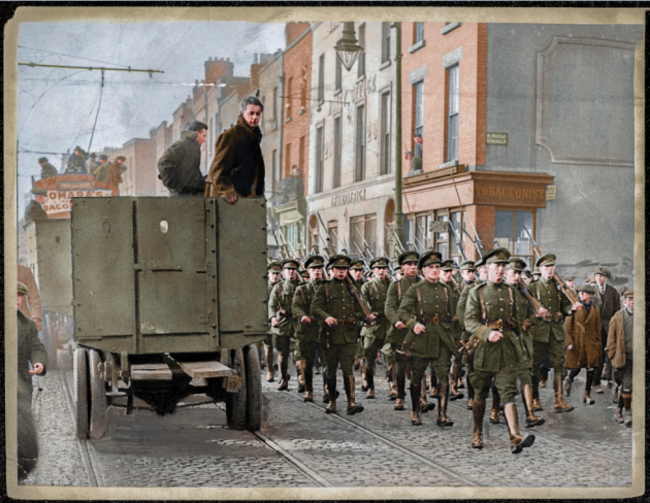
The Quays
Paddy O’Daly marches the newly created Dublin Guard along the Dublin quays on 31 January 1922, on their way to take over Beggars Bush Barracks, former headquarters of the Auxiliaries.
The Irish Civil War in Colour is published by Gill Books and is out now.

To embed this post, copy the code below on your site




have your say