Sign in. It’s quick, free and it’s up to you.
An account is an optional way to support the work we do. Find out more.
Sign in. It’s quick, free and it’s up to you.
An account is an optional way to support the work we do. Find out more.
TODAY MARKS A year since one of the most turbulent days in Ireland since the onset of the financial crisis.
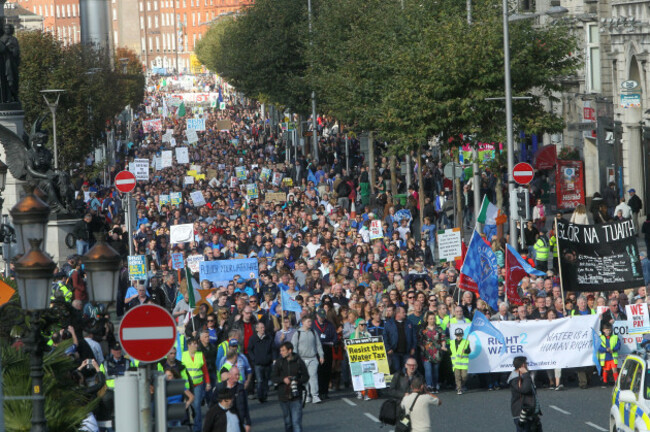
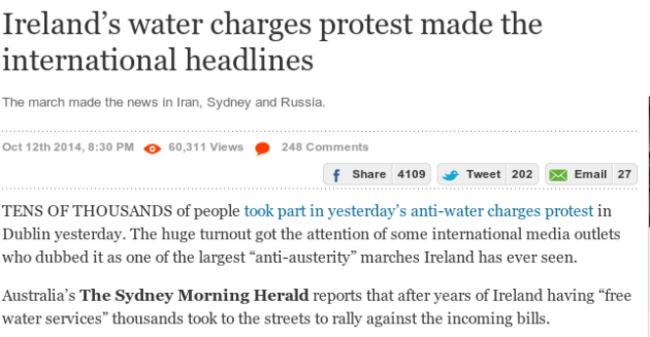
Saturday, 11 October 2014 was the day tens of thousands of people took to the streets of Dublin city to protest against water charges in a show of strength that caught many by surprise.
Up to 100,000 people are estimated to have taken part in the Right2Water demonstration – the largest crowd to attend a protest in Dublin in over 10 years.
At the same time as thousands marched in the city centre , Paul Murphy, the Anti-Austerity Alliance candidate, was on the brink of pulling off a remarkable electoral victory in Tallaght.
Having run on the single issue of opposing water charges, the former MEP upset the odds to beat Sinn Féín and take the vacant Dáil seat in the Dublin South-West by-election.
At the count centre in the National Basketball Arena, Murphy edged out Sinn Féin’s Cathal King by just 566 votes to take the seat.
http://vine.co/v/OADrVzmbUaD
The sense that something had changed in Irish politics after years of austerity was not lost on Murphy that day.
“This is a result because of a revolt against the water charges, there’s no question about it,” he told reporters immediately after celebrating his success.
The Anti-Austerity Alliance provided a very clear opposition to water charges. Our call for a massive boycott campaign, a massive campaign of protest, resonated right across the constituency.
Off the back of the city centre protest, and the significant anger expressed by voters in Dublin South-West, the government significantly revised the water charges regime in the hope of allaying public concerns.
It didn’t quite work out as the coalition had hoped and although the majority of people registered with Irish Water have paid, there is a significant level of non-registration and non-payment that has emboldened the anti-water charges movement.
Several political parties will go into the next general election proposing to scrap water charges and abolish Irish Water. It remains a huge issue for voters up and down the country.
A year on, Paul Murphy firmly believes that 11 October 2014 was an “explosion of anger” that changed everything:
He rejects claims that the movement has suffered from people complying with the charges and the fact turnout at subsequent protests has not always matched last year’s historic demonstration.
In fact, argues Murphy, those same people who were on the streets of Dublin on that sunny October Saturday are now engaged in their local communities and in politics.
He added:
There’s been a turning on of people to politics, and to radical left politics, in a profound way in the last year that has just changed things a lot and it hasn’t gone away and it will be reflected in the next election.

To embed this post, copy the code below on your site














have your say