Sign in. It’s quick, free and it’s up to you.
An account is an optional way to support the work we do. Find out more.
Sign in. It’s quick, free and it’s up to you.
An account is an optional way to support the work we do. Find out more.
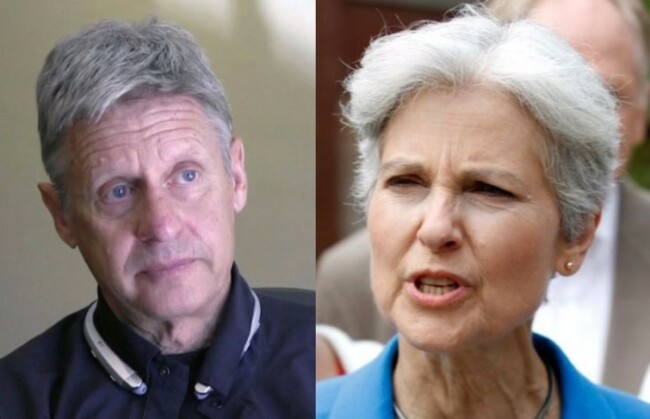
MOST OF THE post-election coverage has been, understandably, focused on Donald Trump and Hillary Clinton.
As the world reacts to news of a Trump victory, we’re taking a look at how the two main third party candidates did in the race.
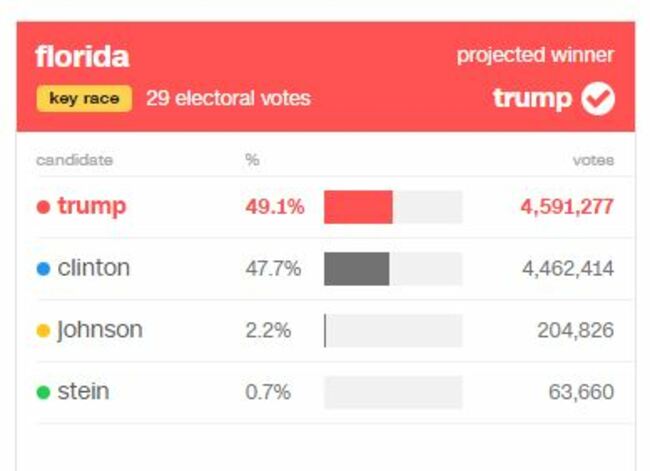
The number of people who voted for Gary Johnson of the Libertarian Party or Dr Jill Stein of the Green Party was greater than Trump’s winning margin in many key states.
A number of people have argued that voters who backed a third party candidate helped Trump get elected, with some voters backing an alternative candidate to the main two in a form of protest.

However, others are pointing out that not all of these people would have voted for Clinton had she and Trump been the only two options on the ballot.
Speaking to TheJournal.ie today, Irish-American attorney and law lecturer Larry Donnelly said: “This is always the issue with third party candidates, it can be argued that voting for them is the equivalent of voting for someone else effectively.”
Donnelly notes that while it’s “perfectly legitimate for voters to say they believe in a third party candidate and want them to be president”, this could help a candidate whom they really don’t want to be elected.
He says the argument that voting for a third party candidate is “foolish and wasteful” is also “perfectly legitimate”.
Some coverage on third party candidates was to the effect that votes for Gary Johnson would have otherwise gone to Clinton. I’m just not so sure about that.
Donnelly says many Republicans who didn’t want to back Trump voted for Johnson, noting that he “appealed to a lot of people who are conservative”.
Republicans for Johnson?
Donnelly recalls how earlier in the campaign it looked as though Johnson, who was formerly in the Republican party and served as governor of New Mexico from 1995 to 2003, could poll much higher than he did.
He notes how there was “a lot of serious conversation” that some prominent Republicans, including Mitt Romney, were on the verge of endorsing Johnson.
However, this kind of talk died down when Johnson made headlines in September after asking “What is Aleppo?” in response to being asked a question about Syria during a TV interview.
Donnelly says this embarrassing slip-up had a huge impact on Johnson’s campaign and “put paid to” some senior Republicans backing him.
Here’s how Johnson and Stein did in some key states:
Despite the fact a third party candidate is unlikely to ever win the US presidential election, Donnelly says it’s “vital” there are always more than two candidates on the ballot paper.
He says it’s “undemocratic” that the Republican and Democrat parties have a “mutually beneficial stranglehold” on the political process in the US.
Donnelly says he’d “love” to see this change, but doesn’t think it’s likely.

To embed this post, copy the code below on your site

















have your say