Sign in. It’s quick, free and it’s up to you.
An account is an optional way to support the work we do. Find out more.
Sign in. It’s quick, free and it’s up to you.
An account is an optional way to support the work we do. Find out more.
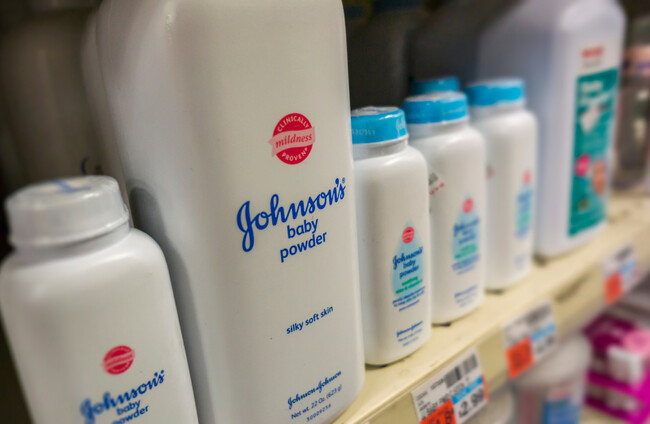
JOHNSON & JOHNSON will stop making its talc-based baby powder next year, replacing it with a cornstarch-based alternative after thousands of lawsuits relating to the product.
The pharmaceutical giant has been hit with over 38,000 lawsuits and has forked out billions of dollars in payouts over concerns that its talc products were contaminated with asbestos, a known carcinogen.
The company said in a statement today: “As part of a worldwide portfolio assessment, we have made the commercial decision to transition to an all cornstarch-based baby powder portfolio. As a result of this transition, talc-based Johnson’s Baby Powder will be discontinued globally in 2023.
“We continuously evaluate and optimise our portfolio to best position the business for long-term growth.”
Talc, the softest of minerals, is mined from deposits around the world, which can be contaminated with asbestos.
Johnson & Johnson already sells cornstarch-based baby powder in a number of countries around the world.
“We remain fully committed to ensuring JOHNSON’S® products are loved by parents and families for years to come.
Our position on the safety of our cosmetic talc remains unchanged. We stand firmly behind the decades of independent scientific analysis by medical experts around the world that confirms talc-based JOHNSON’S® Baby Powder is safe, does not contain asbestos, and does not cause cancer.
Two years ago, Johnson & Johnson stopped selling the talc-based product in the US and Canada but kept it on the shelves in Ireland.
The company told The Journal that it would continue to sell the powder in Ireland as the discontinuation in North America was “due in part to ongoing misleading litigation advertising.”
In 2019, it recalled 33,000 bottles of its baby powder in the US after government testing found trace amounts of asbestos in one bottle bought online.
In 2017, the company was ordered to pay out $4.69 billion (€4 billion) in damages in a lawsuit representing 22 women and their families who alleged a talc-based product sold by the company contained asbestos and caused them to suffer ovarian cancer.
The victims’ lawyer said in a statement that “for over 40 years, Johnson & Johnson has covered up the evidence of asbestos in their products.”

To embed this post, copy the code below on your site













have your say