Sign in. It’s quick, free and it’s up to you.
An account is an optional way to support the work we do. Find out more.
Sign in. It’s quick, free and it’s up to you.
An account is an optional way to support the work we do. Find out more.
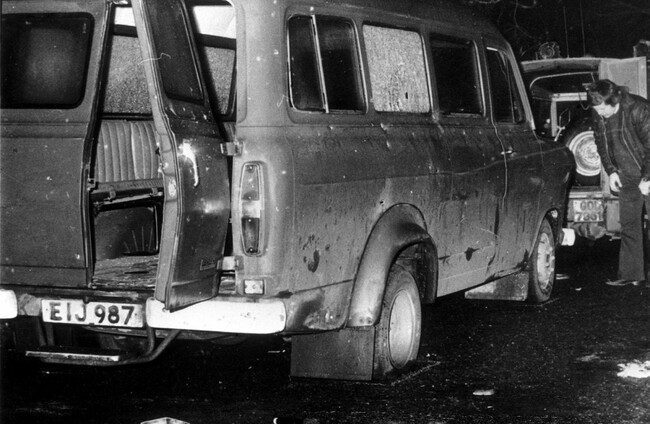
THE IRISH GOVERNMENT has hit back strongly at suggestions from DUP leader Arlene Foster that it is “standing in the way of closure” for the families of those killed in the Kingsmill massacre in 1976.
Speaking last night, Foster said that she was “disappointed with the Irish government” that there had been delays in handing over documents related to the case, and that it had “dragged on for long enough”, reports the Belfast Telegraph.
In a statement this afternoon, a government spokesperson said that any suggestion that there is an unwillingness on behalf of the Irish government to assist in the inquest into Kingsmill “would be unfounded”.
The spokesperson said that the government “has taken unprecedented legal measures to facilitate” cooperation with authorities in the North and to deliver on its commitment to sharing information.
The fact that the Northern Ireland Coroner is not a “criminal justice agency” means that the body does not have “jurisdiction to avail of international law on mutual legal assistance procedures”.
As a result, the Irish government introduced new legislation to allow it to cooperate with the inquest, the spokesperson said.
It was this legislation that allowed the transfer of material information from the gardaí to the Northern Ireland Coroner.
The spokesperson added that a number of cross-border meetings have taken place, most recently on 29 March, to how every effort can be made to assist with the inquest.
Every effort is being made to assist with a request received on 13 April 2017 from the coroner for further information, they concluded.
Families of the victims say they believe information that will be handed over by gardaí could create new leads to follow up in the case.
Kingsmill
On 5 January 1976, a bus carrying textile workers was pulled over by men disguised as British soldiers.
They lined up the workers, asked them their religion, and allowed one to flee when he said he was a Catholic.
They shot the remaining 11 men, killing all except Alan Black, who survived despite being hit 18 times. No one has ever been convicted of the massacre.
A 2011 inquiry found that the attackers were provisional IRA members using the “South Armagh Republican Action Force” as a front, due the fact that the IRA was officially on ceasefire at the time.
In February, a decision was made by the public prosecution service of Northern Ireland not to prosecute a man who was arrested on suspicion of the murder of the 10 people.
Outlining the decision, Assistant Director of Central Casework Michael Agnew said the PPS had given “careful consideration” to all of the evidence and applied the test for prosecution.
“We have concluded that there is no reasonable prospect of a conviction based on the available evidence,” he said.
“We are mindful of the disappointment that this decision will bring to the surviving victim and families of those who were killed. Although 41 years have passed since this atrocity, we are conscious that their pain endures.”

To embed this post, copy the code below on your site










have your say