Sign in. It’s quick, free and it’s up to you.
An account is an optional way to support the work we do. Find out more.
Sign in. It’s quick, free and it’s up to you.
An account is an optional way to support the work we do. Find out more.
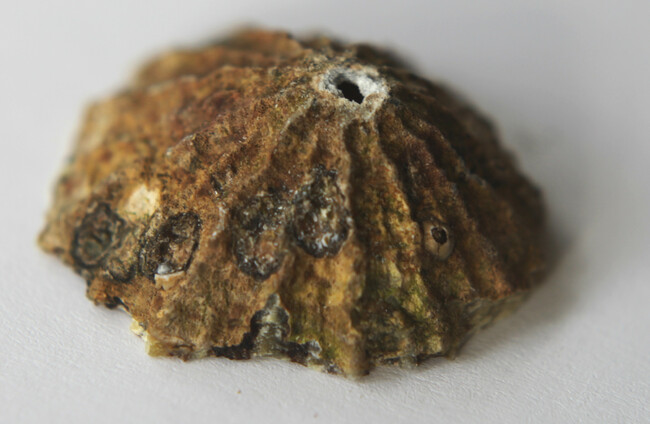
A GROUP OF Trinity College scientists have discovered a link between the healing properties of land mammals and limpets, sea creatures found on rocks near beaches across the world.
New research from a group of bioengineers at the university has uncovered the complex way limpets recover when their shells are damaged, and its remarkable similarity to the way in which mammals heal broken bones.
The bioengineers discovered that the apex – or point – of a limpet’s shell acts like the “crumple zone” of a car, taking the brunt of any major damage to protect what’s inside.
However, they were also surprised to find that limpets that experience shell damage carry out repairs by depositing new material to repair structural weaknesses and restore their strength.
To assess how limpets reacted to damage, the researchers simulated some of the stresses they experience in wild and rough seas.
They recreated the impact of moving rocks and debris by dropping weights on the limpets, as well as more general abrasion and weathering experienced by shells by using a metal file to wear them down.
The limpets then reacted to the stresses by repairing their shells from within, and while the shells were not as thick as before after 60 days, they were found to have regained their former protective strength.
Speaking about the study, co-first author Maeve O’Neill of Trinity’s School of Engineering pointed to the link between the healing properties of limpets and land mammals.
She said: “The way they do [heal] is essentially similar to how bones heal in mammals, as the process is at least partially carried out by the deposition of new material.”
The claim was echoed by Professor of Materials Engineering at Trinity College, David Taylor, who added: “We’ve studied healing before, in human bones and also in the exoskeletons of insects, but we were amazed to discover that these simple marine organisms are capable of reacting in a very subtle and clever way.”
The groundbreaking research has just been published by the Journal of the Royal Society Interface.

To embed this post, copy the code below on your site












have your say