Sign in. It’s quick, free and it’s up to you.
An account is an optional way to support the work we do. Find out more.
Sign in. It’s quick, free and it’s up to you.
An account is an optional way to support the work we do. Find out more.
REMEMBER THE FIVE Point Plan?
It was a phrase repeated ad-nauseam by Enda Kenny and others in Fine Gael as they went to the country in the historic 2011 general election.
The Five Point Plan is no more and there will be many arguments over whether or not it has been implemented by Fine Gael in government over the last five years.
But for this year’s general election, Fine Gael has borrowed directly from the David Cameron and Tory party playbook. In 2016, the party is going to the country with what it’s calling a “long-term economic plan”.
The phrase, or “long-term plan” for short, has cropped up repeatedly in party press releases in recent weeks and it’s likely to be as repetitive and annoying as the Five Point Plan come the election campaign.
Here’s Meath East TD Regina Doherty talking about it in relation to health:
Wicklow TD Andrew Doyle using the phrase about the party’s agriculture policy:
And, finally, junior finance minister Simon Harris using the full phrase while having a go at Fianna Fáil:
Speaking before Christmas, Taoiseach Enda Kenny was also deploying the line, telling reporters:
The long-term economic plan will target employment levels of 2.18 million by 2020, which will be up from 1.98 million by the third quarter. It’s an ambitious target. We can replace every job that was lost in the recession.
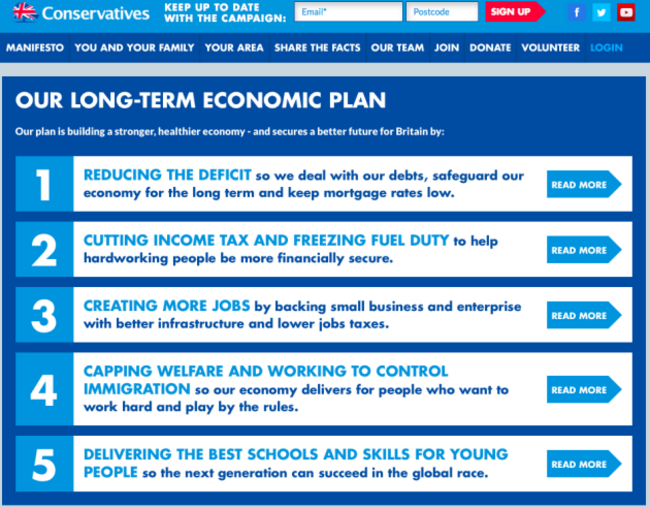
During last May’s UK general election, David Cameron and the Conservative Party used the phrase repeatedly in media appearances, on campaign literature and on its website:
In the immediate aftermath of that election Fine Gael TDs pointed to the Tory success, in winning an overall majority, as a development which bodes well for its own chances in the forthcoming general election.
Here was a coalition government which had to hand out some pretty savage austerity but whom the electorate ultimately decided could be the most trusted on the economy. It’s little wonder Fine Gael has nabbed the “long-term economic plan” from the Tories for its own election message.
As the Irish Times reported last month, senior Fine Gael strategists met with their Conservative counterparts in London last July to discuss strategies. Fine Gael are borrowing the strategy, but not the policies the party insists, lest they be painted as the Irish Tory Party.
While a Fine Gael overall majority is highly unlikely this year, Kenny has outlined some of the key commitments on the economy that his party will be putting to the country in the hope it will be returned to government one way or another.
The Taoiseach said that if re-elected Fine Gael will complete the process of equalising the tax system for the self-employed by introducing an earned income tax credit of €550 by 2018.
This will involve matching the £1,650 PAYE tax credit with an increase in the earned income tax credit by at least another €550 in 2017.
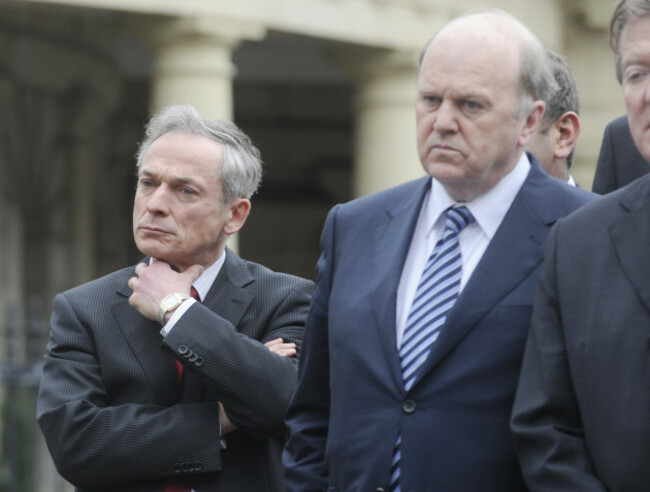
He said that Simon Harris, along with Finance Minister Michael Noonan and Jobs Minister Richard Bruton, are preparing the “long-term economic plan” which will be published prior to the Fine Gael Ard Fheis in Citywest on 22 and 23 January.
Kenny said the plan will include more measures to support job creation across the country, with a particular focus on supporting Irish-owned businesses.
He explained: ”That’s why we had the regional action plans, that’s why we need the investment in the capital programme, that’s why we need follow through on the broadband initiative, with procurement to be advertised very shortly.
It will also focus on making work pay, with a particular focus on abolishing Universal Social Charge by the end of 2020.
“It will include welfare reforms and the most affordable access to childcare and GP care for working parents, which has been a strain on them for quite some time.”
He said it will also focus on investing in public services by growing the economy “without repeating the reckless spending growth that drove this country off a cliff a decade ago”.

To embed this post, copy the code below on your site














have your say