Sign in. It’s quick, free and it’s up to you.
An account is an optional way to support the work we do. Find out more.
Sign in. It’s quick, free and it’s up to you.
An account is an optional way to support the work we do. Find out more.
THE HSE HAS issued a warning about ticks spreading Lyme Disease, urging anyone out walking, hiking or doing anything else outdoors to keep an eye out for the pesky insects.
“As people are more likely to engage in outdoor pursuits in the summer months, ramblers, campers, mountain bikers, and others who work and walk in forested or grassy areas must be vigilant against tick bites,” public health specialist Dr Paul McKeown said.
Ticks are tiny insect like creatures that feed on the blood of mammals and birds and will also feed on humans and occasionally dogs.
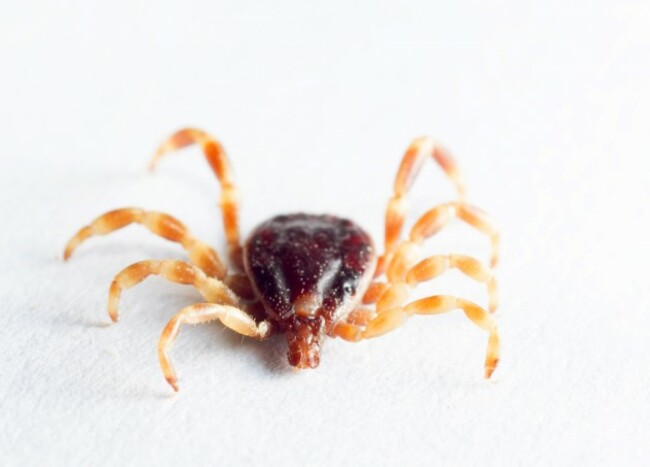
The creatures are more numerous in the summer months, as higher temperatures bring them out.
Bites can be prevented by:
“Only a minority of ticks carry infection,” McKeown added.
“Ticks generally have to be attached to a person for a number of hours before passing on the infection, so rapid removal of ticks is important.
“If a tick is removed within a few hours, the risk of infection is low.
“The entire tick, including any mouthparts which might break off, should be removed with a tweezers by gripping it close to the skin.
The skin where the tick was found should then be washed with soap and water and the area checked over the next few weeks for swelling or redness.

The commonest feature of Lyme Disease is a rash – which occurs in about three-quarters of patients. It can last up to a month, and be several inches in diameter.
People can also complain of flu-like symptoms such as headache, sore throat, neck stiffness, fever, muscle aches and general fatigue.
Occasionally, there can be much more serious complications – involving the nervous system, joints, the heart or other tissues.
In Europe, between 5% and 25% of the population (depending on the country you’re in) have antibodies in their blood to Lyme Disease, meaning they have been bitten by an infected tick at some stage in their lives.
Health authorities record between eight and 13 cases of the disease in Ireland each year – but as some people never become aware that they have been infected, the actual number of cases could be as high as 100, the HSE says.

To embed this post, copy the code below on your site













have your say