Sign in. It’s quick, free and it’s up to you.
An account is an optional way to support the work we do. Find out more.
Sign in. It’s quick, free and it’s up to you.
An account is an optional way to support the work we do. Find out more.
Updated at 8.20pm
“IT TAKES A personal toll… I have of course a family that is worried.
“But they are used to it… I’ve been working in Gaza throughout the last four Israeli attacks.
They know I come back in one piece.
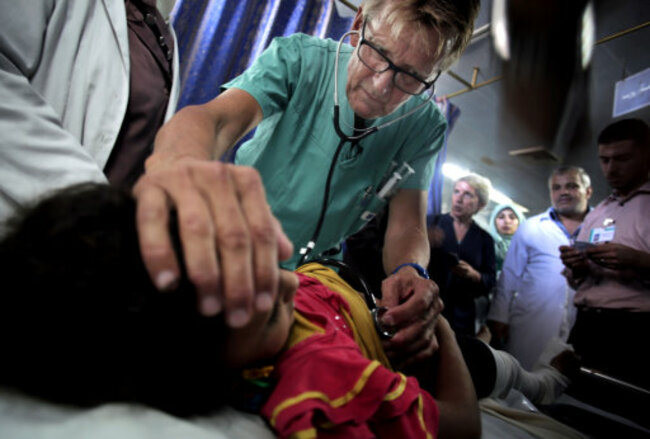
One year on from the start of Israel’s ‘Operation Protective Edge’, veteran Norwegian medic Dr Mads Gilbert has been speaking about his time working in the emergency room of Gaza’s Shifa hospital during the 2014 conflict.
“Conflict,” in fact, is a word he declines to use.
“I call it an attack or an onslaught, not a conflict – because a conflict implies … when we use that word, it implies a disagreement between two parties,” he says.
Gaza is occupied.
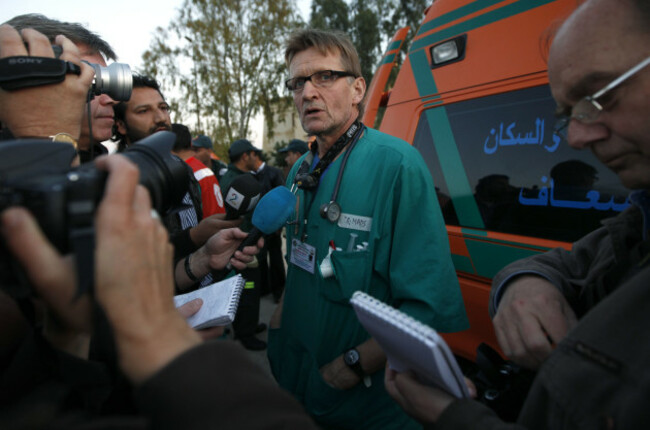
The 2014 conflict
2,251 Palestinians were killed during last summer’s violence, including 551 children. More than 10,000 were wounded and 100,000 were left homeless.
On the Israeli side 73 people were killed, of whom 67 were soldiers. Up to 1,600 were wounded, according to the United Nations.
The conflict broke out after an upsurge in hostilities in June of last year.
During the evening of July 7 at least 80 rockets were fired into southern and central Israel, with the military wing of Hamas claiming responsibility.
The next day, Israel launched ‘Protective Edge’ with air strikes, on what it said were “approximately 50″ Gaza targets.
Bombardments of the coastal strip continued until an Egyptian-brokered truce was reached in Cairo at the end of August.
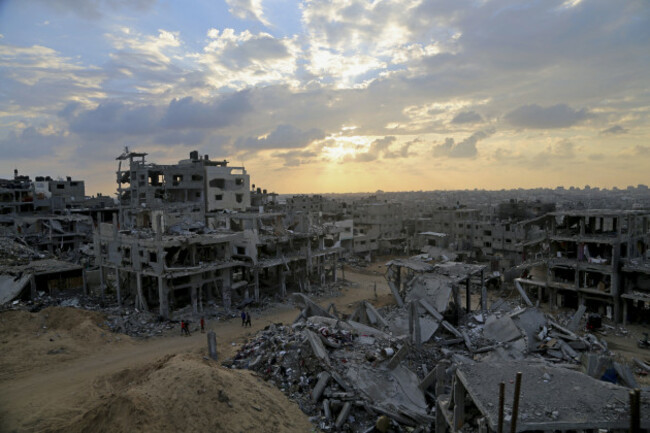
68-year-old Gilbert, who has volunteered on and off at the Shifa hospital for the past 18 years, became a familiar face and voice last summer, regularly speaking to TV and radio reporters from the besieged territory as he attempted to convey the reality of what was happening in the city to international viewers.
His new book, documenting the 51-day conflict, ‘Night in Gaza’, has just been published – and the medic will be in Dublin this Friday for a signing, and to give a talk at Belvedere College.
It’s part of his ongoing activism effort, against what he describes as Israel’s “propaganda machine”.
“I think ordinary people, wherever they are – they don’t want people to be treated like the Palestinian people are being treated. It’s time the sharp end of these Israeli attacks came out, and that’s what I’m trying to provide. ”
Speaking out
Gilbert was permanently banned from entering the Gaza Strip by Israel last November, with Israel citing security reasons for the ban.
He insisted at the time that he had never broken any Israeli rules during his time working in the city – adding that his regular reporting on the deaths and injuries suffered by the Palestinian people had angered authorities.
“If I should take precautions to not irritate the Israeli government or not to provoke the Israeli government, then I would stay muted,” he says, in a phone interview with TheJournal.ie.
I don’t want to be muted. I want to speak up about what I see and what I experience.
“I want as many parts of the world as possible to get a grip of the reality of the sharp end of the occupation of Palestine and the Israeli bombing and the siege of Gaza.
“Only through conveying the realities on the ground can we have an open and fair discussion about right and wrong.”
From his perspective, he says:
Gaza is protecting life, Israel is providing death.
“In order to show that, you need the factual information on the ground – and if I should balance everything I say with the censorship of the Israeli government, I would have to shut up.”
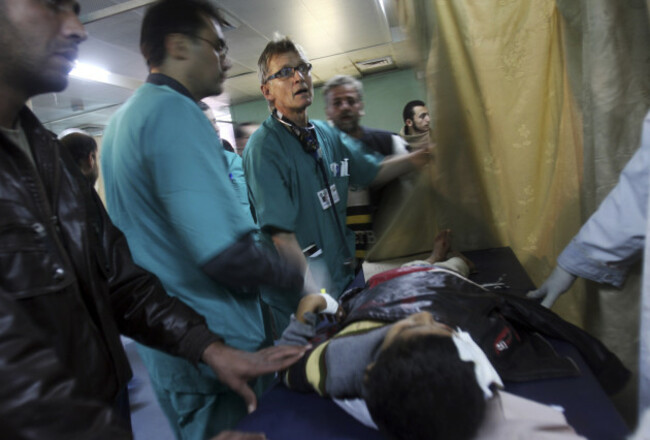
The Norwegian says he only became aware of the Palestinian cause in 1967, after he volunteered to work at a kibbutz during the Six Day War.
I was brought up in the typical narrative of Israel being the blooming desert: the socialist experiment we had to support. I had never heard about the Palestinian people.
He withdrew as a volunteer, he says, “and I became an activist for the Palestinian cause”.
In 1982, working as a doctor in Lebanon, he “saw for the first time the brutality of the israeli war machine”.
He adds:
It was a sort of an endless misery of death and destruction.
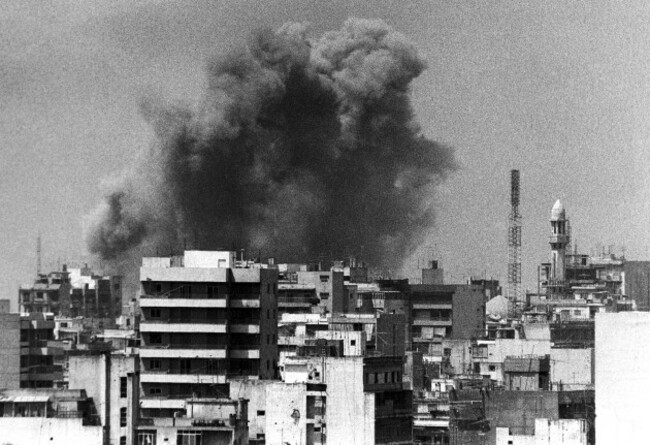
Asked about the personal toll of working and operating, under siege, in the Shifa hospital, he is quick to pay tribute to his fellow staff.
“My personal situation, compared to my colleagues – the nurses, the doctors, the paramedics and the ambulance system, is easy…
“Of course it is a phenomenal strain on your emotional reserves to see all this meaningless suffering from ordinary people in Gaza,” he says.
“All these injuries: maimed, torn apart, decapitated, amputated children, women and men – of course it is an enormous stress on your feelings, because of course everyone should have been safe and alive. Every one of these injuries is man-made.
This feeling, as a doctor, of seeing all this avoidable suffering, all this avoidable blood and death and misery – of course takes an enormous toll.
“But I maintain my strength by learning from my Palestinian colleagues: to see their steadfastness, their high morale, their working capacity, and their total lack of complaints.
“They just stand tall day after day, week after week.”
Dr Mads Gilbert will be signing his latest book in Hodges Figgis on Dawson Street at 12.30pm on Friday. Tickets for his Belvedere talk can be purchased here.

To embed this post, copy the code below on your site




have your say