Sign in. It’s quick, free and it’s up to you.
An account is an optional way to support the work we do. Find out more.
Sign in. It’s quick, free and it’s up to you.
An account is an optional way to support the work we do. Find out more.
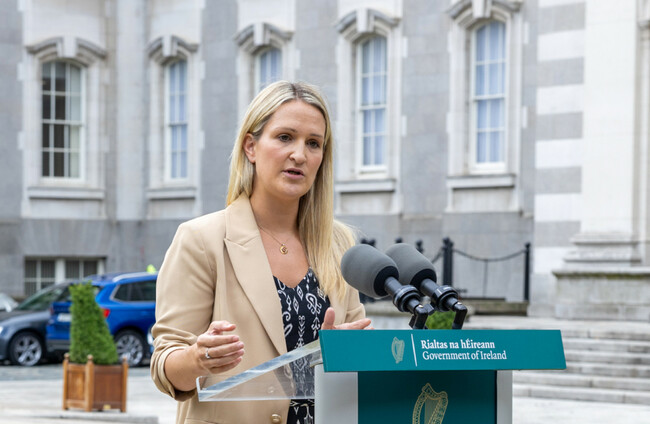
MINISTER FOR JUSTICE Helen McEntee has said that “you can never have an exact date for legislation” when asked when a proposal for lower speed limits would be implemented.
McEntee’s government colleague, minister of state at the Department of Transport Jack Chambers, has said that he will bring proposals to Government this month to lower the baseline speed limits on many roads by 20km/h.
Speaking on Morning Ireland, McEntee said she couldn’t provide more clarity on when the legislation would be passed other than to repeat Chambers’ deadline of the end of 2024.
“Legislation takes time and unfortunately, it comes down to making sure that you make the right decision. I know he’s talking about reducing speed limits in certain areas. That’s borne by facts,” she said.
Under Chambers’ proposal speed limits will be lowered from 100 km/h to 80 km/h on national secondary roads, from 80km/h to 60km/h on rural roads, while within towns, cities and built up areas, the limit will be 30km/h.
Roads on the outskirts or arterial routes around urban areas will have a limit of 50km/h.
The proposal comes as road deaths have risen by almost 25% so far this year compared to the same period last year.
The Road Safety Authority (RSA) and gardaí said earlier this month that years of road safety progress “is being undone” as new figures revealed that road deaths in the first half of 2023 were the worst for six years.
“If you look at a pedestrian that’s hit by a car traveling at 50 kilometres an hour, they have a 50% chance of survival. Increase that by 10, it’s 10%. These are the facts that are emerging,” McEntee said.
“I’ve met with the minister only this week, obviously the Dáil is not sitting now. So it’s a matter of bringing this to Cabinet and getting approval. It’s bringing it through the houses as quickly as possible. You can’t fast track a process any quicker than it will go but he is absolutely committed to bringing this forward.”
“In particular in the last few months we’ve had a series of horrific accidents and a significant number of deaths and I have to offer my sympathies to all of the families and communities that have been impacted,” she said.
The minister also added that she believed a Garda Representative Association (GRA) no confidence ballot in Garda Commsioner Drew Harris wasn’t “the right approach” to an industrial dispute.
“I understand why it’s so important to Garda members. It’s important for family life. It’s important for work life balance. It’s also important to make sure that the Garda Commissioner is able to put the right teams in place at the right time,” she said.
“This is not going to change the fact that people still have to get around the table and negotiate and discuss and find a way forward.”

To embed this post, copy the code below on your site















have your say