Sign in. It’s quick, free and it’s up to you.
An account is an optional way to support the work we do. Find out more.
Sign in. It’s quick, free and it’s up to you.
An account is an optional way to support the work we do. Find out more.
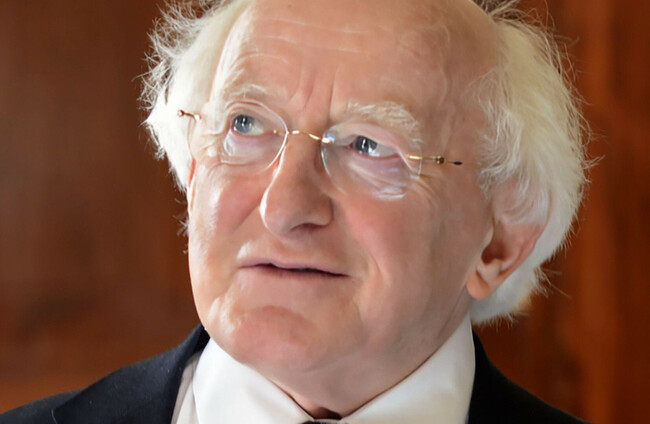
PRESIDENT MICHAEL D Higgins had a “mild stroke” during his health troubles last month, but he’s “fine now” after his release from hospital.
In a wide-ranging interview with the Irish Times, the president described the stroke as his “little episode”, discussed failures of EU migration policy, Ireland’s links with Britain and conversations he has had with the UK’s King Charles on their shared health problems.
On his own hospitalisation, Higgins told the newspaper: “I’m fine now. What I had was a form of mild stroke. It didn’t affect my cognitive abilities.
“It affected simply my motor side, which was on the left-hand side.”
This affected his left hand for a period but it is now “fully back”, Higgins said.
While the stroke “exacerbated” lower back issues, this will be “fixed in the next week”.
The president is in England this week to receive an honorary doctorate from the University of Manchester, where he was a postgraduate student in the 1960s.
He also shared that he has been in communication with King Charles in recent weeks, including on the phone after Higgins was hospitalised last month. This came on the back of the UK monarch learning he had cancer, which was discovered after he was treated in hospital for prostate issues.
Higgins said of their conversation: “I’ve had prostate operations and I told him that people will speak to you about ‘mild discomfort’ – I said that is one of the greatest abuses there is of the English language. We had a laugh about that.”
The Irish Times interview also saw Higgins criticise the immigration policy of “some of the EU members”, calling it “ill informed” and “not based on decent scholarship, it’s not based on consultation with the source countries”.
He also appeared to criticise Britain for its pursuit of a policy, passed this week in Westminster, which will allow it to deport illegal migrants to Rwanda.
Higgins was critical of “the idea of paying client countries in Africa to do certain things that you could have done [yourself] if you’d went about understanding it properly”.

To embed this post, copy the code below on your site











have your say