Sign in. It’s quick, free and it’s up to you.
An account is an optional way to support the work we do. Find out more.
Sign in. It’s quick, free and it’s up to you.
An account is an optional way to support the work we do. Find out more.
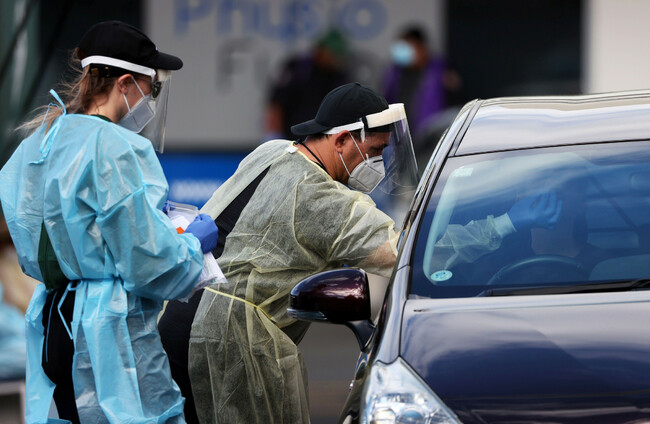
NEW ZEALAND’S COVID-19 Response Minister Chris Hipkins has announced that parts of the country will go into a level three lockdown from today.
An area of Northland, a region on New Zealand’s North Island, entered the lockdown at midnight on 2 November. This will be reviewed by the cabinet on Monday 8 November.
A confirmed case of Covid-19 was detected in the town of Taipa, with a household contact also testing positive today.
In a statement on RNZ, the country’s public broadcaster, Minister Chris Hipkins said, “On the basis of public health advice, including from the Northland Public Health Team, we’ve decided to move the northern part of Northland into alert level 3 from 11:59 pm tonight, through to midnight on Monday.”
He said that the new cases were separate from other active cases in the region and as a result, it’s “unclear at this point how they could have picked up the virus”.
“This means there is a strong possibility of one or more missing links in the chain of transmission and that means there could be undetected community transmission occurring right now in Northland,” he said.
The lockdown will facilitate “extensive” contract tracing and testing to discover how these cases contracted the virus.
Under level three, travel is restricted outside of local areas for exercise, shopping and going to school. People are encouraged to stay at home and to work from there.
In order to minimise disruption to the whole area, a boundary will be enforced with police presence throughout. Those outside of the border will remain in alert level two.
The Northland region has had one of the lowest vaccination uptakes than the rest of New Zealand at 64%. Until vaccination rates go up, Hipkins said, alert level lockdowns are an important protection tool.
More than 17,000 doses are required in this area for the whole country to reach 90% uptake of the eligible population.
He said, “These lower rates of vaccination make the risk of an outbreak that much greater, especially amongst the 11,000 Māori in the region, who are still unvaccinated.
“We need people to get the vaccine before the virus reaches them first,” Hipkins said.
To embed this post, copy the code below on your site










have your say