Sign in. It’s quick, free and it’s up to you.
An account is an optional way to support the work we do. Find out more.
Sign in. It’s quick, free and it’s up to you.
An account is an optional way to support the work we do. Find out more.
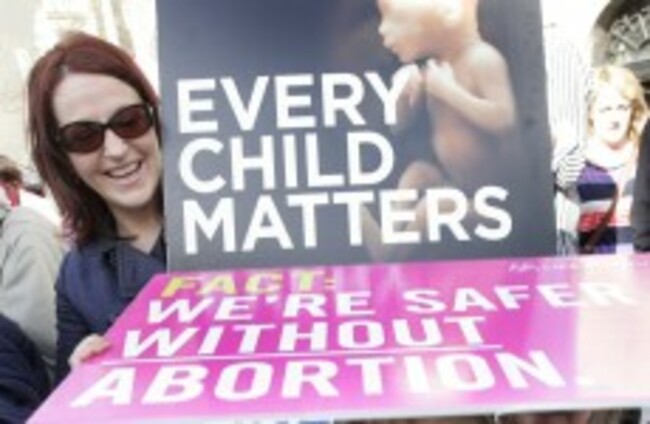
IN A CAREFULLY-worded statement, the umbrella group for religious communities in Ireland has outlined its opposition to government plans to legislate for abortion.
The Conference of Religious of Ireland (CORI) said it was “acutely aware” that women who experience a difficult pregnancy should be treated with the “utmost compassion, sensitivity and care”, acknowledging the government’s duty to legislate for complex situations within a “transitioning and diverse society”.
It outlined its reasons for opposing the (heads of) Protection of Life During Pregnancy Bill and called for politicians to be given a free vote, as well as a widening of the use of conscientious objection to include entire institutions. The heads currently give the right to conscientious objection to individual doctors, but not hospitals.
“This freedom cannot be restricted to medical practitioners, midwives and nurses. Legal persons such as hospitals and institutions must also be free to exercise their right to conscientious objection,” said CORI.
Not providing a free vote or the option to abstain from participation in a “legislative process that could introduce abortion to Ireland…gives the hallmark of a totalitarian regime.
The organisation gave six reasons why it stood against the bill. It said its belief that the right to human life is the most fundamental of human rights under pinned that response.
“CORI appeals to legislators to recognise that abortion legislation concedes a basic principle of law – that innocent life may not be intentionally destroyed,” read the statement.
“Currently, medical treatment of mothers, whose lives are in danger, including surgery, therapy and medication is ethically permissible even if this results in the unintended death of an unborn child. This is different from abortion, which is the intentional termination of the life of the baby and is morally wrong.”
According to the group, the controversial inclusion of suicide ideation as a grounds for a legal termination raises “serious moral questions”, stating the destruction of a foetus is not a solution.

To embed this post, copy the code below on your site















have your say