Sign in. It’s quick, free and it’s up to you.
An account is an optional way to support the work we do. Find out more.
Sign in. It’s quick, free and it’s up to you.
An account is an optional way to support the work we do. Find out more.
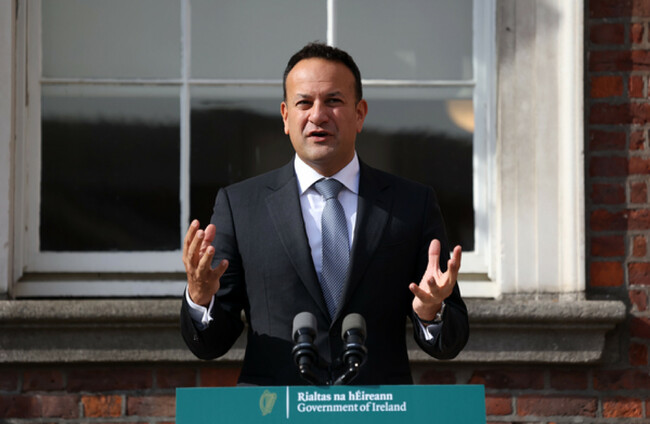
TÁNAISTE LEO VARADKAR has said the government will close any loopholes that allow people to conceal their assets.
Yesterday it was revealed that dozens of heads of state and government, including the King of Jordan and the Czech prime minister, have hidden millions in offshore tax havens, according to an investigation published today by the ICIJ media consortium.
The so-called “Pandora Papers” investigation – involving some 600 journalists from media including The Washington Post, the BBC and The Guardian – is based on the leak of some 11.9 million documents from 14 financial services companies around the world.
The Irish Times reports today that an empty Dublin office is being used as a registered address for 800 limited partnerships listed in the papers.
Asked about the issue today, Varadkar said he had only heard the revelations this morning, stating that it is a “matter of concern”.
“We don’t want to be part of any supply chain where people conceal assets,” he said, adding, “we don’t want any part of it”.
Department officials have been tasked with examining what company law may need to be modified, he said. Revenue are also reviewing what tax issues might need to be changed.
“If we need to make changes, close loopholes, we will do that,” he said, stating that changes could be made in the Finance Bill on Budget Day that would end such activity happening in Ireland.
Earlier, EU Commission President Ursula von der Leyen said the European Union must do more to combat tax evasion and aggressive tax planning.
Speaking during a visit to Helsinki, von der Leyen condemned the practices brought to light in the huge data leak.
“Tax evasion and aggressive tax planning is completely unacceptable,” von der Leyen said.
“We have in the European Union some of the highest tax transparency standards in the world, but as we see it’s not enough, more work is needed.”
In total, the ICIJ found links between almost 1,000 companies in offshore havens and 336 high-level politicians and public officials, including country leaders, cabinet ministers, ambassadors and others.
More than two-thirds of the companies were set up in the British Virgin Islands.
In most countries, the ICIJ stresses, it is not illegal to have assets offshore or to use shell companies to do business across national borders.

To embed this post, copy the code below on your site










have your say