Sign in. It’s quick, free and it’s up to you.
An account is an optional way to support the work we do. Find out more.
Sign in. It’s quick, free and it’s up to you.
An account is an optional way to support the work we do. Find out more.
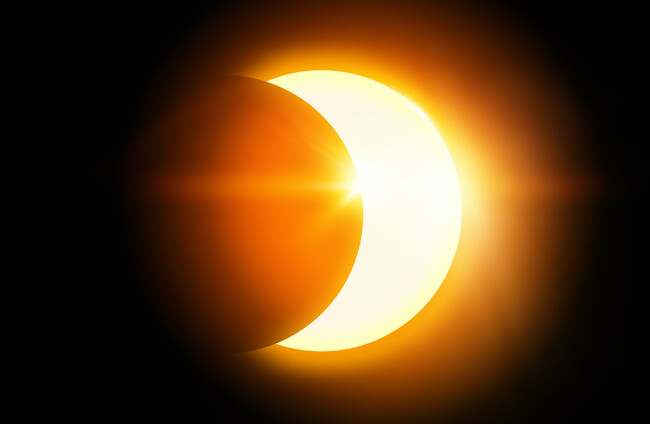
IRISH SKIES WILL darken slightly tomorrow morning as almost half of the sun’s diameter will be covered over in a partial solar eclipse.
The astronomical event will happen just before 10am high in the morning sky as the moon moves in between the Earth and our star.
David Moore of Astronomy Ireland said it is the deepest partial eclipse since 20 March, 2015 and the next such event will happen in March 2025.
“Given this is the best eclipse in a decade, everyone in Ireland should make sure they witness it over the two and a half hours that it will take place so I strongly recommend people book the day off work to see this extremely rare natural spectacle.
“While Ireland is a long way from the centreline of this Annular Eclipse, if it’s clear we will see a spectacular Partial Eclipse.
“The good news for Ireland is that the eclipse will be high in the sky, about 50 degrees up in the southeast.
“The eclipse will begin just before 10am when we will see the ‘first bite’ being taken out of the Sun, and it ends just before 12:30pm. Times around Ireland may vary but only by a few minutes.
“Maximum eclipse will occur a few minutes after 11am with up to 45% of the Sun’s diameter being covered from Donegal. Other places in Ireland will see at least 40% of the Sun covered.
“Given the Irish weather it is important to note that you can see the Eclipse for over two hours, so even if the weather forecast isn’t great, plan to watch the entire event, in the hope of seeing something!”
Down through history, Moore said, eclipses have been blamed for the fall of the Greek and Roman empires.
“Eclipses are extremely important. It is a little-known fact that eclipses in the past have drastically shaped the path of human civilisation.”
Moore said that the eclipse can be viewed through specialist eclipse glasses or by passing sunlight through a pinhole punched in tin foil or a sheet of paper – picking up the Sun’s image on a sheet of white paper placed a few feet away.
He advised that people should not look directly at the solar phenomenon as this can cause damage to the eyes.

To embed this post, copy the code below on your site












have your say