Sign in. It’s quick, free and it’s up to you.
An account is an optional way to support the work we do. Find out more.
Sign in. It’s quick, free and it’s up to you.
An account is an optional way to support the work we do. Find out more.
REPUBLICAN MIKE PENCE and Democrat Tim Kaine square off tonight in the least high-profile debate of the current US general election campaign.
The two men were picked as ‘safe pairs of hands’ by their respective campaigns. As a result, their debate – taking place in Virginia – is generating nowhere near as much interest or attention as the first top-of-the-card clash between Donald Trump and Hillary Clinton last month.
The two Veep nominees – Pence, in particular – were chosen to appeal to voters who may be put off by their more divisive running mates.
And while Trump and Clinton have been famous for decades, these two were little known outside of their own electoral areas until this year.
So what can we expect from this evening’s debate?
And while we’re at it – as Butch Cassidy and the Sundance Kid once said - who are those guys?
Unveiled by the Trump campaign back in July, Indiana governor Mike Pence adds precious Washington experience to the Republican presidential ticket.
The 57-year-old Christian conservative is a lawyer by training and former radio talk show host with strong communication skills.
He knows his way around Washington too: He held a seat in the House of Representatives from 2001 to 2013 and served as chairman of the House Republican Conference – the party’s third most important position on Capitol Hill – from 2009 to 2011.
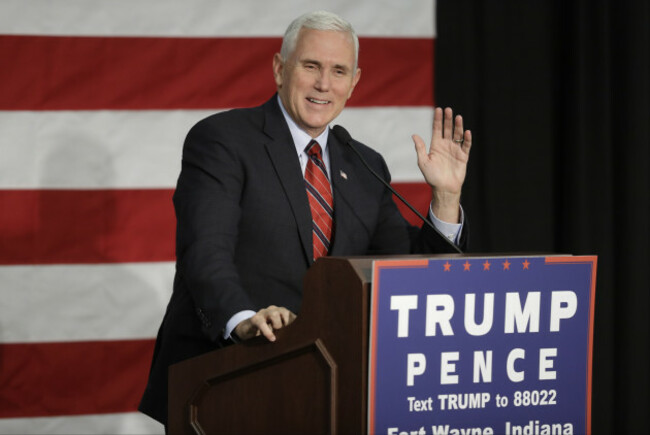
Seen as disciplined and relatively discreet, Pence was apparently the favourite pick of Trump’s adult children, and was chosen over New Jersey Governor Chris Christie to fill the VP slot on the ticket.
A conservative defender of ‘family values’, he’s against abortion and gay marriage, and opposed to the idea of the US taking in Syrian refugees.
His low-profile, calm personality means he’s in little danger of overshadowing Trump at the top of the ticket. When he does make an appearance in the headlines, it’s most often to defend or explain something his boss has said…
Also unveiled in July, Tim Kaine is a senator from Virginia with strong foreign policy credibility who could help the Democrats bring in two key voting blocs: Hispanics and voters in his own battleground state.
The Spanish-speaking lawyer, widely seen as a safe choice for Clinton, emerged as a frontrunner in the VP stakes because he ticks so many boxes.
In addition to his defence and foreign policy credentials as a member of the Armed Services and Foreign Relations committees, his language skills are a major asset in a year when the Latino vote could be decisive.
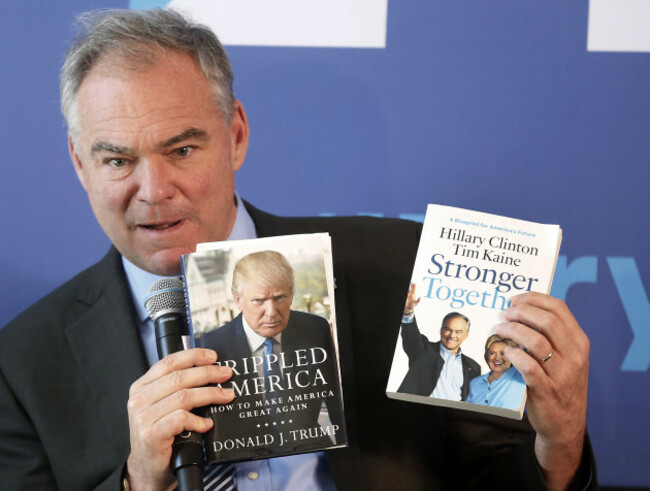
Perhaps above all, Kaine is a middle-of-the-road choice who can put independent male voters at ease.
The senator is aware that he lacks high wattage, like that exuded by Republican pick Sarah Palin in 2008. “I am boring,” he smilingly acknowledged in a recent television appearance.
Elected mayor of Richmond, Virginia, in July 1998, governor of the state in 2006, and then senator in 2012, “he has never lost an election,” as Hillary Clinton herself noted recently.
He hasn’t made the news much at all since clinching the nomination:
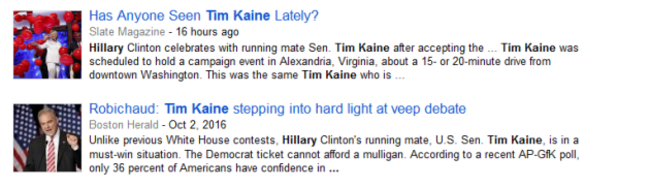
Should you tune in for the debate? Up to you, but it’s not on till 2am Irish time, and if you’re interested in seeing sparks fly you’d probably be better off tuning in to either of the two remaining Trump v Hillary clashes.
In short, don’t be surprised if #watchingpaintdry trends on Twitter overnight:

According to Geoffrey Skelley of the University of Virginia Center for Politics:
Given the polarising nature of the two major-party nominees and the incredible attention paid to each of them, the vice presidential debate in 2016 may be even more of a sideshow than it normally is.
Joel Goldstein, a constitutional law professor at St Louis University, reckons “Pence may try to provide a more respectable face for the Republican ticket”.
Kaine, meanwhile, will “certainly present himself and Clinton as policy-oriented people committed to helping the less fortunate and the middle class”.
He added:
I would expect most of the discussion to be about the presidential candidates and their policies, not about the vice presidential candidates.
And those for?
Scouring the internet for an expert who explicitly recommended tuning in (or at least, who recommended Americans tune in) we came across co-author of The VP Advantage, Kyle Kopko, who told the Wall Street Journal:
“Even though vice presidential debates don’t get a lot of attention relatively speaking, voters still ought to pay attention.
“The role of vice president has changed over recent decades and they are much more important policy advisers and trouble shooters.
They have great informal powers.
With reporting by © AFP 2016

To embed this post, copy the code below on your site














have your say