Sign in. It’s quick, free and it’s up to you.
An account is an optional way to support the work we do. Find out more.
Sign in. It’s quick, free and it’s up to you.
An account is an optional way to support the work we do. Find out more.
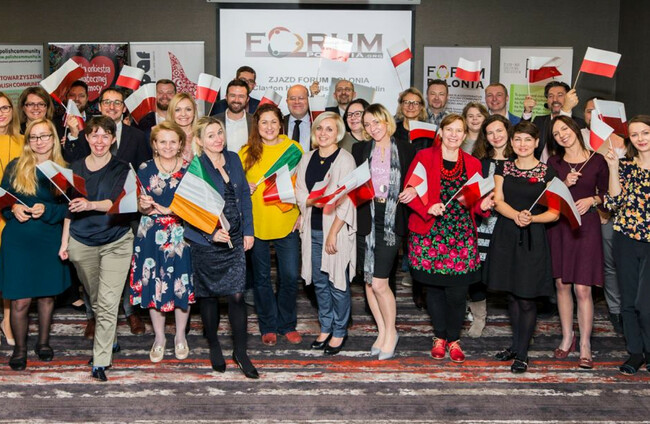
ONLY THREE POLISH nationals are running in the local elections this year, despite 19 candidates running in both the 2009 and 2014 election cycles respectfully, says a Polish community group.
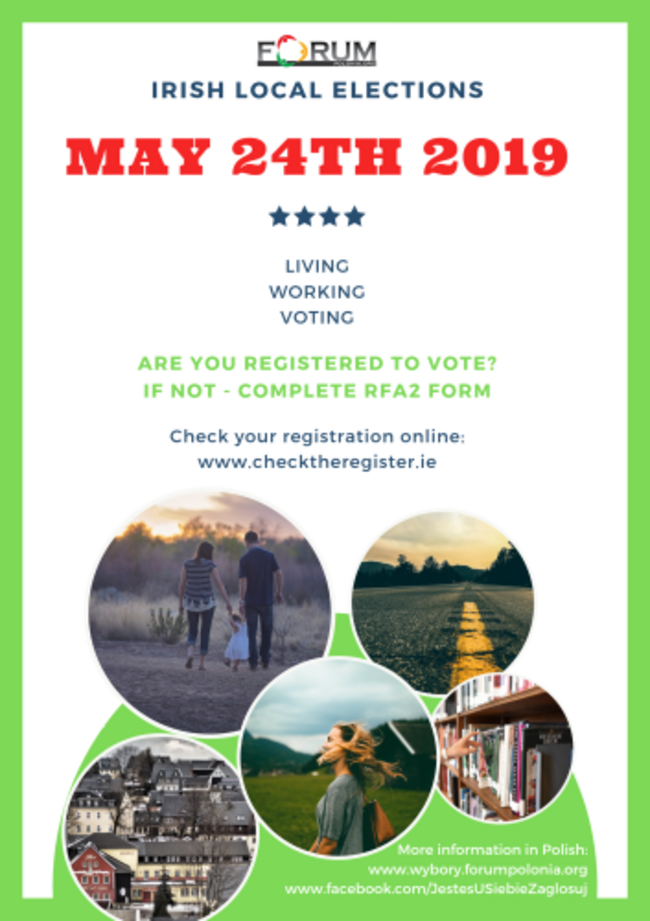
Forum Polonia, an organisation that brings together Polish communities and links them to Irish society, has launched a new voter information and awareness campaign for the Polish community in Ireland.
Viola Di Bucchianico of Forum Polonia says knowledge of voter and candidate rights for Polish nationals in Ireland could play a part in why so few are taking part in this year’s elections.
“I think a general lack of knowledge about Irish politics in general, of the system, that is one of the main issues,” she says.
Bucchianico says that there also seems to be a lack of visible interest from political parties in Ireland in encouraging Polish nationals to join a party or represent the community and run as a candidate.
Largest minority group
There are 122,515 Polish nationals living in Ireland according to the 2016 census, and they form the largest minority group in the country.
As members of the EU, Polish citizens in Ireland are eligible to vote in the European Parliament elections and can elect Irish or Polish MEPs.
“There was different circumstances,” Bucchianico says about the time during the 2009 and 2014 local elections when more Polish nationals ran as candidates.
It was a very active time, she says, in terms of Irish politicians targeting the Polish vote and organisations running workshops for immigrant groups on how get involved in the community.
She also adds there was a larger influx of Poles coming into Ireland during that time, and this might have resulted in Irish politicians taking an interest in the voting potential.
She says Forum Polonia is interested in better Irish-Polish integration and getting Polish nationals living in Ireland to be civic-minded and responsible citizens, with voting and community leaderships positions being important elements of that.
Bucchianico suggests that the registration process for voters should become more straightforward and transform into a electronic system, which could encourage more Poles to become involved and reduce barriers.
Forum Polonia says that while the Polish community have made significant contributions to their communities and the country as a whole, “it seems that political integration is still in its infancy”.
Reasons for disengagement
Agnieszka Wieczorkowska, a former local election candidate in Dublin, says that the decrease in candidates compared to previous years is”‘worrying”.
What are the reasons for such a drop? Maybe there is a need for more meaningful actions from the State institution or political parties to promote active citizenship and political engagement?
She adds that those Poles who have made their home here in Ireland must realise they have important responsibilities to this country and to the local community they live in.
“Civic participation is strengthening integration, so this campaign is very important to us,” she says.
Marcin Czechowicz, one of the Polish nationals running as an Independent candidate in the Dublin North Inner City area for this year’s local elections, says there could be several reasons for the perceived lack of political engagement by the Polish community.
He says after 15 years many Poles have left to go back to Poland as the economy improves over there, and some currently living here might think of doing the same. They might not be compelled to engage in politics just before leaving.
He also adds that Poland has a different type of election system where leaders of a party elect their candidates-to-be on the ballot papers, so that people only have the choice of ‘pre-selected’ candidates.
“I think many Poles in Ireland are not fully aware of that difference and they still think it’s all the same and there’s not much they can do to change that,” he says.
“And this lack of engagement in politics may also be caused by the general distrust in the politics/politicians,” he adds, which he says is a mentality brought over by Poland where 15 years ago politics and politicians were considered inaccessible to the common people.
He says this distrust in political systems, by the Irish as well as the Polish, can’t be ignored as a factor.
We can see that in the cases of growing popularity of the grass-roots movements such as the ‘Yellow Vest Movement’ in France and in Ireland as well.
“And that might cause the general turnout on the election day to be lower than in previous years equally among the Irish and Polish voters,” he adds. “I hope this will not be the case but only time will tell.”
Czechowicz says while he sees some Polish friends engaging in various online campaigns before referendums and elections, it’s not many – and he hopes this may change among the second generation of Polish and Polish-Irish families.

To embed this post, copy the code below on your site













have your say