Sign in. It’s quick, free and it’s up to you.
An account is an optional way to support the work we do. Find out more.
Sign in. It’s quick, free and it’s up to you.
An account is an optional way to support the work we do. Find out more.
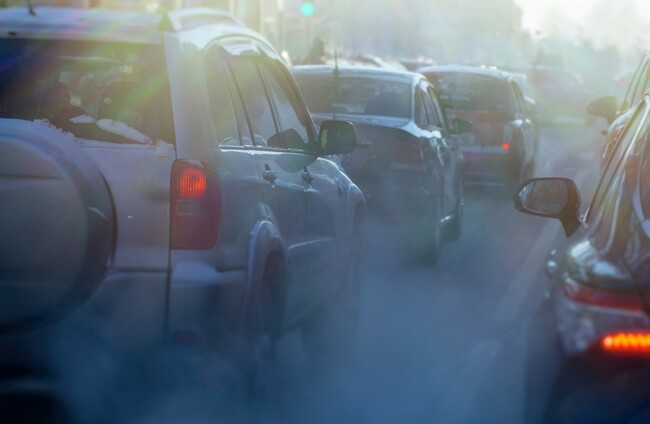
LEVELS OF AIR pollutant nitrogen dioxide (NO2) are possibly exceeding EU limits in areas of high motor traffic in Dublin, such as on the M50, and on certain city centre streets, representing a possible public health risk.
A new report from the Environment Protection Agency looks at indicators of the levels of NO2 in the air in Dublin, showing that the dangerous chemical may be exceeding EU annual limits in some areas.
NO2 levels have been increasing in Ireland as a result of a growth of motor traffic numbers. Emissions from traffic are the main source of NO2 in the country, along with electricity generating stations and industry.
The chemical can affect the throat and lungs with emphysema and cellular damage among the negative health effects.
The report found that areas with heavier traffic have the highest levels of No2 in Dublin. Levels were high – suggesting they may be over the EU limit – in particular places, including:
The report pointed out that levels of the pollutant are well within the EU limits in many residential areas.
Next steps
The results laid out in the report are an early warning, the EPA said. They point to a need for coordinated action to improve air quality in Dublin.
The report notes that if further monitoring confirms that EU limits are being exceeded, local authorities will be legally required to prepare air quality action plans to address the causes and provide solutions in the affected areas.
“This report outlines the findings of two recent studies which suggest that levels of Nitrogen Dioxide in certain parts of Dublin are exceeding the EU limit value,” said Dr Ciara McMahon, EPA programme manager.
“Given the known health impacts on people’s respiratory systems, this is a cause of concern.
Traffic is the dominant source of nitrogen dioxide in our urban areas and the public must be supported in taking clean transport choices if we want to reduce nitrogen dioxide concentrations in the air we breathe.
Dr McMahon said that recent climate action measures introduced by government for the transport sector in Dublin could “also act to reduce harmful health impacting pollutants such as Nitrogen Dioxide”.
This report is a further call for coordinated action to tackle transport emissions in Dublin.
In order to improve the availability of real-time air quality data, the EPA is setting up new permanent monitoring stations. In Dublin, one has been set up near Heuston Station and another is being installed near Pearse Street.

To embed this post, copy the code below on your site














have your say