Sign in. It’s quick, free and it’s up to you.
An account is an optional way to support the work we do. Find out more.
Sign in. It’s quick, free and it’s up to you.
An account is an optional way to support the work we do. Find out more.
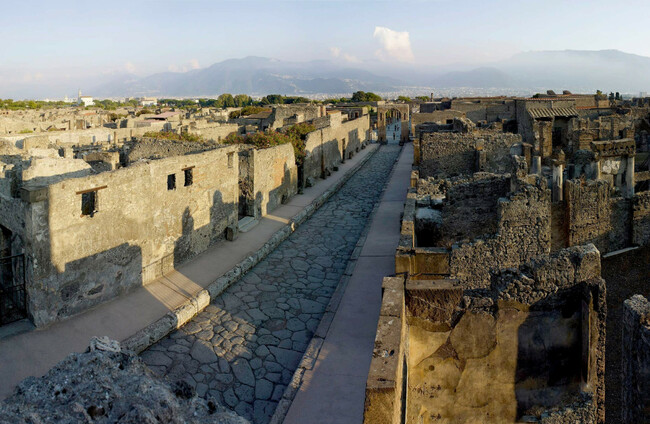
ARCHEOLOGISTS IN THE ancient city of Pompeii have discovered a remarkably well-preserved skeleton during excavations of a tomb.
The scientists believe the find has shed light on the cultural life of the city before it was destroyed by a volcanic eruption in AD79.
White hair and part of an ear, along with bones and fabric fragments, were found in the tomb in the necropolis of Porta Sarno, an area not yet open to the public that is located in the east of Pompeii’s urban centre.
The discovery is unusual since most adults were cremated at the time.
On a marble slab located on the pediment of the tomb, a commemorative inscription to the owner Marcus Venerius Secundio makes reference, extraordinarily, to performances at #Pompeii that were conducted in #Greek, direct evidence of which has never before been found. pic.twitter.com/TcUi9s99E3
— Pompeii Sites (@pompeii_sites) August 17, 2021
An inscription of the tomb suggested that its owner, Marcus Venerius Secundio, helped organise performances in Greek in Pompeii.
Experts said it was the first confirmation that Greek was used alongside Latin.
“That performances in Greek were organised is evidence of the lively and open cultural climate which characterised ancient Pompeii,” the director of the Archaeological Park of Pompeii, Gabriel Zuchtriegel, said in a statement announcing the discovery.
The eruption of Mount Vesuvius in AD79 destroyed Pompeii, which is located near modern day Naples in Southern Italy.
Excavations over the years have yielded remarkable discoveries of tombs, chariots and brilliantly frescoed homes.

To embed this post, copy the code below on your site














have your say