Sign in. It’s quick, free and it’s up to you.
An account is an optional way to support the work we do. Find out more.
Sign in. It’s quick, free and it’s up to you.
An account is an optional way to support the work we do. Find out more.
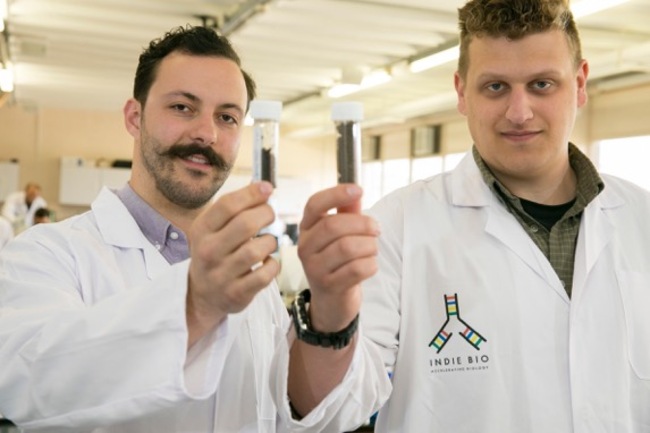
JAKE COTTER AND Dakota Hamill have a simple, if unconventional, request at the centre of their business plan: they want your soil.
The duo are behind bio-technology startup Prospective Research, which they have billed as the world’s first crowdsourced drug-discovery venture.
Their aim is to find new antibiotics by analysing minuscule organisms living in earth sent to them by scores of “microbe miners” across the globe.
And they’re even promising a financial incentive: a share of the income from any “blockbuster” antibiotic products developed through their technology to the prospectors who find the breakthrough samples.
“Our ultimate ambition is to be able to involve everyday people in drug discovery,” Cotter, 25, told TheJournal.ie.
“People feel like they’re helpless in discovering new drugs, that it’s all done in labs controlled by big pharma, when the reality it’s as easy as sending us a dirt sample from your backyard.
The further step down the road is we want to be a company that can supply viable pharma leads faster than any other company.”
The soil connection
Several of the most-important antibiotics in modern medicine have been discovered in soil bacteria, including streptomycin, the first effective treatment for tuberculosis, and tetracycline, used to treat many common STIs.
However the breakthroughs have stalled until recently when bio-technology made it easier to find and harvest microbes – or minuscule organisms - growing in soil.
In the meantime, bacteria have become increasingly resistant to antibiotics to the point where the World Health Organisation declared an approaching “post-antibiotic era” in which common infections could be life-threatening again.
But the pair, who formed Prospective Research after meeting as chemistry students at Salem State University in Massachusetts, plans to speed up the antibiotic-finding process through two tactics.
The first is crowdsourcing the soil to use for their tests to get a huge number of samples from sites everywhere, while the second is developing the technology to better unleash the drug-making potential in microbes.
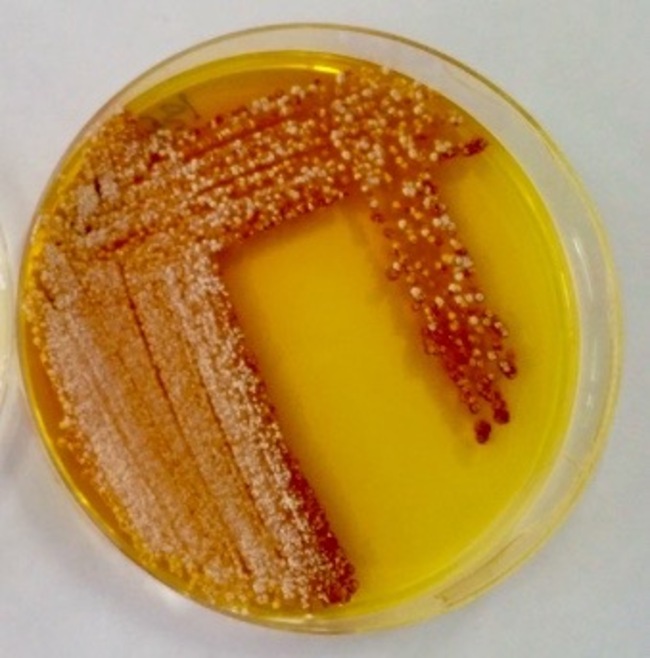
Hamill, 28, said the company would use robots to pick and screen over 24,000 samples per day, meaning they had the scope to accept millions of soil specimens each year.
While it sounds bad that we might just be screening lots of samples, that’s where the other part of the company is so important,” he said.
That involves the company’s proprietary technology, which the pair plans to patent shortly, to generate an antibiotics “lead” from every 10,000 soil samples it analyses, rather than roughly one in every million.
An Irish experiment
The duo this week completed their stint in Ireland at the Cork- and San Francisco-based IndieBio, the world’s first “synthetic biology accelerator” for high-potential international startups within the sector.
Simply, the programme offers startups which bring together the fields of biology and technology cash, lab space and expert advice to grow their ideas into viable businesses.

IndieBio is backed by entrepreneur Sean O’Sullivan’s SOS Ventures and other participants have included synthetic rhinoceros-horn maker Pembient and artificial milk company Muufrii.
Hamill said after spending several years synthesising compounds in his mom’s basement – which the duo converted into a functioning lab – their 60-day IndieBio stint had taken them to the point of having a commercial proposition.
They plan to return to Boston file their first few patents and within two months will launch a Kickstarter project to sell their “microbe miner bio-prospecting kits”.
The sets, starting from around $20 (€18) apiece, will set people up with the equipment to collect and return their soil samples, while also giving them online access to an up-close view of the microscopic creatures living in their gardens.
“It’s sort of like a lottery, but it’s going to save humanity at the same time,” Cotter said.
We’re trying to get people involved in doing science … and at the same time, our company could make a lot of money.”

To embed this post, copy the code below on your site










have your say