Sign in. It’s quick, free and it’s up to you.
An account is an optional way to support the work we do. Find out more.
Sign in. It’s quick, free and it’s up to you.
An account is an optional way to support the work we do. Find out more.
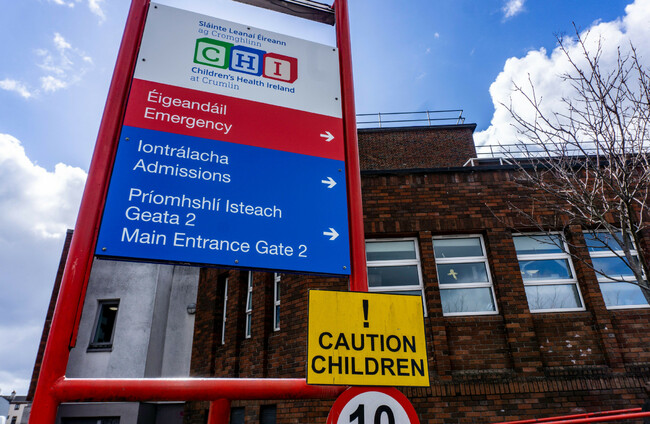
A MODEL OF Care for psychological services for cancer patients aged 0-24 years and their families has been launched today by the National Cancer Control Programme (NCCP) and Children’s Health Ireland (CHI).
The primary aim of the Model of Care is to provide a plan for the provision of psychosocial and psychological support services for children, adolescents and young adults (CAYA) with cancer over the lifetime of the current National Cancer Strategy (2017-2026).
Each year in Ireland, around 200 children up to the age of 16, a further 69 adolescents between the ages of 16 and 19, and 111 young adults between the ages of 20 and 24 are diagnosed with cancer.
Psycho-Oncology services for people under 15 years old will be delivered within the National Paediatric Psycho-Oncology (NPPO) service in CHI at Crumlin.
Adolescent and young adult psycho-oncology services (for 16-24 year olds) will be delivered within the recently developed AYA Cancer Service Network, which incorporates CHI at Crumlin, Cork University Hospital, Galway University Hospital, and St James’s Hospital.
The National Clinical Programme Lead for Psycho-Oncology,Dr Helen Greally, welcomed the launch today stating:
“Publishing this Model of Care is a particularly important milestone in that it outlines key aspects of psychosocial and psychological support necessary, so that the diagnosis of cancer in this age group can be managed in a way that ensures the best quality of life possible for the patient and the family.”
Co-Chair of the CAYA Psycho-Oncology Model of Care, Dr Chiara Besani added:
“The launch brings to fruition the work that has been developing in paediatric Psycho-Oncology over the past decade by hospitals and charities. While cancer is recognised as a potentially traumatic life event for CAYA, we aim to minimise the psychological, neurocognitive and psycho-social aspects of a cancer diagnosis and contribute to improved long-term quality-of-life for our patients.”

To embed this post, copy the code below on your site
















have your say