Sign in. It’s quick, free and it’s up to you.
An account is an optional way to support the work we do. Find out more.
Sign in. It’s quick, free and it’s up to you.
An account is an optional way to support the work we do. Find out more.
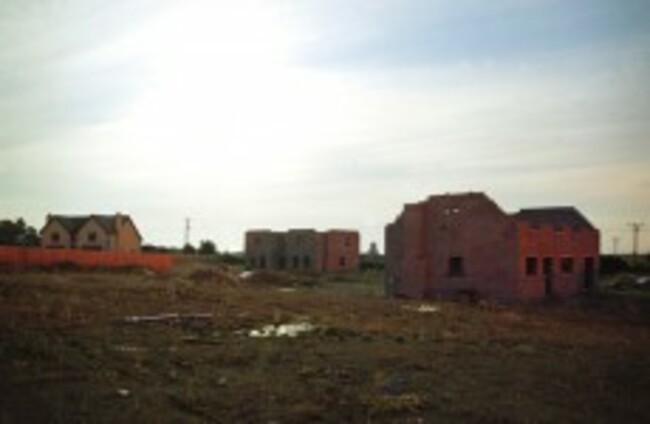

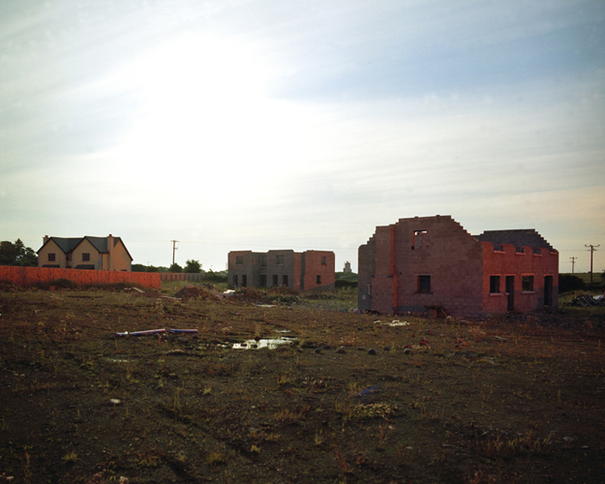
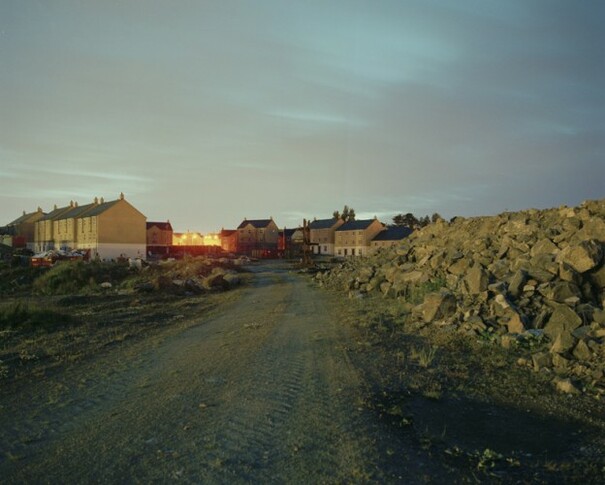
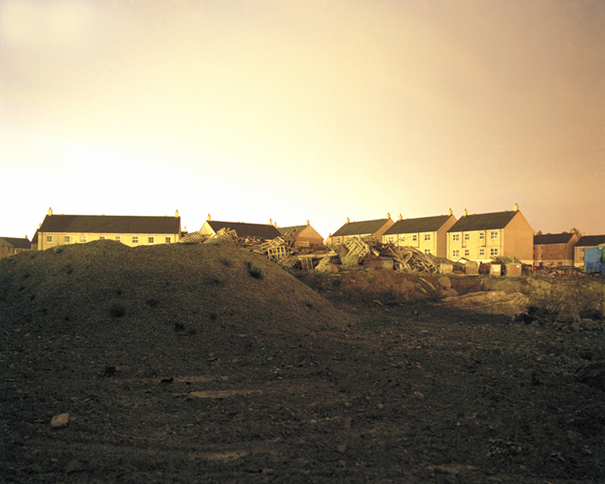
Photographer Anthony Haughey has spent much of the year travelling around Ireland, capturing images of the country’s ghost estates. Here he describes the strange experience of walking around the unfinished developments, eerie monuments to the end of Ireland’s gold rush.
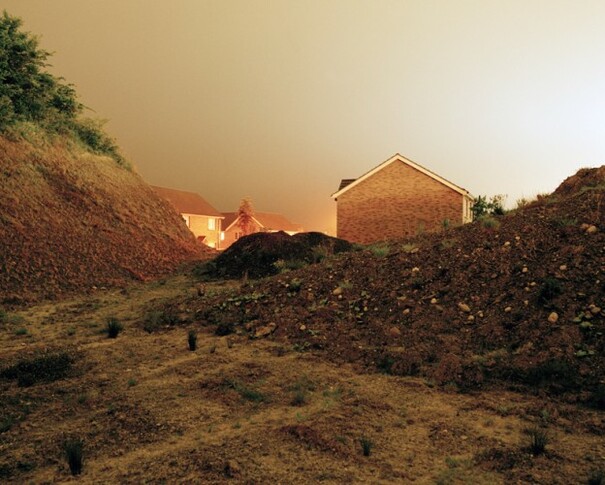
MY PHOTOGRAPHS WERE taken between sunset and sunrise – partly to avoid any unwanted attention from security guards, who I had originally feared would be patrolling these sites during the daytime. But during my first few visits, I quickly realised that security is now an unaffordable luxury. It is no longer clear who owns these sites. Many developments are now part of NAMA’s portfolio.
In an attempt to hide the problem and maintain a veneer of respectability, unusually high builders’ hoardings surround the perimeter of many of these estates. Fading posters featuring young families rehearsing utopian lifestyles can be seen pasted to the hoardings, but the dream behind the façade has become a nightmare.
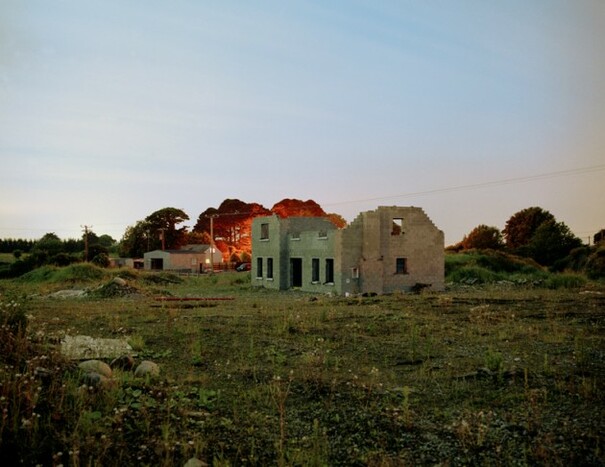
Peering through the holes which are beginning to appear in the slowly disintegrating hoardings, it reminds me of the Green Line ceasefire zone in Cyprus – a no man’s land where nature has reclaimed the built environment. But here in Ireland, nature is only beginning to seek revenge on the millions of tons of concrete poured over often-unsuitable terrain. The half-built houses resemble the battle-scarred war zones which I visited in the former Yugoslavia for an earlier project. This analogy is not so implausible. In Ireland these sites are and will continue to be contested territories.
For the unfortunate owners of homes within ghost estates – often surrounded by huge areas of vacant sites – life goes on. On weekend nights I have regularly experienced the strange phenomenon of becoming invisible, a ghost haunting a ghost estate. Wearing dark clothes, and in the absence of streetlights, I am camouflaged and easily blend into the night-time landscape. Between one and two in the morning, I observe the residents – couples, middle-aged men and young revellers – returning from their long hike to the ‘local’ pub. I stand still and watch with trepidation. I have no wish to engage in conversation – how would I explain my presence in their neighborhood at two in the morning? They pass within six feet of me, swaying as they valiantly navigate around unfinished pavements, oblivious to my presence.
Moving further into these dead zones, I continue with my mission, setting up the camera on a tripod, framing surreal landscapes. It is a genuinely shocking experience to explore these unfinished housing estates, with unpaved streets containing hundreds of unoccupied houses. I find myself calculating the cost of raw materials used to construct one house, multiplied by the rows of houses stretching out in front of me.
Anthony Haughey is an internationally recognised photographer, and lecturer in the School of Media at DIT. His project on ghost estates, Settlement, is showing as part of The Long View at the Gallery of Photography, Dublin, until August 28.
Slideshow: Ireland’s ghost estates by night. For more, see anthonyhaughey.com.
To embed this post, copy the code below on your site












have your say