Sign in. It’s quick, free and it’s up to you.
An account is an optional way to support the work we do. Find out more.
Sign in. It’s quick, free and it’s up to you.
An account is an optional way to support the work we do. Find out more.
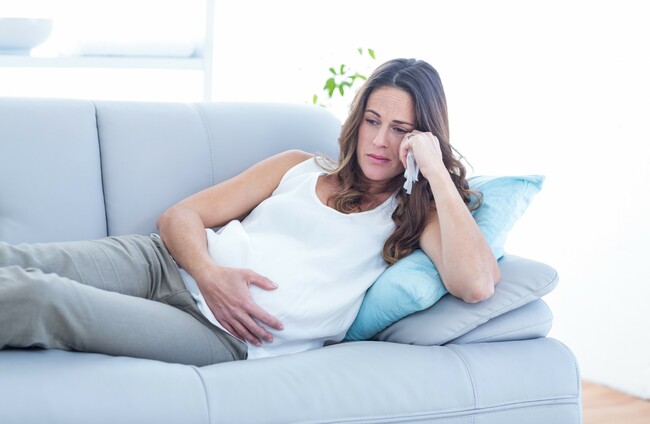

SO, YOU’VE SHARED the good news of your pregnancy and everyone is excited and congratulating you, saying how happy you must be.
Surely, they’re right? Pregnancy is meant to be a time of excitement and hope. So, what happens if inside you are far from ecstatic? In fact, you might be downright unhappy.
And to make matters worse you feel guilty about being unhappy. If you think you’re the only one to have these feelings during pregnancy rest assured you are not.
Most of us are familiar with the idea of post-natal depression, but when difficult feelings arise during pregnancy we often struggle to acknowledge them.
Recent research by website BabyNet revealed that pregnant women are at a far higher risk of depression than previous official statistics suggested. Of 1,000 women surveyed almost a third of these reported feeling anxiety and / or depression.
The poll suggests that few seek help because of feelings of guilt and shame.
How do I know if I’m depressed?
Mood swings can be a normal part of pregnancy. It’s not unusual to feel emotionally overwhelmed at things that wouldn’t normally upset you, however antenatal depression goes beyond this. It can affect you emotionally and physically and it can alter your behaviour.
Symptoms vary from woman to woman but may include:
Am I at risk of depression?
There is no one factor that will determine whether or not a woman will develop depression during pregnancy.
However, there are risk factors associated with both antenatal and post natal depression:
It is thought that there is a link between depression in pregnancy and subsequent postnatal depression. But. early detection and intervention can play a big part in preventing the development of postnatal depression
How do I deal with depression?
It is really important that you don’t try and cope with your depression alone. Try and talk about how you are feeling to someone that you trust. Sadly, people often believe that it’s a sign of weakness to admit to having these feelings.
The support of your midwife, GP, partner, friends and family are very important. Unless they know how you feel they won’t be able to help. And by building up a support network at this stage means help will already be in place when your baby is born.
Consider linking in with support groups (details from the Irish Childbirth Trust 01 872 4501). Sharing your feelings with other Mums may help you feel less isolated. It can also help you learn strategies for coping with your feelings.
Try to get some exercise, even if it’s the last thing you feel like doing! Exercise can lift your mood – - swimming, walking, pregnancy yoga, aqua natal classes are all safe during pregnancy.
If these things don’t seem to help, consider speaking to a counsellor – your GP will be able to refer you to someone or you can look at The Irish Association for Counselling and Psychotherapy website – this has a search facility which you can use to find a fully qualified counsellor in your area.
Caitriona Spellman is a fully accredited Counsellor / Psychotherapist with the Irish Association of Counselling and Psychotherapy (IACP). She has over twenty years experience of clinical practice in both the UK and Ireland. She is co-founder of Lifespan Counselling and Psychotherapy which provides emotional support in all areas of gynaecological and reproductive health. For more information see www.dublincounsellingandpsychotherapy.ie.
To embed this post, copy the code below on your site













have your say